Climate change could nearly double household water bills in vulnerable US cities by mid-century, pushing an extra 7–16% of residents into water poverty, according to new research that offers the most detailed picture yet of how a warming planet will hit household budgets.
The study, led by researchers at Stanford University and published in the journal Nature Sustainability, modelled the coastal city of Santa Cruz, California, tracing the chain of cause and effect from shifting rainfall and rising temperatures through to reservoir levels, utility spending decisions, water rates and, ultimately, what shows up on residents' bills.
Santa Cruz relies almost entirely on a single reservoir and local surface water, and its utility has already wrung most of the easy savings out of the system through decades of conservation programmes. That leaves it with few cheap options left when supplies run short – and, the researchers argue, makes it a preview of what many other water-stressed cities may eventually face.
"Climate change stresses water supplies, and forces utilities to build expensive new infrastructure to maintain reliability," said Jennifer Skerker, the study's lead author, who worked on the research as a PhD student in civil and environmental engineering at Stanford. "In cities already struggling with affordability due to ageing infrastructure, the additional costs passed on to ratepayers to pay for additional infrastructure and reliability measures can push a substantial share of households into crisis."
Median monthly water bills in Santa Cruz could rise from about $64 today to $120 under a dry, hot climate scenario
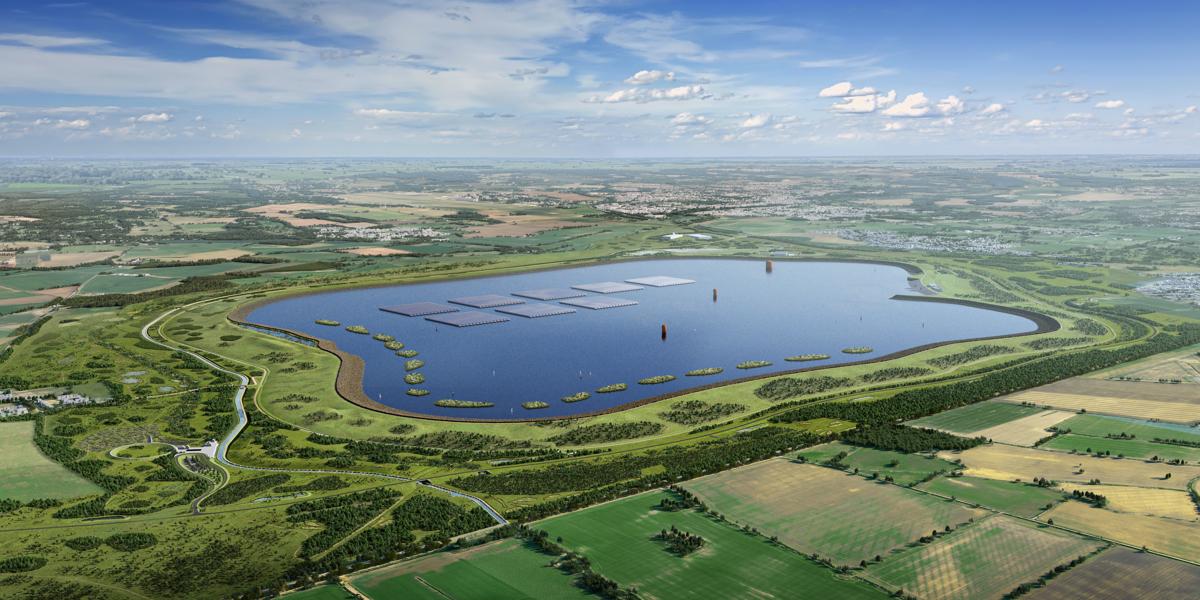
The researchers built a model that links climate projections, a city's water supply system, the way utilities decide when to invest in new infrastructure, and how households actually respond to price changes. Under a hotter, drier climate scenario, declining reservoir storage in Santa Cruz was found to trigger construction of a desalination plant, a costly fix whose bill is passed straight on to customers.
The numbers are stark. Median monthly water bills in Santa Cruz could rise from about $64 today to $120 under a dry, hot climate scenario in which new infrastructure has to be built to keep supplies reliable. For households already near the top of the bill distribution, the increase is sharper still: 80th-percentile bills could climb from $100 to $204 a month.
Currently, 19% of households in Santa Cruz already spend more than 2.5% of their income on water – the threshold the US Environmental Protection Agency uses to define affordability. Under the driest climate scenario modelled, that share could rise to 35%, meaning more than a third of the city's households would struggle to pay their water bills.
Low-income households bear the brunt. While their actual water use and bills are lower than those of other residents, the share of their income going to water is far higher. Under the driest scenario, median water bills for the poorest households were projected to rise from around $60 to $111 a month, pushing their typical affordability burden from 3.9% of income to 7.3%. At the sharper end of the distribution, some low-income households could end up spending as much as 30% of their income on water – a level researchers say would likely force painful trade-offs with food, healthcare and other essentials.
The study found that falling average rainfall, rather than rising temperatures alone, was the biggest single driver of higher bills
Notably, the study found that falling average rainfall, rather than rising temperatures alone, was the biggest single driver of higher bills, with greater year-to-year rainfall variability adding a further squeeze – a particular problem for a city whose single reservoir has little spare capacity to bank water across dry years.
The research also compared different utility strategies for responding to climate risk. Building major new infrastructure early, to guarantee near-total reliability, meant sharply higher costs and worse affordability outcomes. Delaying investment kept bills lower but left the system exposed: under the most cautious approach modelled, the city could expect a fully reliable water supply in only about six years out of ten.
"The bottom line is that under today's financing and regulatory models, climate adaptation and water affordability are on a collision course," said Sarah Fletcher, the study's senior author and an assistant professor of civil and environmental engineering at Stanford. "Ensuring reliable water access for everyone is going to require interventions at the state and federal level that go far beyond what individual utilities can do on their own."
The authors caution that Santa Cruz's results are shaped by its particular circumstances – a small reservoir, limited room for further conservation, and California's Proposition 218, which restricts utilities from subsidising low-income customers through their rate structures. Cities with larger, more flexible water systems may fare better. But the researchers say their modelling framework could be applied to other utilities grappling with similar pressures, including Los Angeles, San Diego, San Francisco, Cape Town and Melbourne, and warn that even cities that look resilient today could find themselves in Santa Cruz's position as climate stress builds and conservation gains run out.