Plato Malozemoff Distinguished Professor at UC Berkeley and co-founder of major research platforms including ReNUWIt and the National Alliance for Water Innovation, David Sedlak has spent three decades bridging environmental chemistry, treatment engineering and water policy. In this conversation, he discusses public trust, PFAS regulation, the quiet bottleneck of concentrate management, and why the future of water security may depend less on any single technology than on dismantling the institutional silos that keep drinking water, wastewater and stormwater artificially apart.
Your research spans water quality, treatment technologies, and urban water systems. How did you first become interested in water reuse, and what drew you to approach wastewater as a resource rather than a challenge?
Nature-based treatment systems like constructed wetlands offer an alternative to engineered unit processes, especially for removing nutrients
Prior to arriving in California in 1994, I had never lived in a place experiencing water scarcity. Thus, improving water quality meant cleaning up water pollution from industrial sites and municipal wastewater treatment plants. In the American West, I discovered that treated wastewater, stormwater and agricultural runoff were potentially important water resources. My introduction to water reuse took place in 1997, when I visited a proposed potable water recycling project in San Diego. I was surprised that all the attention that was being paid to the safety of that project was focused on waterborne pathogens. The limited work on chemical contaminants that had been done was targeted at chemicals originating in industrial sources. As an environmental chemist, I knew that treated wastewater contains a wide variety of chemical contaminants from consumer products, like medicines and household chemicals. This recognition led me to start studying trace organic chemicals in wastewater. After we started finding trace organic contaminants in treated wastewater, we turned our attention to the potential for removing them during the recycling process. This turned out to be an interesting topic that has occupied a lot of my attention over the last three decades.
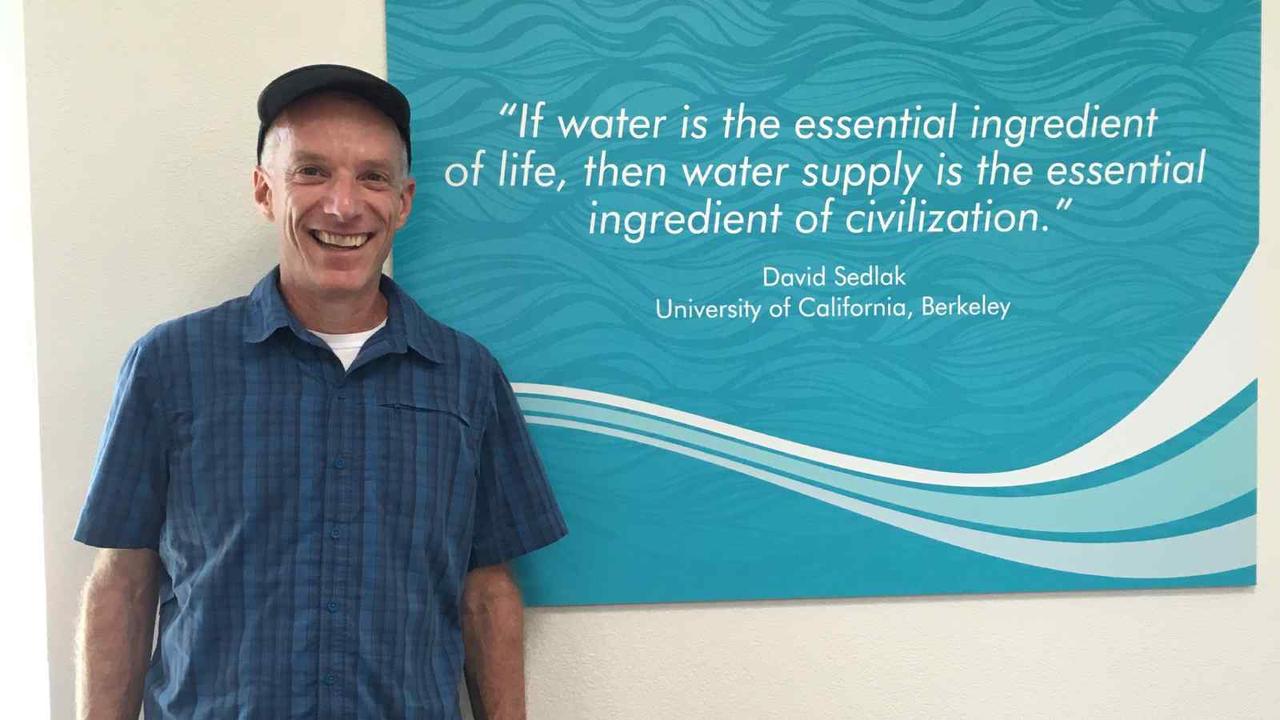
Public acceptance has long been one of the trickiest hurdles for potable reuse. What have we learned about communicating these projects to communities, and what mistakes are still being repeated?
In my opinion, the biggest mistake that water professionals make when communicating about potable water reuse is the belief that marketing campaigns are the path to public acceptance. Members of the public are attuned to efforts to convince them to do things that are not in their best interests and tend to view marketing campaigns for water with suspicion.
The good news on the PFAS front is that nearly all uses of the most toxic compounds, like PFOS and PFOA, have been discontinued
Our research has shown that transparency, competence and experience affect public attitudes about recycled water. Almost every new technology undergoes a process referred to as legitimisation in which members of the public decide whether some new way of behaving is in their best interest and if it is being managed by organisations that they can trust. When the public doubts the motives and competence of the organisations behind a new technology, they may develop strong opposition, as was the case with nuclear power in the 1970s and genetically modified organisms in the early 2000s. In contrast, when legitimisation is achieved, as was the case with air travel in the 1950s, and more recently, potable water reuse in the western United States, the new technology becomes legitimate in the eyes of the public and is widely accepted.
Your work at the Oro Loma Horizontal Levee has explored treatment wetlands as a polishing step for wastewater effluent. What have longer-term observations revealed about the durability of nature-based systems and the lifespan of their dominant removal mechanisms?
Unless there are specific requirements for contaminant removal in discharge permits, most utilities cannot justify large expenditures for effluent polishing. Nature-based treatment systems like constructed wetlands offer an attractive alternative to engineered unit processes, especially for removing nutrients, metals and trace organic contaminants from municipal wastewater that is being discharged to surface waters. Compared to conventional unit processes, these systems are relatively inexpensive and provide multiple benefits, like shoreline protection, recreation and habitat creation. Presently, most constructed wetlands are designed as free water surface flow systems in which treated wastewater passes through a series of basins or cells, as they are sometimes referred to by their designers. As water passes through the wetlands, it encounters microbes that are capable of denitrification and breakdown of trace organic contaminants.
In the early years of water reuse, most recycled water was used for landscape irrigation, industrial operations such as cooling towers, and agriculture
However, these systems require annual maintenance to minimise hydraulic short-circuiting. They also tend to get damaged by flooding. The horizontal levee, which is a subsurface wetland that employs native plants and wood chips to provide carbon to biofilms located about 30 centimetres below the ground surface, also removes nitrate, metals and trace organic contaminants. These systems are quite robust and require minimal maintenance to maintain their performance. Currently, the greatest challenge is related to the costs of sand and gravel needed to build the system as well as the relatively large surface areas needed to treat water. Thus, we have turned our attention to the treatment of concentrate generated by reverse osmosis systems used for water reuse.
PFAS dominates the contaminants conversation. Beyond removal and destruction technologies, what changes in monitoring, regulation or source control are most urgently needed to get ahead of the problem?
External funding from federal sources helps develop innovative water solutions, incentivising researchers and utilities to work together
The good news on the PFAS front is that nearly all uses of the most toxic compounds — the eight carbon chain compounds like PFOS and PFOA — have been discontinued. Many uses of the less toxic, shorter chain length compounds also are being eliminated or curtailed. Thus, we are no longer creating PFAS-contaminated sites that will require large sums of money and years of remediation. In places that are not contaminated by industrial PFAS sources, concentrations of these extremely toxic compounds will slowly decrease, as was the case for other persistent chemicals that were discontinued, like PCBs, DDT and brominated flame retardants. However, many of the shorter-chain compounds will persist and possibly even increase in concentration before they begin to decrease. Available data suggest that the safe levels of many of the short-chain PFAS are probably over an order of magnitude higher than the stringent maximum contaminant levels that have been established for PFOS and PFOA. However, we need more data on the toxicity of these shorter chain length compounds to resolve questions of whether treatment is needed. We also need treatment technologies that can remove these contaminants when they do occur at unacceptable concentrations.
Reuse and desalination both generate concentrate streams that are difficult and costly to manage. How serious a bottleneck is concentrate management for the long-term scalability of reuse, and which approaches do you find most promising?
The main problem associated with managing residuals produced by potable water reuse projects is related to the final fate of the concentrate produced by reverse osmosis (RO). Currently, most RO processes operate at recoveries of around 85%, meaning that for every million gallons of wastewater that is being recycled, plant operators must find a means of disposing of 150,000 gallons of water that is considerably saltier than most receiving waters (e.g., total dissolved solids concentrations in such concentrate will typically range from 2,500-5,000 mg/L). The RO concentrate may also contain concentrations of nutrients, metals and trace organic contaminants that are too high for surface discharge without additional treatment. As a result, many potable reuse projects that do not have access to either a deep ocean outfall have avoided the generation of RO concentrate by relying on alternative treatment technologies, like activated carbon and ozonation. However, these processes are expensive and generate other types of residuals, like spent activated carbon. They also do not provide low-salinity recycled water, which is the main attraction of recycled water in places where source water salinity is a concern.
In situations where the salinity of the RO concentrate is not a concern, such as discharges to estuaries or brackish surface waters, additional treatment to remove contaminants can alleviate the RO bottleneck. Conventional unit processes appear to be too inefficient to achieve the desired water quality on this large volume of water. We are hopeful that nature-based treatment systems, such as the horizontal levee (a subsurface constructed wetland), will be a cost-effective means of treating RO concentrate from water recycling projects. Our pilot-scale studies on the horizontal levee have been encouraging, but additional research and development is needed to reduce the land area needed for contaminant removal.
Climate change is reshaping both supply and demand. Which water reuse and reclamation strategies are most underrated as climate adaptation tools — and which are over-promised?
In the early years of water reuse, most recycled water was used for landscape irrigation, industrial operations such as cooling towers, and agriculture. This made sense when potable reuse was still unproven. However, construction, maintenance and operation of dedicated recycled water systems (i.e., purple pipe networks) for non-potable water recycling systems has proven to be expensive, especially when users are located far away from the source of recycled water. It also can have the unintended consequence of discouraging efforts to reduce outdoor water use. Today, much of the focus is on potable water reuse because it avoids the need for a second water distribution network.
In parallel with efforts to recycle the effluents produced by wastewater treatment plants, experience has been gained with water recycling in buildings, office parks and housing developments. This approach, which is sometimes referred to as on-site reuse or distributed water reuse, has the potential to further enhance water security if issues related to permitting and operations can be resolved. For example, autonomous operation (i.e., without on-site staff) can be enabled by use of sensors and actuators that employ machine learning, digital twins and other advanced tools.
You have helped build cross-institutional research platforms such as ReNUWIt and the National Alliance for Water Innovation (NAWI). What does it take to translate university research into utility-scale practice in a risk-averse sector?
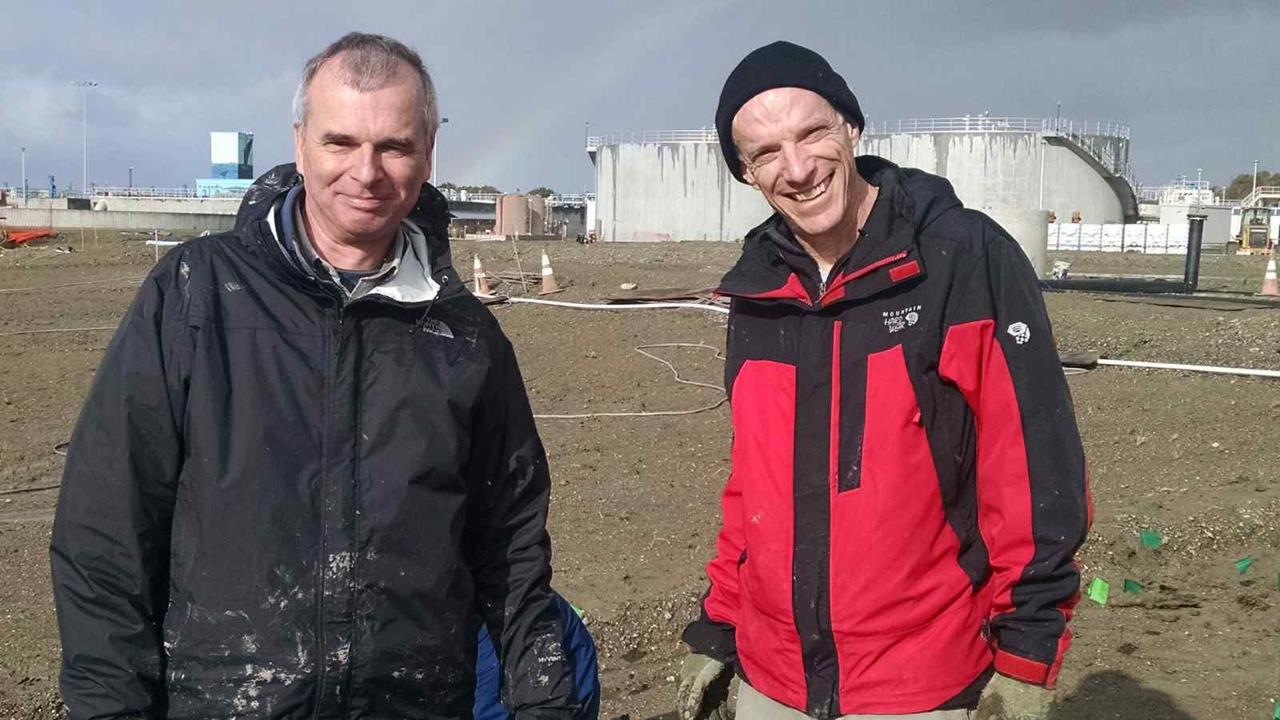
Partnerships between utilities and universities require time to develop trust and understanding. Researchers are rewarded for being the first ones to report on technology applications or potential risks associated with new technologies, while utility managers are rewarded for providing a safe, affordable and abundant water supply. These objectives are not mutually exclusive, but it is not always obvious how these contrasting objectives can be achieved. External funding from federal sources is extremely helpful in developing innovative water solutions because they incentivize researchers and utility personnel to work together as equal partners.
Without the framework of an umbrella organisation that rewards collaborations, it is difficult to effectively translate university research into practice at utilities; in places that lack these kinds of organisations, it is more likely that innovators at universities will target equipment manufacturers and private companies as potential users of their innovations.
Looking ten to twenty years ahead, what is the single change you would most like to see in how the world manages its wastewater and what would have to happen in the next five years to make it realistic?
The one water ethos requires us to rethink many of the water institutions that have developed to support management of drinking water, wastewater, hazardous waste and stormwater as separate entities
Over the past decade, water professionals have started to adopt the term “one water” to describe the need for holistic water management. This is a step in the right direction because it recognises that water from any source may be used for any purpose after appropriate treatment. This is a potentially powerful concept that, if applied properly, could change the way that we educate students, operate water systems and engage in professional activities. The one water ethos requires us to rethink many of the water institutions that have developed to support management of drinking water, wastewater, hazardous waste and stormwater as separate entities. Creating greater recognition of the potential benefits of breaking free of the mindset will allow us to create systems where tap water, industrial process water, irrigation water, cooling water and water for ecosystems are managed holistically. It also will create a greater willingness to experiment with novel solutions that will help achieve a goal of abundant, safe and affordable water for all.