On 26 June 2025, a court in Vicenza sent eleven chemical executives to prison for poisoning water. The sentences totalled more than 141 years. The ruling is a first-instance judgment and will almost certainly be appealed, but the legal and commercial signal it sends is immediate. The contamination they were convicted of had reached the tap water of roughly 350,000 people across the Italian provinces of Vicenza, Padua and Verona. The compound at the centre of the case belonged to a family of chemicals you have almost certainly never named in a board meeting, and can no longer afford to ignore: PFAS.
Your treatment plant did not make them. The law is rapidly deciding that you will manage them
If you run a utility, regulate one, finance one, or sell technology to one, the Vicenza verdict is not a foreign curiosity. It is a preview. PFAS contamination is now a matter for criminal courts, not just environmental agencies. The question is no longer whether PFAS will reshape your cost base, your liability and your capital plan. It is how fast, and whether you act before the deadlines are set for you.
There are more than 10,000 PFAS compounds. They are in drinking water, wastewater, sludge, wildlife, food and human blood, on all six continents — called “forever chemicals” because the carbon-fluorine bond that makes them useful also makes them almost impossible to break down. PFOA and PFOS are linked to kidney and testicular cancer, thyroid disease, liver damage and immune suppression, and one study published in the European Journal of Public Health estimated 3,800 additional cardiovascular deaths in the exposed population of Italy’s Veneto region over 34 years. Your treatment plant did not make them, but the law is rapidly deciding that you will manage them.

The receiver pays
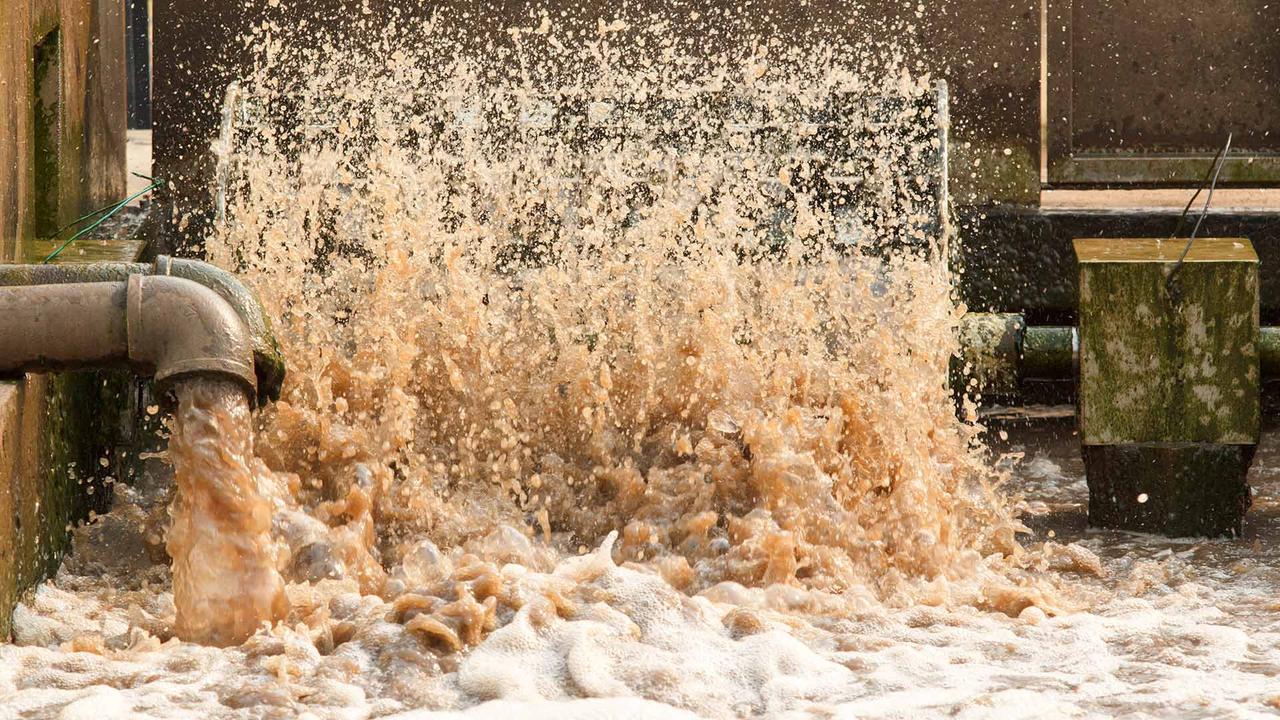
Municipal wastewater plants are not a source of PFAS. They are a receiver. The chemicals arrive from households and industries connected to the network, pass through conventional biological treatment that was never designed to stop them, and leave in two directions: into the effluent and the receiving environment, and into the sludge.
Inaction is not the cheap option. It is the expensive one, deferred
That second pathway is where the money bleeds. When long-chain PFAS bind to biosolids, the sludge that utilities have spread on farmland for decades becomes a contamination vector. Across Europe between 2018 and 2022, between 51 and 60 per cent of rivers and up to 100 per cent of coastal and transitional waters exceeded the environmental quality standard for PFOS. And when regulators react, they react against the receiver.
Maine became the first jurisdiction in the world to ban the land application of biosolids outright in 2022. Sludge handling costs that ran around 71 dollars per wet tonne in 2018 reached 133 dollars by 2023. Many Maine utilities now pay between 190 and 240 dollars per wet tonne to haul and landfill what they once gave to farms. The Portland Water District watched its annual biosolids bill climb from 1.5 to 3.2 million dollars — for a product it can no longer sell or give away, and cannot stop making.
The cost of removing PFAS from wastewater, by one Minnesota estimate, runs between 2.7 and 18 million dollars per pound destroyed. You are not paying that bill because you polluted. You are paying it because the pollution arrived at your gate.
Europe chooses the class
For years, regulators played whack-a-mole, banning PFAS one compound at a time while industry substituted the next. Europe has decided to stop playing.
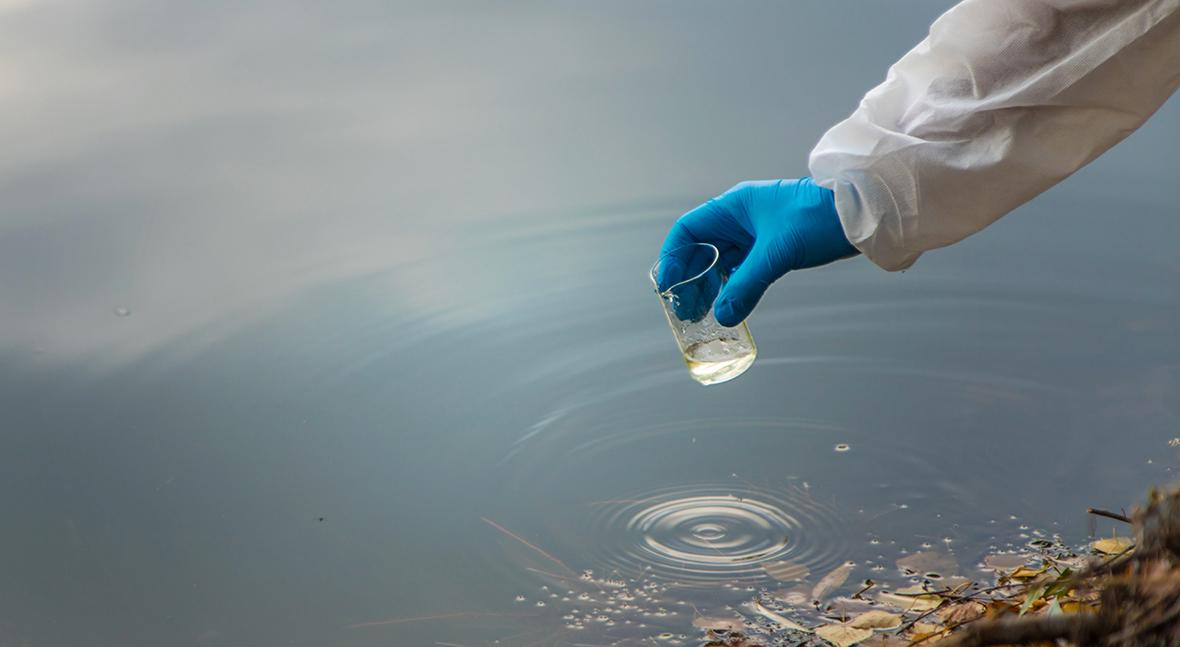
Since 12 January 2026, the recast EU Drinking Water Directive has made harmonised PFAS monitoring mandatory across member states, with a limit of 500 nanograms per litre (ng/L) for “Total PFAS” and 100 ng/L for the sum of twenty named compounds — member states apply one or both parameters, and all have opted for the sum of twenty approach. Several countries have gone further: Denmark enforces 2 ng/L for the sum of PFOA, PFOS, PFNA and PFHxS; Sweden 4 ng/L for a broader set of compounds; Germany 20 ng/L for the same four by 2028.
The real signal is the universal restriction proposal under REACH, filed by the Netherlands, Germany, Denmark, Norway and Sweden. In March 2026, ECHA’s Risk Assessment Committee concluded that a broad restriction was justified and that a full ban would be the most effective measure. The Socio-Economic Analysis Committee’s draft opinion, published the same month and still subject to consultation, expressed greater caution, favouring time-limited derogations of up to twelve years where alternatives do not yet exist. The final SEAC opinion is due by year-end, after which the Commission will draft the law.
The economic argument is now quantified. A European Commission study published in January 2026 estimated that leaving PFAS contamination at current levels until 2050, with no regulatory action, would cost European society around 440 billion euros. Treating only the contaminated water would cost more than a trillion. Acting at source by 2040 would save roughly 110 billion. Inaction is not the cheap option. It is the expensive one, deferred.
The smallest molecule, a big problem
Trifluoroacetic acid, TFA, is the shortest-chain PFAS of all, just two carbons, and the final breakdown product of fluorinated gases, refrigerants and at least 32 pesticides authorised in the EU. Under the OECD definition that Europe follows, TFA qualifies as a PFAS; the US EPA uses a narrower definition that excludes it. Studies find that TFA accounts for around 98 per cent of all PFAS detected in European water samples and has multiplied fivefold in German rainfall since the 1990s, according to research published in Environmental Science and Technology.
In early June 2026, ECHA’s Risk Assessment Committee confirmed its recommendation to classify TFA as toxic to reproduction and, for the first time for any substance, as persistent, mobile and toxic, and very persistent and very mobile. It is still a scientific opinion, not yet binding law. But the direction is set.
TFA breaks the conventional playbook because treatment barely touches it. Granular activated carbon, ion exchange and even reverse osmosis are largely ineffective. Control at source is not the preferred option — it is close to the only one. For any utility building water reuse or aquifer recharge, that is a design problem to solve now, while the assets are on the drawing board.

Washington retreats, the states advance
The United States runs the largest PFAS response on earth by investment and litigation. It is also, at the federal level, reversing.
In April 2024, the EPA set enforceable drinking water limits of 4 ng/L for PFOA and PFOS and 10 ng/L for three others. Then the direction changed. On 18 May 2026, the agency formally proposed two rules: one to rescind the limits for PFHxS, PFNA, GenX and the hazard index for mixtures, and one to extend the compliance deadline for PFOA and PFOS by two years from April 2029 to April 2031, though the existing limits remain operative during the rulemaking process. The comment period closes on 20 July 2026, with a public hearing on 7 July. If finalised, only two of the six compounds regulated in 2024 would keep enforceable federal limits.
The litigation is no longer a tail risk. It is a market
The courts are pulling the other way. The DC Circuit has twice refused EPA requests to suspend the contested standards while litigation continues — first in January 2026, when it rejected a request to set aside the limits entirely, and again in March, when it declined to split off and pause the case over the four compounds the agency now wants to drop. Nineteen state attorneys general have filed briefs defending the 2024 rule.
The 2024 standards were challenged not only by chemical makers but by the water sector itself — the lead petitioner is the American Water Works Association. Their argument is not that PFAS are safe, but that the EPA underestimated compliance costs and that small and rural systems cannot absorb the capital burden without steep tariff rises. Proportionality is a genuine question, raised by the same utilities that receive the contamination they are now asked to remove.
The lesson is that federal retreat does not lower your risk; it relocates it. Michigan proved that source control works: by identifying industrial dischargers and demanding better pre-treatment, it cut PFOS concentrations at some facilities by more than 85 per cent between 2018 and 2022. When the federal floor drops, the most effective lever is the one closest to the source.
Fourteen billion dollars, and counting
The litigation is no longer a tail risk. It is a market. In the United States, collective settlements now exceed 14 billion dollars: 3M agreed to pay up to 12.5 billion over 13 years, DuPont, Chemours and Corteva agreed to 1.185 billion, and New Jersey reached a separate 2 billion dollar settlement with DuPont in August 2025.
Claim windows close in summer 2026: 31 July for both the DuPont and 3M action funds, 1 August for the special needs fund. Miss the deadline, and you lose eligibility and release the defendants from liability. More than 15,000 personal injury claims are pending in the federal court that handles the firefighting foam litigation, with no global settlement yet.
Europe has begun to follow. The Dutch government has issued an unprecedented liability notice to 3M over contamination of the Schelde estuary. In France, around 200 residents of the chemical valley south of Lyon have sued Arkema and Daikin for more than 36 million euros. The Vicenza verdict ordered more than 75 million euros in civil damages alongside the prison terms. The UK Parliament, in an April 2026 report, urged a more rigorous application of the polluter-pays principle, opening the door to cost-recovery mechanisms for water companies.
Destruction becomes a business
Every treatment technology you can buy today shares one flaw: it separates PFAS; it does not destroy them. Granular activated carbon, ion exchange and high-pressure membranes all concentrate the problem into a secondary waste stream that someone still has to deal with.
North America and Europe account for 80 to 90 per cent of the scientific literature, the largest lawsuits and the most significant investment
Supercritical water oxidation mineralises PFAS into fluoride, carbon dioxide and water at 374 degrees and high pressure, and has demonstrated destruction above 99.7 per cent in concentrated influent. In June 2026, Reworld launched a destruction service using a different high-temperature pathway — thermomechanical incineration at its waste-to-energy plants, which run above 1,100 degrees — positioning it as the largest full-scale PFAS destruction capacity in the United States. 374Water, which builds supercritical systems, reported a gross margin of 63 per cent in the first quarter of 2026, up from 25 a year earlier — on revenues still at pilot scale — a sign the technology is starting to earn service revenue. Electrochemical oxidation is advancing in parallel, with destruction efficiencies above 98.8 per cent. The EPA’s 2026 interim guidance on PFAS destruction and disposal now recognises thermal treatment, underground injection and landfilling as commercially available options.
Estimates vary by an order of magnitude depending on scope, from 2.28 billion dollars in 2025 on one measure to nearly 30 billion by 2030 on the broadest. The opportunity is not in concentrating PFAS. It is in destroying them.
The map has holes, and the holes are the story
North America and Europe account for 80 to 90 per cent of the scientific literature, the largest lawsuits and the most significant investment. Everywhere else, the data thins out, and the thinness is itself the danger.
In the Gulf, where countries hold 60 per cent of the world’s desalination capacity and lean heavily on reused water, a single study found PFAS up to 956 nanograms per litre in coastal lagoons near Jeddah that receive treated sewage — yet a 2024 review found just five published studies in Saudi Arabia and one in Bahrain. In South Africa, reservoirs supplying three provinces have shown PFAS sums up to 909 nanograms per litre. Across most of Africa, the capacity to measure PFAS barely exists.
Where there is no baseline data, there is no basis for regulation. Advanced jurisdictions restrict, and the chemicals and the production capacity migrate. The machinery from the convicted Italian plant was reportedly dismantled and shipped to India. The asymmetry is not an academic curiosity. It is a systemic risk that will reproduce the entire PFAS problem, geographically, on a decades-long delay.
What you do now
The science is settled enough for courts and parliaments. The regulatory architecture is in force in Europe, contested in the United States, advancing across Asia-Pacific. The litigation has crossed the Atlantic. The technology to destroy these chemicals is moving from demonstration to service. None of this is on a 2050 horizon. It is on your current capital plan.
Treat PFAS as what it is: not a compliance line item, but a strategic variable that touches your liability, your tariffs, your sludge, your reuse strategy and your capital allocation at once. Map your sources before a regulator maps them for you. Build PFAS removal and destruction into reuse and recharge schemes at the design stage, because retrofitting a 50-year asset is the expensive path. Watch TFA, because it will not be stopped at the plant; it has to be stopped at source. Decide, deliberately, how the cost gets shared between ratepayers, public budgets and the companies that made the chemicals, because if you do not decide, the ratepayer pays twice.
The executives in Vicenza did not believe the reckoning would reach them. It did. The only open question is who sees it coming.