For a decade, the Gulf answered water scarcity by building plants that turn seawater into drinking water. Now the same governments are pouring capital into the other end of the pipe (collection, treatment and reuse) because the arithmetic has shifted decisively. Reclaimed water costs between roughly $0.10 and $0.65 per cubic metre to produce; desalinated seawater costs $0.45 to $1.30. The energy gap is starker still: a large treatment plant runs at 0.13 to 0.79 kilowatt-hours per cubic metre, while reverse-osmosis desalination demands 2.5 to 3.5. Every cubic metre of sewage you treat and reuse is a cubic metre of expensive desalinated water freed for the tap, and a measure of carbon you never emit. This is the story the desalination headlines have been hiding.
That arithmetic has done something more consequential than shift procurement priorities. It has turned sanitation (long filed under municipal cost centre) into a financeable asset class, with 25- and 30-year concessions, sovereign-backed offtake agreements, and returns running into double digits. The Gulf is not where water reuse was invented, but it is where the financial model for scaling it has been most completely built out. If you still file wastewater under “municipal cost centre”, this market is quietly, expensively proving you wrong.
Every cubic metre of sewage you treat and reuse is a cubic metre of expensive desalinated water freed for the tap
Reuse targets across the region read like industrial policy, not green branding. Abu Dhabi already treats more than a million cubic metres a day, has pushed network coverage to 99%, reuses around 80% of its treated effluent and has set a target of 100% (zero discharge) by the end of 2026. Saudi Arabia treats more than 6.5 million cubic metres of municipal wastewater a day, reuses only about a quarter today, and wants 70% by 2030. Kuwait recovers close to 60% of its domestic wastewater through a single plant. These are decision-makers treating sewage as a strategic reserve. You should too.
Saudi Arabia rewired the market
Saudi Arabia has built the most structured wastewater PPP market in the region around the Independent Sewage Treatment Plant: a 25-year build-own-operate-transfer contract with a state-backed offtake. The institutional design matters as much as the engineering. In 2024, the old Saline Water Conversion Corporation became the Saudi Water Authority, splitting policy, regulation and procurement into three clean roles: the environment ministry sets strategy, the new authority regulates, and Sharakat (rebranded from the Saudi Water Partnership Company in February 2026, under the Ministry of Finance) procures. That separation is what makes the contracts bankable. It is also the first thing international lenders check before they wire money.
The financing template is already set. ACCIONA’s 2022 green-loan close for three Saudi plants (Madinah, Buraydah and Tabuk) was the first sewage-treatment financing in the Kingdom to earn green-loan status, combining an Islamic Ijara tranche with green certification from S&P Global Ratings. It is the structure every serious bidder is now copying.
Levelised tariffs on recent Saudi plants cluster around SAR 1.20 to SAR 1.94 (about $0.32 to $0.52) per cubic metre, tight enough to reward operators who master lifecycle cost, not so tight as to deter serious bidders. The live deal to watch is Riyadh East, with an initial capacity of 200,000 cubic metres a day expanding to 400,000 in phase two, targeted for commercial operation in 2029. At least six consortia, pairing names like Suez, Saur, Veolia, Metito and Miahona with Saudi partners, were bidding as this issue went to press. Whoever wins inherits a 25-year annuity; even the losing bidders come away with a sharp read on a market that keeps tendering. The same machine has already named preferred bidders for the Hadda and Arana plants in Mecca and lined up Kharj 3 behind them.
The tunnel club
The defining engineering bet of the Gulf is deep, gravity-fed tunnelling, and it is where the largest checks are written. The logic is straightforward: a gravity tunnel lined for a 100-year service life replaces a fleet of pumping stations and their permanent operating cost. Abu Dhabi proved the model with its Strategic Tunnel Enhancement Programme: a 41-kilometre deep spine plus roughly 43 kilometres of link sewers, built for around AED 5.7 billion (about $1.55 billion), carrying an average flow near 800,000 cubic metres a day and switching off 35 conventional pumping stations. Gravity, it turns out, is the cheapest pump you will ever own.
Gravity, it turns out, is the cheapest pump you will ever own
Dubai took the concept and supersized it. The Dubai Strategic Sewerage Tunnels will lay roughly 75 kilometres of deep tunnel and more than 200 kilometres of link sewers, retire about 120 pumping stations and save an estimated 100 gigawatt-hours a year. Its lifecycle cost runs to around $22 billion, making it the largest sanitation megaproject on the planet. The first two packages alone carry a combined capital cost of nearly $5 billion: Package W at Warsan is set to go to a consortium led by EtihadWE alongside Tamasuk and Alkhorayef Water & Power, with Veolia as operator, at roughly $3 billion; Package J at North Jebel Ali is set to go to Vision Invest and Suez at under $2 billion. A separate Links package carries the first In-Country Value requirement the municipality has applied to a scheme of this size. Read that as a signal: the Gulf increasingly wants the supply chain, not just the plant, anchored at home.
Qatar is building the same idea under its Doha South Sewage Infrastructure Programme: a trunk sewer of about 45 kilometres feeding a new works sized at 500,000 cubic metres a day, dismantling more than 30 existing pumping stations, valued at $3 to $5.5 billion depending on where you draw the boundary. Qatar has also closed its first sanitation PPP, Al Wakrah and Al Wukair: a QAR 5.4 billion (about $1.48 billion) deal led by Metito with Al Attiyah and the Gulf Investment Corporation, starting at 150,000 cubic metres a day and scalable to 600,000. Its existing Doha North works already treats up to 439,000 cubic metres a day through membrane bioreactors, and a separate polishing facility at Katara turns effluent into demineralised water for district cooling, a model of resource recovery that the rest of the region is watching closely.
The smaller states, the sharper deals
Kuwait’s Umm Al Hayman is one of the most closely watched deals in the region: a roughly $1.8 billion plant treating 500,000 cubic metres a day, structured as a 25-year build-operate-transfer, financed with a $650 million 26-year loan, and offering investors a guaranteed minimum internal rate of return of 13.5%. It captures biogas for about 40% of its own energy and produces roughly 70,000 tonnes a year of Class A fertiliser. The Kuwaiti government holds 50% and is preparing to float it on Boursa Kuwait, which would make it the first PPP wastewater plant in the Gulf to go public. When a deal is structured well enough to list on a stock exchange, the sector has moved well beyond public works.
Bahrain’s flagship Tubli works is doubling toward 400,000 cubic metres a day in a roughly $266 million expansion (reported near 80% complete) in a country where 95% of the population is already connected to the network. Almar Water Solutions holds a 35% stake in the Muharraq concession, which runs to 2040 and was the first deep gravity trunk sewer in the GCC. Oman has folded its utilities into Nama Water Services and tabled an integrated master plan worth around $28.8 billion through 2050, lifting sanitation coverage toward 75% by 2040 and treated-effluent reuse from 50% toward 71%.
In 2025, Nama’s plants took in some 95 million cubic metres and delivered close to 93 million, with reclaimed-water users up more than a third in a single year. Even Ras Al Khaimah signed its first wastewater PPP in February 2026: a roughly $300 million build-own-operate-transfer for a plant starting at 60,000 cubic metres a day, scalable to 150,000, with the effluent fully reused. When a smaller emirate structures its debut sewage plant as a concession, the model has stopped being an experiment.
The technology written into the contract
Strip away the finance, and a clear engineering doctrine remains. Deep gravity tunnels lined for a 100-year service life replace fleets of pumping stations and the operating cost that comes with them. Membrane processes do the heavy lifting on quality: membrane bioreactors at Oman and Qatar, ultrafiltration and reverse osmosis at Kuwait’s Sulaibiya, aerobic-granular and high-efficiency activated-sludge trains across the Saudi plants. Resource recovery is becoming standard rather than optional: biogas that powers the plant, Class A fertiliser that leaves it, and polishing units that turn effluent into demineralised water for district cooling at a fraction of the usual energy. The 25-year concessionaire who will live with your equipment’s performance for three decades has very different purchasing criteria from a procurement office buying on capital cost alone, and that shift is already visible in how contracts are written.
The only scarce resource left in this market is a seat in the winning consortium
NEOM illustrates the discipline the whole market demands. The gigaproject has cancelled two desalination schemes in the past two years and terminated the Trojena dam and lake contract, all as part of a broader restructuring. The reuse and zero-discharge ambitions may survive the cuts, but they have not yet reached financial close. That is not a criticism; it is the same logic that governs every serious project in this region: separate the ambition from the asset, price the asset on a 25-year lifecycle basis, and let the concession structure carry the risk. Whether NEOM’s water ambitions reach financial close remains the open question.
Who owns the water now
Follow the equity and the real story is consolidation. Abu Dhabi’s TAQA absorbed the emirate’s sewerage company, turning it into TAQA Water Solutions, now running 41 plants across roughly 13,000 kilometres of network. Sovereign and quasi-sovereign vehicles (the Public Investment Fund behind the National Water Company in Saudi Arabia, ADQ taking 49% of Plenary, Vision Invest backing Miahona) are buying the seats at the table. International operators increasingly sit as minority partners inside consortia led by local or sovereign champions. That is not an accident. It is the deliberate localisation of capital. The deal-making runs deeper than the marquee acquisitions: Vision Invest sold a 10% stake in Miahona in November 2025 while retaining 60%, freeing capital to redeploy, while EVN AG now owns WTE Wassertechnik, the technical partner behind both Kuwait’s Umm Al Hayman and Bahrain’s Tubli expansion. The map of who builds and who operates Gulf wastewater is being redrawn deal by deal.
The desalination decade is giving way to the reuse decade. The only question left is whether your name is on the contract
The financing rails are being laid just as fast. DEWA priced a $1 billion green sukuk (Islamic bond) for renewable energy and water. The GCC sukuk market grew more than 13% in the first four months of 2026. Saudi Arabia’s privatisation strategy targets more than 220 PPP contracts and over $64 billion of private capital by 2030. The instruments, the offtakes and the sovereign guarantees now exist to move serious money into a sector that, a decade ago, almost nobody outside the Gulf would underwrite. Across the wider Middle East and North Africa, the bill for water infrastructure runs to an estimated $110 billion, demand large enough to keep green bonds, blended finance and sukuk flowing toward exactly the kind of long-dated, government-backed asset a wastewater concession represents.
The window, and what to do about it
The Gulf has concluded that the cheapest, lowest-carbon new water it can buy is the water it already used once, and it is willing to commit tens of billions of dollars, on 25- and 30-year terms, to capture it. The contracts are bankable. The offtakes are sovereign. The returns, where disclosed, run to double digits. The only scarce resource left in this market is a seat in the winning consortium.
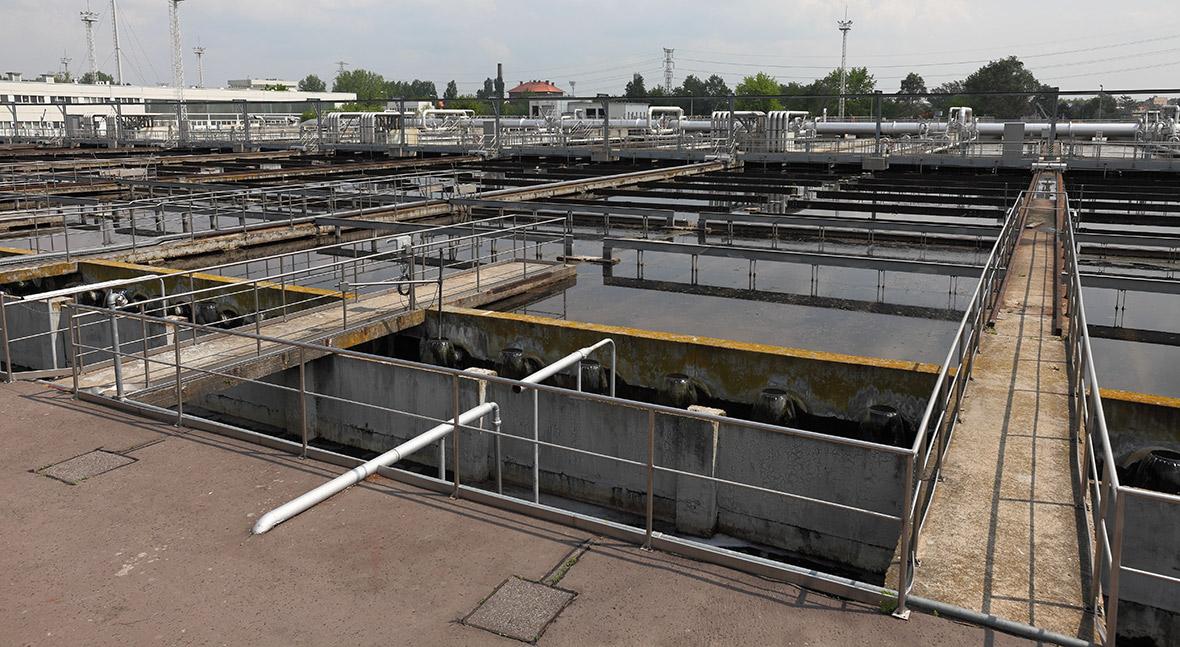
None of this is speculative. The plants are operating or financed, the regulators are stood up, the tariffs are signed, and the first listing is in motion. The scale of the need sustains the appetite: across the wider Middle East and North Africa, the backlog of unmet water infrastructure demand is large enough to keep this pipeline running well into the next decade. What is still in flux is who captures the contracts, and that is being decided now, in the consortia forming around tenders that close this summer.
If you are a utility or an administration, the model to study is not the plant: it is the split between regulator, offtaker and operator that made the plant financeable. If you are a technology firm or a manufacturer, your buyer is no longer a procurement office; it is a 30-year concessionaire who will live with your equipment’s operating cost for three decades. If you are an investor, the first Gulf wastewater IPO is being assembled in Kuwait right now, and the second will not wait for you. The desalination decade is giving way to the reuse decade. The contracts are being priced, tendered and, in places, already closed. The only question left is whether your name is on one of them.