Reuse: from a complementary option to a strategic resource
Water reuse is no longer a marginal solution but a central pillar of water management policy. Increasing pressure on conventional resources, recurrent droughts and the need for resilience have shifted the focus from technical feasibility to deployment speed and operational robustness. The European framework positions reuse as a mechanism to reduce abstraction, mitigate environmental impacts and support climate adaptation.
In Spain, the transition from the traditional quality-based model towards a risk-based approach introduces stricter requirements in terms of traceability, monitoring and shared responsibility. As a result, reclamation systems must not only achieve target water quality, but also ensure reliability, auditability and adaptability under variable operating conditions.
Water reuse is no longer a complementary solution; it is becoming a strategic infrastructure asset driven by structural water stress
Regulatory change: water reclamation as distinct infrastructure
Royal Decree 1085/2024 explicitly defines water reclamation as an activity distinct from wastewater treatment, introducing a dual regulatory framework: one governing the production of reclaimed water and another governing its final use. This distinction has direct implications for infrastructure planning, requiring additional treatment lines and new authorisations.
From an engineering perspective, this means that existing WWTPs must evolve into integrated systems capable of meeting both discharge and reuse requirements. This distinction is further reinforced by the new urban wastewater framework, which will require additional investment in both treatment and reclamation infrastructure. In this scenario, solutions that reduce construction time, minimise footprint and integrate seamlessly with existing assets become critical. Compact modular plants provide a direct response to these constraints.
Target contaminants in water reclamation and treatment technologies
Reclamation design must be driven by end-use requirements and limiting parameters, following a “fit for purpose” philosophy supported by a multiple-barrier approach. This implies combining processes to ensure robustness, rather than relying on a single technology.
1. Suspended solids, turbidity and colloids
The control of suspended solids and turbidity is essential to ensure downstream performance, particularly for disinfection and membrane systems. Physico-chemical treatments such as coagulation–flocculation and lamella clarification provide high removal efficiency within compact footprints. These processes are often complemented by granular filtration. When greater stability is required, microfiltration and ultrafiltration provide a robust physical barrier, limiting fouling and improving UV transmittance.
2. Microbiological control
Microbiological safety is the cornerstone of water reuse. Regulation (EU) 2020/741 is based on the principle that reuse must rely on a system of barriers and controls capable of ensuring the safety of agricultural use, combining minimum quality requirements, monitoring and risk assessment. Clear water alone is therefore not sufficient; microbiological control must be assured in accordance with the intended use.
The most suitable technologies for this group of contaminants are, first, disinfection processes — primarily UV irradiation, chlorination and, where appropriate, other oxidative alternatives — and, second, membranes when used as an additional physical barrier. Ultrafiltration, and to some extent microfiltration, can provide a highly robust barrier against bacteria and microorganism-bearing solids, although in practice they are generally combined with a final disinfection stage in order to reinforce the overall safety of the system.
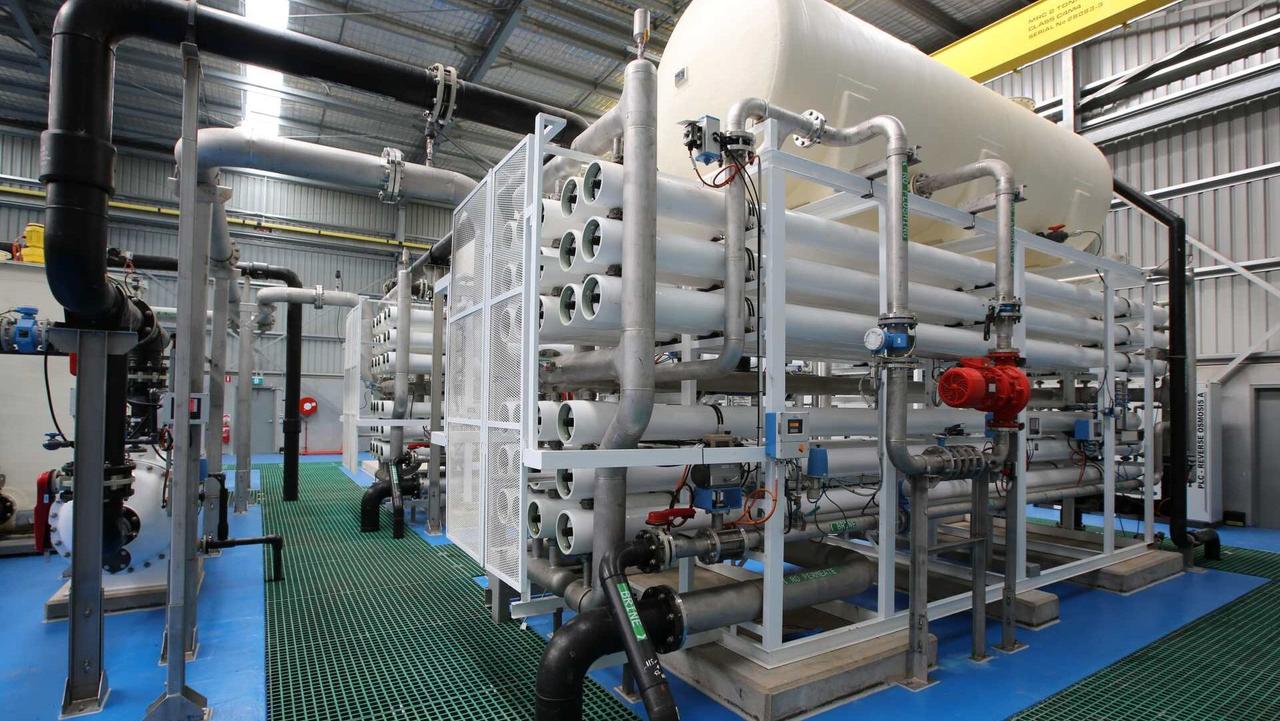
This multiple-barrier approach is particularly relevant because microbiological compliance does not depend solely on outlet water quality, but also on operational reliability, system redundancy, monitoring and the conditions of reclaimed water distribution and use. In engineering terms, this means that microbiological control must be designed not only for removal efficiency, but also for robustness, traceability and verifiability under real operating conditions.
3. Salinity and dissolved salts
Salinity is a key limiting factor in irrigation reuse, especially in coastal systems affected by seawater intrusion. Reverse osmosis, nanofiltration and electrodialysis are applied to control conductivity, sodium and boron. Among these, reverse osmosis stands out for its robustness and versatility, enabling high-quality water production under demanding conditions.
4. Nutrients
Nitrogen and phosphorus require a balanced approach. While they may provide agronomic benefits, excessive concentrations can limit reuse. Their removal is mainly addressed in biological treatment processes, although additional polishing stages may be incorporated to ensure process stability and compliance.
5. Organic matter and fouling precursors
Residual organic matter plays a critical role in membrane fouling, disinfectant demand and by-product formation. Technologies such as activated carbon, ozonation and advanced physico-chemical treatments are applied to control these compounds, depending on their biodegradable or refractory nature.
6. Microcontaminants
The removal of microcontaminants is gaining relevance in the context of advanced treatment requirements. Technologies such as ozonation and activated carbon are widely recognised for their effectiveness and form part of a broader strategy linked to environmental protection and public health beyond reuse alone.
7. Technologies with highest potential for compactness and scalability
Technologies best suited for compact implementation are those that can be configured as modular, repeatable units. Membrane systems (MF, UF, NF, RO), cartridge filtration, chemical dosing and UV disinfection are particularly well adapted to containerised or skid-mounted configurations, allowing capacity expansion through parallel lines. High-rate clarification systems also offer compactness, although with greater integration requirements. Conversely, processes dependent on large civil structures or long retention times are less compatible with phased deployment.
Scalability and phased investment
One of the key advantages of compact plants is their inherent scalability. In reuse schemes, demand typically evolves gradually, driven by network expansion and user uptake. Modular systems allow capacity to be installed progressively, optimising capital expenditure and reducing financial risk.
Additionally, compact plants provide an effective response in transitional scenarios, enabling rapid deployment with minimal civil works and facilitating integration into existing facilities.
Case study: Adeje-Arona WWTP
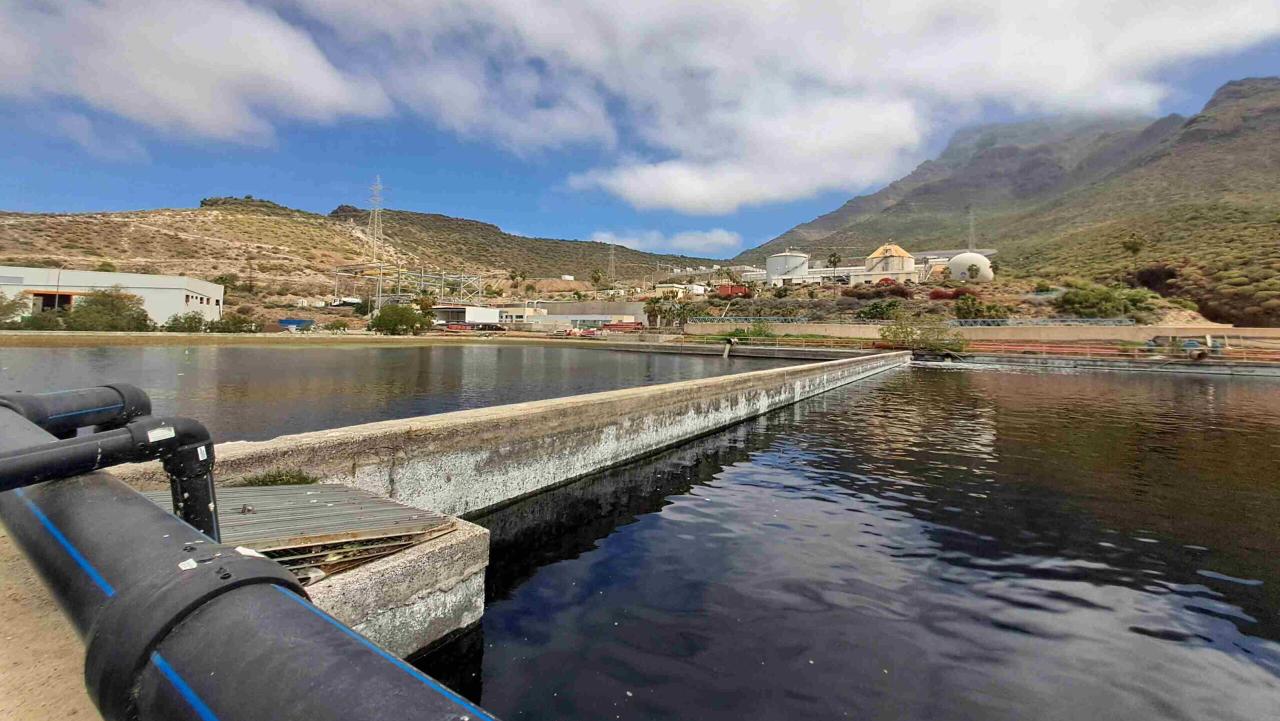
The Adeje-Arona WWTP in Tenerife (Canary Islands) represents a benchmark in advanced water reuse through compact modular design. The facility produces approximately 5,700–6,000 m³/day of high-quality reclaimed water for irrigation, addressing the needs of a region with acute water stress.
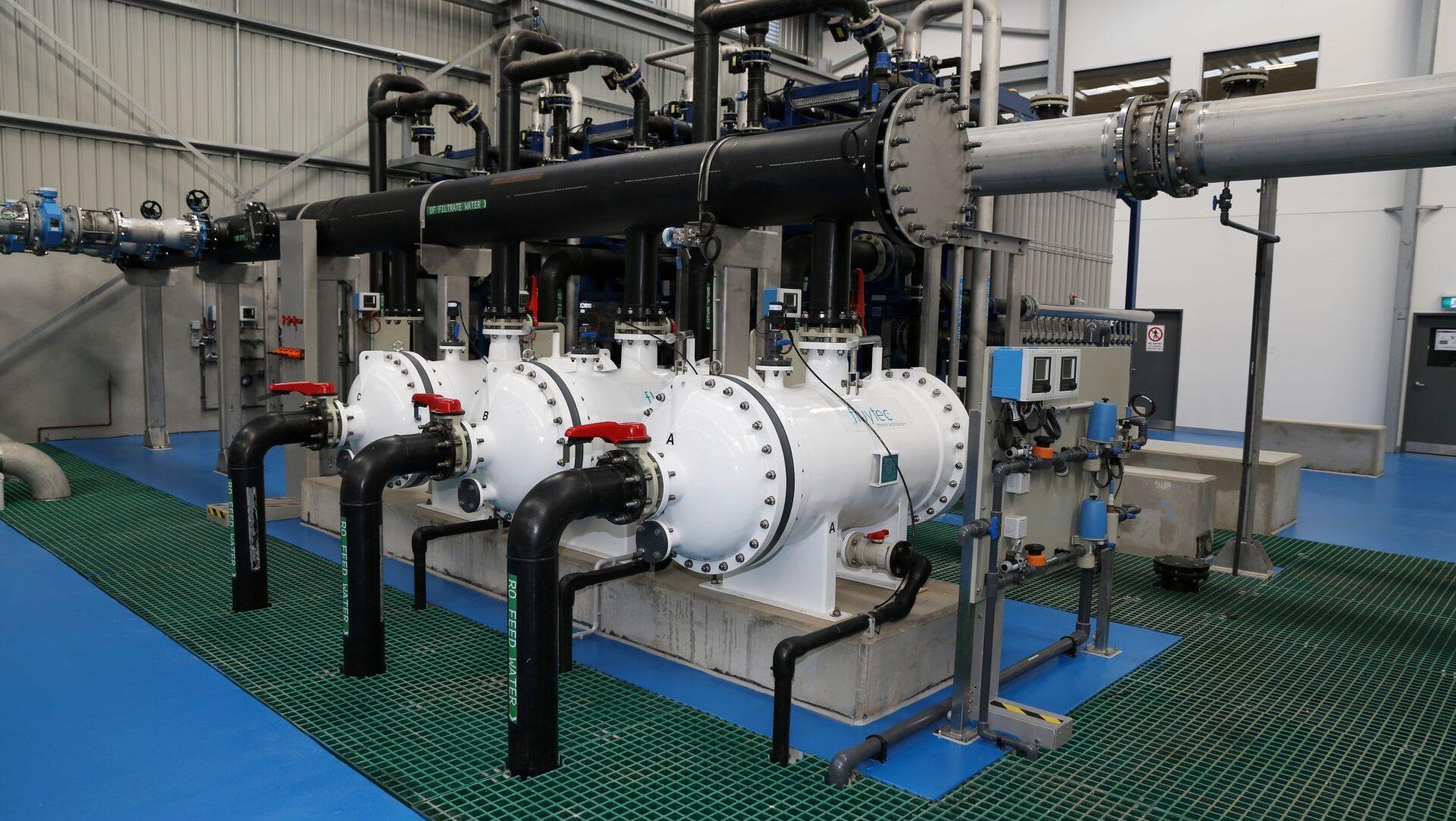
The treatment scheme follows a multiple-barrier approach combining equalisation, multilayer filtration, cartridge filtration and three independent reverse osmosis lines. This configuration stabilises feed quality, protects membranes and ensures consistent performance, with recoveries in the range of 70–75%.
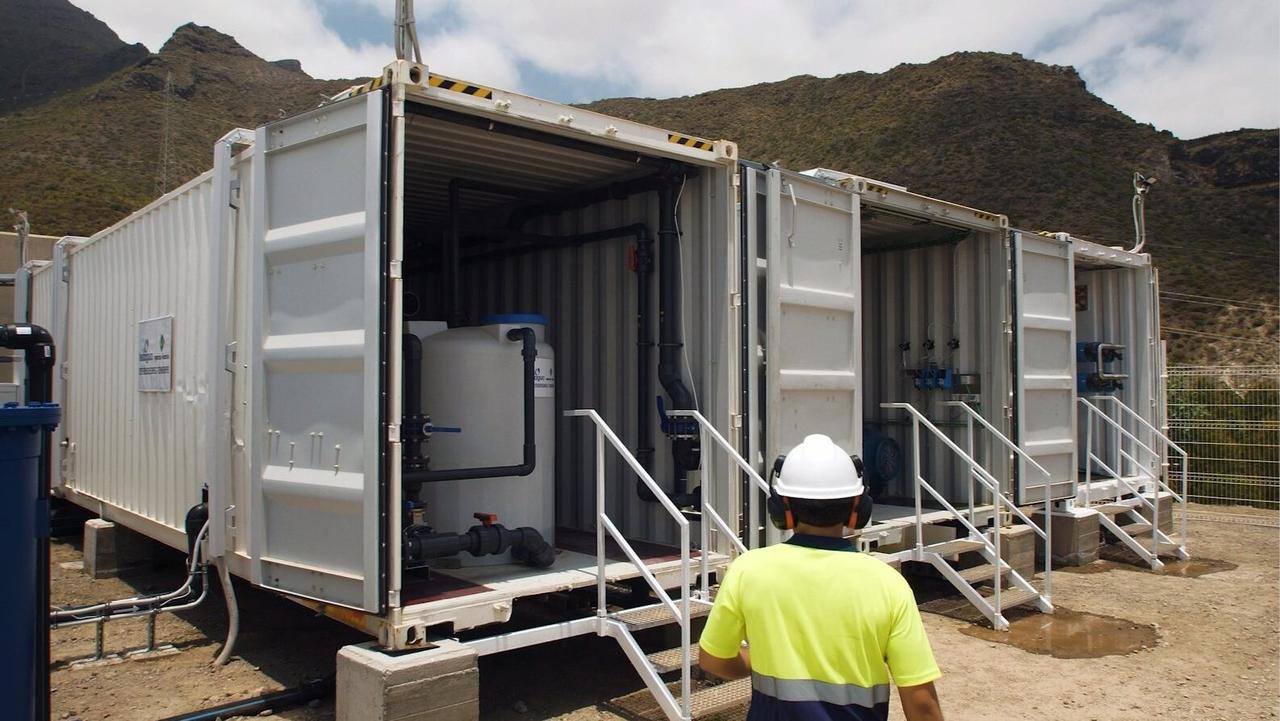
From an implementation standpoint, the plant is based on modular equipment with limited civil works, enabling rapid deployment and flexible operation. The use of independent lines enhances operational resilience and facilitates maintenance without compromising production, while allowing future expansion through additional modules.
Beyond its technical performance, this project illustrates a replicable model for accelerating reuse deployment under demanding conditions. The integration of robust pre-treatment, advanced membranes and modular architecture demonstrates how high-quality water can be produced reliably while maintaining scalability.
The Adeje-Arona case also highlights TEDAGUA’s capability to design, integrate and operate advanced reclamation systems, combining technological excellence with practical implementation strategies aligned with real project constraints and evolving demand.
Water reclamation requires more than outlet quality: it demands operational robustness, traceability and control under a risk-based approach
Conclusions
Water reuse is consolidating as an essential component of water infrastructure under a regulatory framework based on risk management and multiple barriers. Achieving its full potential requires solutions capable of delivering reliable performance within constrained timeframes and investment conditions.
Compact modular plants represent a highly effective response to these challenges. Their ability to minimise civil works, reduce implementation times and scale capacity progressively makes them particularly suitable for accelerating reuse. Technologies such as membrane filtration, advanced oxidation and UV disinfection form the backbone of these systems.
The Adeje-Arona WWTP demonstrates that this approach can be successfully implemented at scale, providing high-quality reclaimed water while maintaining operational flexibility and scalability. In this context, TEDAGUA’s experience and technical expertise position it as a key partner in the deployment of advanced and reliable water reuse solutions.