Envirosuite: turning data into intelligence for better environmental performance
It is time for this year’s last issue of Smart Water Magazine Bimonthly. We wanted to take a look at how the water sector is mobilising to integrate water security and sustainability ambitions into their work.
Cover story: Software providers must connect with industry professionals & enable them to do their jobs better →

“Utilities are coming together to look for county-wide solutions in ways that also promote equity”

“When communicating about water, striking the balance is essential”

“In the future, circularity, recovery of nutrients and energy from wastewater will be crucial”

Infrastructure intelligence, water, and sustainability meet at Year in Infrastructure conference

Ari Veltman, WFI Group: “The role of decentralized systems is expected to increase significantly”

“The EchoWater Project truly is the legacy project for the modern day iTwin”

“The Commission proposal for the UWWTD addresses energy neutrality, not climate neutrality”

“The consequences of not reducing leakage as demand grows are too high a price to pay”

The development of SDG 6 and Tedagua’s contribution towards the goal

Marcos Barrera, Aganova’s COO: “The next decade will be the decade of optimization and efficiency”

Water security: a shared understanding to achieving sustainability through innovation

From sewer to river: environmental monitoring tools designed for agility

The need to leverage responsible AI to transform water management

Sustainability at the heart of WEG’s activities

Regulatory barriers for PPPs and the perspective of private sector companies

“We are moving towards more sustainable and efficient water services”

Rethinking funding structures for youth-led WASH entrepreneurs in achieving SDG 6

The rationale for prioritising sustainability

From scarcity to security: dealing with water stress in Spain

Bigger, smarter, cheaper: Europe private water concessions evolve

Water Biosense, real time monitoring of agents of interest in water

Urgency, challenges, and digital transformations in achieving global water security and SDG 6
It is time for this year’s last issue of Smart Water Magazine Bimonthly. We wanted to take a look at how the water sector is mobilising to integrate water security and sustainability ambitions into their work. As the world feels the effects of a changing climate more intensely, the urgency of water-related challenges is glaring at us. In this issue, we can read how water sector actors, each from their niche, are doing their part to advance towards a more water secure world. Our cover features Colby Manwaring, who this year joined Envirosuite's Board as a non-executive director; in an insightful interview, he underscores the importance of software technology in water management, to enhance efficiency, promote sustainability and ensure water quality. We must accelerate efforts, collectively, to ensure availability and sustainable management of water and sanitation for all, and that encompasses many fronts. On the business side, partnerships between private and public actors can fast-track infrastructure development and the uptake of innovative technologies, as Carlos Cosín, CEO of Almar Water Solutions, remarks in an article in our business section. Collaboration and innovation are imperative to address the challenges ahead and ensure water security; you can read more about the many faces of innovation in a feature by Isle Utilities in our digital section. Whether it is advanced treatment systems, digital technologies, innovative policy approaches, or climate-smart solutions, various interviews and features across our usual sections discuss different aspects that contribute to the overarching goal of global water security and in particular SDG 6. Be sure to browse them all in Smart Water Magazine Bimonthly 20.
Features
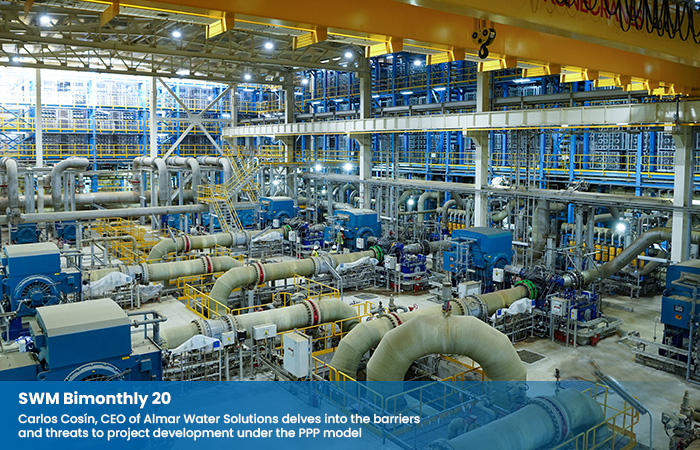
Carlos Cosín, CEO of Almar Water Solutions delves into the barriers and threats to project development under the PPP model.
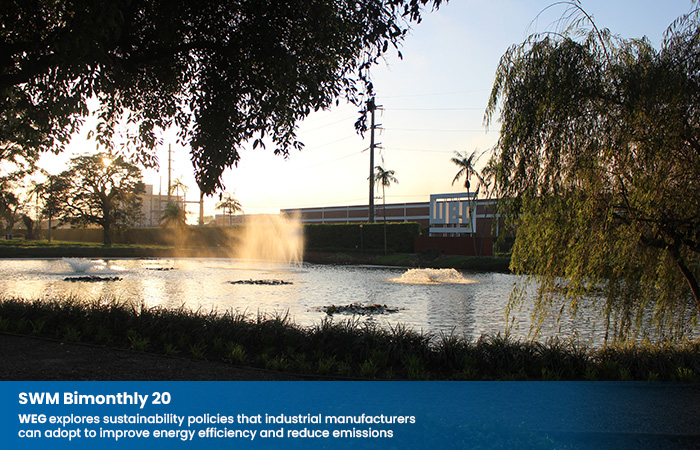
WEG explores sustainability policies that industrial manufacturers can adopt to improve energy efficiency and reduce emissions.
Badger Meter’s environmental monitoring tools enable water utilities to take action on water pollution and invest in compliance.

Isle Utilities explores the crucial role of water security to advance the Sustainable Development Goals and achieve water resilience.
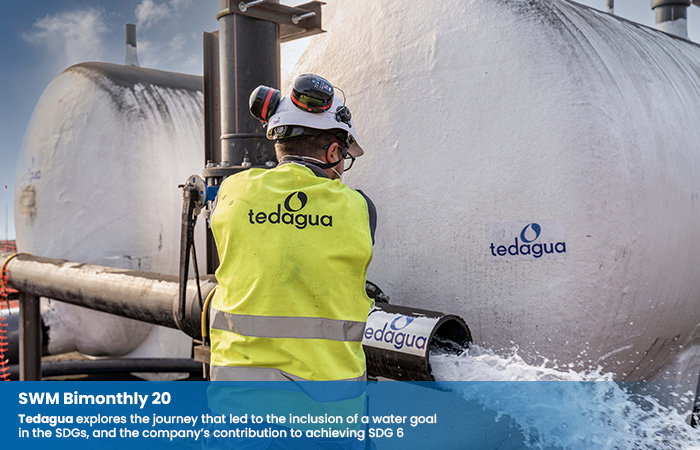
Tedagua explores the journey that led to the inclusion of a water goal in the SDGs, and the company’s contribution to achieving SDG 6.
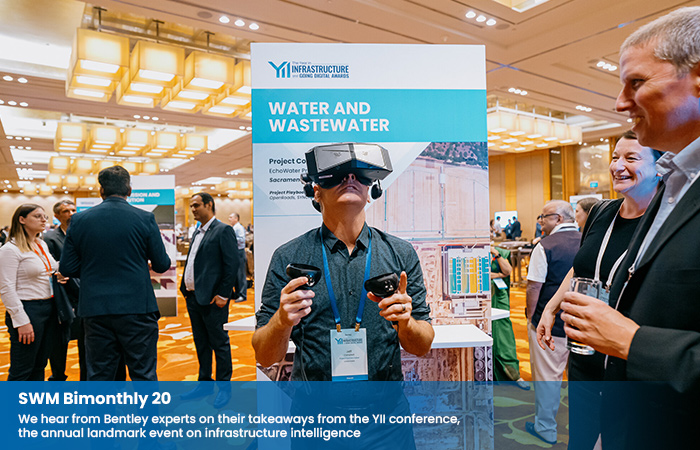
We hear from Bentley experts on their takeaways from the YII conference, the annual landmark event on infrastructure intelligence.
Interviews
Interview with Colby Manwaring. Non-Executive Director, Envirosuite Board
- The topic of digital twins is a fairly natural extension of the water system simulation technology that I have worked with for over 2 decades
- Software systems that assist in infrastructure asset performance management are becoming the norm for utilities, public agencies, etc.
- The significance of software in water management lies in its ability to enhance efficiency, promote sustainability, ensure water quality
- It is not about the software, no matter how impressive it is, it is about the water professionals, the people, who adopt the technology
- Democratization of software technology and data is key to maximum impact: more people using software solutions is better than an elite few
- Applying software technology to complex environmental problems is the best way to understand and ultimately solve those problems
- Professional-grade software is more secure than the average utility or public agency creating their own software and computing environments
- As infrastructure ages, digital twins offer cost-effective solutions by simulating scenarios and predicting maintenance needs
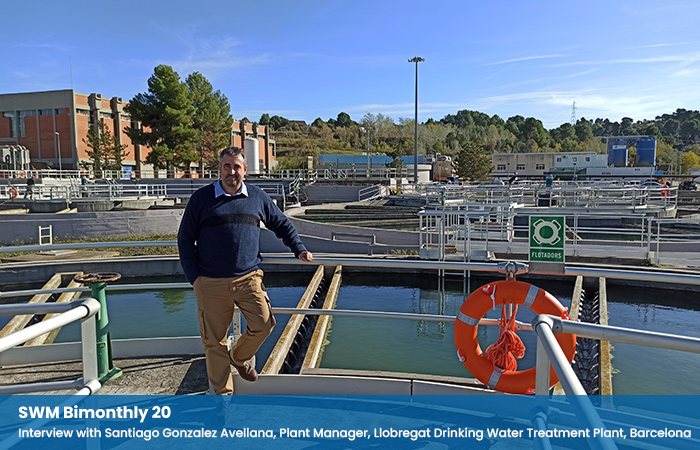
Interview with Santiago Gonzalez Avellana, Plant Manager, Llobregat Drinking Water Treatment Plant, Barcelona
- Desalination plants in places like Almeria, where you can find the Filtralite® solution, Valencia, and Catalonia have alleviated water stress
- Filtralite®, the filter media solution from Saint-Gobain group, has been implemented in the Llobregat DWTP in Barcelona, managed by ATL
- To optimize the filter run and reduce washing costs, Filtralite was tested on an industrial scale on one of the 12 filters of the plant
- The results showed that with the Filtralite® solution, the filtration run times were increased, reducing the number of washes by 66%
- With the Filtralite® solution it was possible to work with higher filtration velocities than with conventional sand, even exceeding 15 m/h
- Taking into account savings in energy, washing water and other aspects, we have calculated a ROI of approximately 2.3 years
Interview with Marcos Barrera, COO of Aganova
- Our mission is clear: to bring to the market affordable solutions that through periodic use reduce drinking water losses globally
- Aganova's technology brings digital innovation and tools for direct inspections in the field, from the inside of the pipelines in service
- We have adapted our structure to the commercialization of technology and service contracts on a subscription and pay-per-use basis
- The combination between digitalization and physical inspection devices allows to remotely manage many simultaneous projects anywhere
- The Jábega® wired solution, with acoustic and visual CCTV inspection, for in-service pipelines, can investigate up to 600 m per inspection
- Persian Gulf countries do annual inspections of their arterial water mains with Nautilus® and they plan upgrade or replacement actions
Interview with Wändi Bruine de Bruin, Provost Professor of Public Policy, Psychology and Behavioral Science at the University of Southern California (USC); Josh Inwald, social psychology PhD student at USC; and Marc Yaggi, CEO of Waterkeeper Alliance
- The science has shown that global climate change is largely driven by human-caused emissions of fossil fuel production and combustion
- Waterkeeper Alliance advocates for phasing out offshore drilling and bringing an end to all new fossil fuel expansion projects
- Second-order effects of climate change will negatively impact water security in the realms of waterborne illness and geopolitical conflict
- Saltwater intrusion in drinking water systems causes a briny taste, corrode plumbing, and other water treatment infrastructure impacts
- Before COVID, it was widely understood that over half the hospital beds in the world are filled with people suffering from waterborne diseases
- People are more likely to report being concerned about their water safety if they are also concerned about severe weather events
- People’s concerns about water safety are more likely to be informed by their concerns about severe weather than by climate change
- Communications about climate change are often needlessly complex and use climate jargon like “mitigation” and “adaptation”
Interview with Dr Ari Veltman, Chief Business Officer – WFI Group
- With a decentralized approach, treatment facilities and execution will be spread and done at local points – closer to the source
- Planned and leveraged correctly, decentralized solutions can be a crucial component in planning for circular economy through reuse
- The economic benefits of treating the wastewater locally can be huge and turn what was traditionally a huge economic burden to a strategic asset
- There are a number of possible concerns when considering a decentralized solution, but a new generation of technologies addresses them
- The TAYA solution allows a small community to generate high quality effluent from its wastewater, without sophisticated operational needs
- There is lack of familiarity and trust on new available technologies, and to top that, there is of course the financial barrier
- I expect to see the regulator and central authorities take an increasingly active role in identifying and validating new technologies
- Decentralized wastewater treatment can provide non-potable water for irrigation, to be used locally instead of potable water resources
Interview with Barbara Hathaway, Technology Leader for Leakage Solutions at Ovarro
- It is not economical to replace every water pipe, so we need to embrace tech to guide us in how best to use the available money wisely
- With the effects of climate change, we are seeing more frequent drought and flood events, which will affect and weaken infrastructure
- Ovarro’s new as-a-service platform LeakNavigator is a tangible example of how closer working with suppliers can bring more efficient outcomes
- Our leading Enigma3hyQ loggers use immersed acoustic hydrophone sensors that listen to sound waves inside the pipe to pinpoint leaks
- Thames Water selected LeakNavigator to deliver a three-year leakage reduction contract. The sensors provide a daily call-in with leak data
- Ovarro’s aim is to “connect big data to make a big difference”. By looking at the bigger picture, I feel that we are able to achieve this aim
Interview with Tyler Jones, National Business Line Executive – Water at WSP
- Going forward, localized retreatment of greywater must also be seen as critical because it reduces the per capita water demand
- Pumping recycled water (sewage that has been safely treated) back into the ground can help restore aquifers and store water for later use
- The WRF and WSP partner on a project to understand the barriers utilities face, and opportunities to prepare for unexpected events
- Source water management strategies are a starting point for meeting PFAS regulations until more efficient treatments are available
- Our Equity Center of Excellence provides services to create places, infrastructure and experiences that improve quality of life
- We were recently recognized in Fortune’s annual Change the World list, which honoured companies having a positive social impact
- By considering current, emerging and anticipated trends, our Future Ready approach ensures our solutions are ready for an ever-changing future
- AI will help us with initial legwork and verifiable predictions, helping communities prepare for a more water-secure future
Interview with Satish Tripathi, Managing Engineer at City of Houston
- The City of Houston has been a frontrunner in embracing new technologies, developing its workforce alongside technological advancements
- My advice to fellow utility managers: treat data as an essential asset and invest in its acquisition and management wisely
- We're collaborating with Amazon Web Services (AWS) to create a data lake for our extensive datasets and establish secure connections
- I am a proponent of open data, and I firmly believe most of the data can be made public without compromising the cybersecurity concern
- Digital transformation supports sustainable water management by making it more efficient, transparent and adaptable to human needs
- I had the privilege of participating in Duke University's WILD programme, a high-calibre initiative for up-and-coming water management leaders
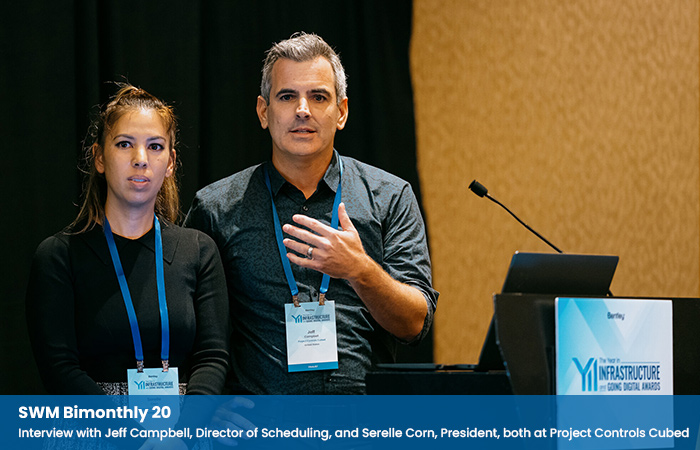
Interview with Jeff Campbell, Director of Scheduling, and Serelle Corn, President, both at Project Controls Cubed
- The EchoWater Project had a budget of $2.1B, and Regional San estimated over $1B in construction contracts for new treatment facilities
- The EchoWater Project federated all the design models, schedule activities and cost into a digital twin used for over a decade
- iTwin federates 3D models into a single digital tool that so far no one has used to its full potential, due to its sophistication and power
- The client, Regional Sanitation, drove the evolution of the digital twin, coming up with all the greatest innovations that we see today
- The $400 m in savings will fund the Harvest Water Project, which will add to the EchoWater digital twin with new pipelines and facilities
- With the ever-increasing complexity of projects in modern day it’s almost impossible to succeed without the use of Bentley’s 5D iTwin
- Digital delivery connects stakeholders regardless of their physical location: situational awareness is readily available in the cloud
Interview with Gari Villa-Landa Sokolova, Senior Water Policy Advisor at EurEau
- EurEau welcomes the Council’s General Approach on the UWWTD (recast) adopted as well as the European Parliament’s Position
- EurEau would have liked to see a broad control at source approach, a key strategy for an effective protection of water resources
- We appreciate the text in Article 9 on EPR and we are glad to see certain recognition of the sectors’ reality regarding energy neutrality
- We look forward to the trilogues, hoping for a final text that allows water operators across Europe to tackle remaining pollution sources
- EPR is one of the tools to implement the Polluter Pays Principle, a key principle underlying the European Union’s environmental policy
- We are glad to see the recognition (to a certain extent) of the sectors’ reality regarding energy neutrality in the General Approach
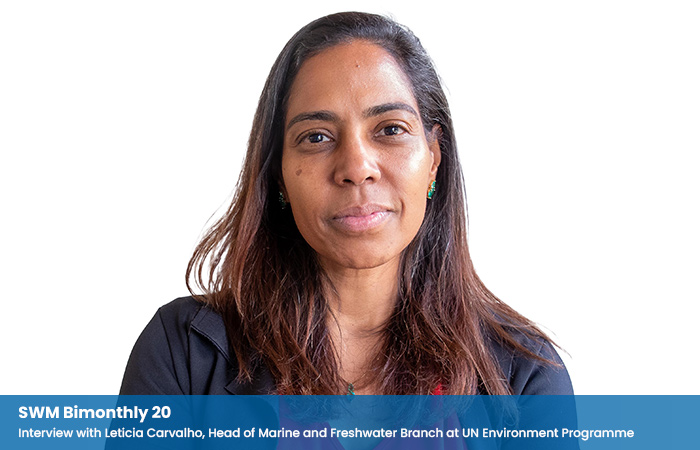
Interview with Leticia Carvalho, Head of Marine and Freshwater Branch at UN Environment Programme
- The GWWI has worked to change the paradigm of how wastewater is commonly seen, from simple waste to a valuable and rich resource
- The report speaks to the crucial role that wastewater plays in climate change adaptation and sustainable nutrient management
- The opportunities for wastewater are many: there is five times more energy contained in wastewater than is needed to treat it
- In many cases, sustainable wastewater management means decentralizing away from conventional and expensive treatment systems
- We are resistant to the idea of eating fruits or vegetables produced with safely treated wastewater, but when done right, we shouldn’t be
- The National Water Agency of Singapore collaborated with a private beverage company to produce a beer made from 100 per cent recycled water
- In the future, reuse of unconventional water resources such as wastewater and others will be paramount and can help achieve water security
Opinion articles
Chloé Meyer, Senior Research Director, Bluefield Research
Iván Iglesias Baena, CEO & CSO of Sensactive Technology
Jacob Kwasi Amengor, Co-Founder, WASH Advancement Centre, Ghana
Juliette Lassman, Policy Analyst. Water Governance, Blue and Circular Economy Unit. Cities, Urban Policies, and Sustainable Development Division at OECD
Jo Dow, CEO of Business Stream