
Hybrid intelligence will define the next decade of wastewater treatment
Digital twins, AI and advanced treatment technologies are transforming wastewater plants into smarter, more resilient water resource recovery facilities.
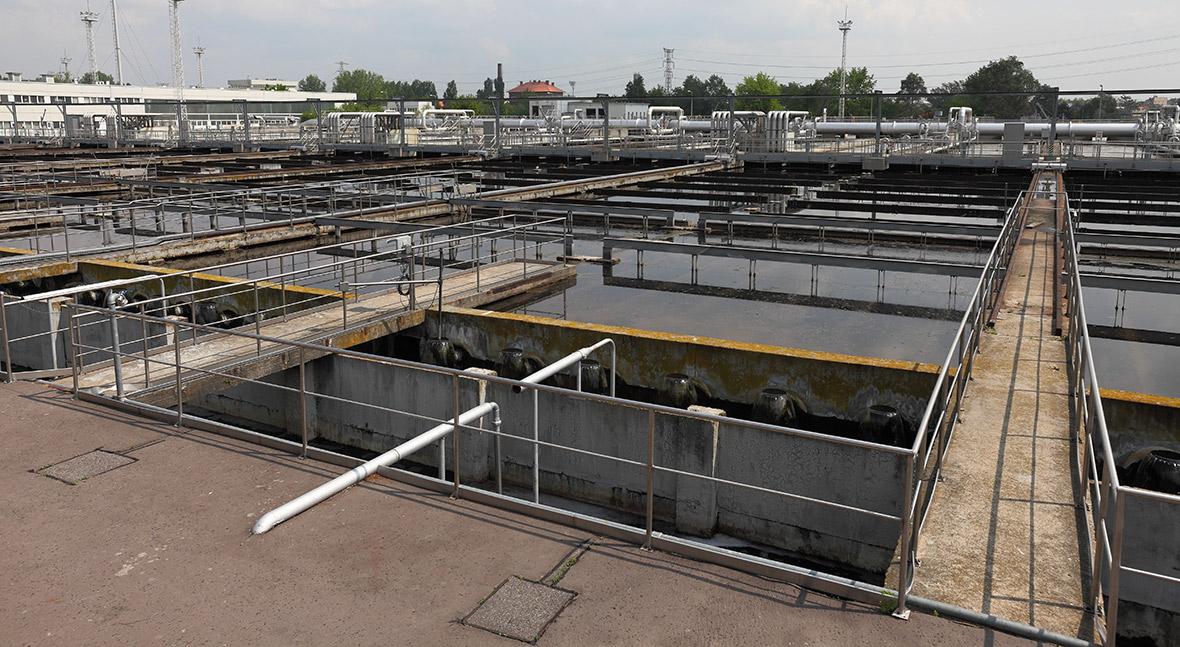
The most important innovation in wastewater treatment is not a single technology, but the integration of different technologies and data into plants that can think, adapt and recover value. We are no longer asking only how to meet a discharge consent, but also how to produce reusable water, cut emissions and make existing assets work better and harder. Driven by regulatory pressure, climate urgency, and technological breakthroughs that are redefining what a treatment plant can do, the change is more than a shift in name from Wastewater Treatment Plants to Water Resource Recovery Facilities (WRRF).
Perhaps the most structurally significant shift is the development of digital twins, virtual replicas combining sensors, process models, machine learning and operator knowledge. It can test, detect, forecast, estimate, optimise and support decision-making at every level and even operate the treatment plant automatically through real-time AI-driven optimisation, moving the operation of a treatment plant from reactive to predictive.
The gap between the state of the art and the average plant remains wide. Data scarcity, heterogeneity, and sensor reliability issues limit model accuracy in real-world applications, and many models are trained in laboratory conditions that do not reflect operational complexity.
The new Directive opens the conversation on the following three subjects. Tertiary treatment is moving from a polishing option to a necessity. Enhanced biological phosphorus removal, post-denitrification, tertiary filtration, chemical precipitation and low-dose carbon control will increasingly be judged by stability, not peak performance. A plant that fails to comply during wet weather or cold starts is not resilient, but operationally fragile.
The weak point will not be technology availability; it will be data quality, instrumentation maintenance and institutional confidence
This is where membranes and aerobic granular sludge (AGS) deserve attention. Membrane bioreactors can produce high-quality effluent suitable for reuse. AGS is exciting because of its capacity for carbon, nitrogen and phosphorus removal in compact reactors with excellent settling. In dense cities, footprint is becoming as important as effluent quality, and the ease of application of these technologies to old infrastructure is a practical response to ageing assets, land scarcity and tougher permits.
At the same time, innovative biological nitrogen removal technologies are gaining increasing relevance in the context of energy efficiency and process intensification. Solutions such as MABR, IFAS/MBBR systems and deammonification/Anammox processes, both for sidestream treatment and, increasingly, for mainstream deammonification, are enabling more compact, energy-efficient and operationally flexible wastewater treatment configurations, especially in retrofit applications where footprint is limited.
Quaternary treatment is the hardest test the sector will probably endure. Ozonation and granular or powdered activated carbon, or a combination of both, are increasingly mature and can reduce many micropollutants.
In the sludge line, the optimisation of anaerobic digestion has become a priority for energy recovery. Thermal hydrolysis processes (THP) have proved transformative, dramatically improving biogas yields and reducing sludge quantities for disposal. More recently, the microbial hydrolysis process, developed by Jacobs, has attracted significant interest as a biological alternative, without the thermal energy demands of THP.
The next decade will reward hybrid intelligence. The weak point will not be technology availability; it will be data quality, instrumentation maintenance, cybersecurity, skills and institutional confidence. A plant cannot be smart if its sensors are neglected or its operators are excluded from the model.
The future WRRF must simultaneously recover energy, reclaim nutrients, protect receiving waters, and remove contaminants that did not exist in the regulatory lexicon a generation ago, with the minimal possible cost. That is an extraordinary challenge and an extraordinary opportunity.