EIT Water, Smart Green Water, Spain Smart Water Summit: an intense EU Smart Water week
·6 min read
EIT Water. Agriculture is the art and technology of turning water into food
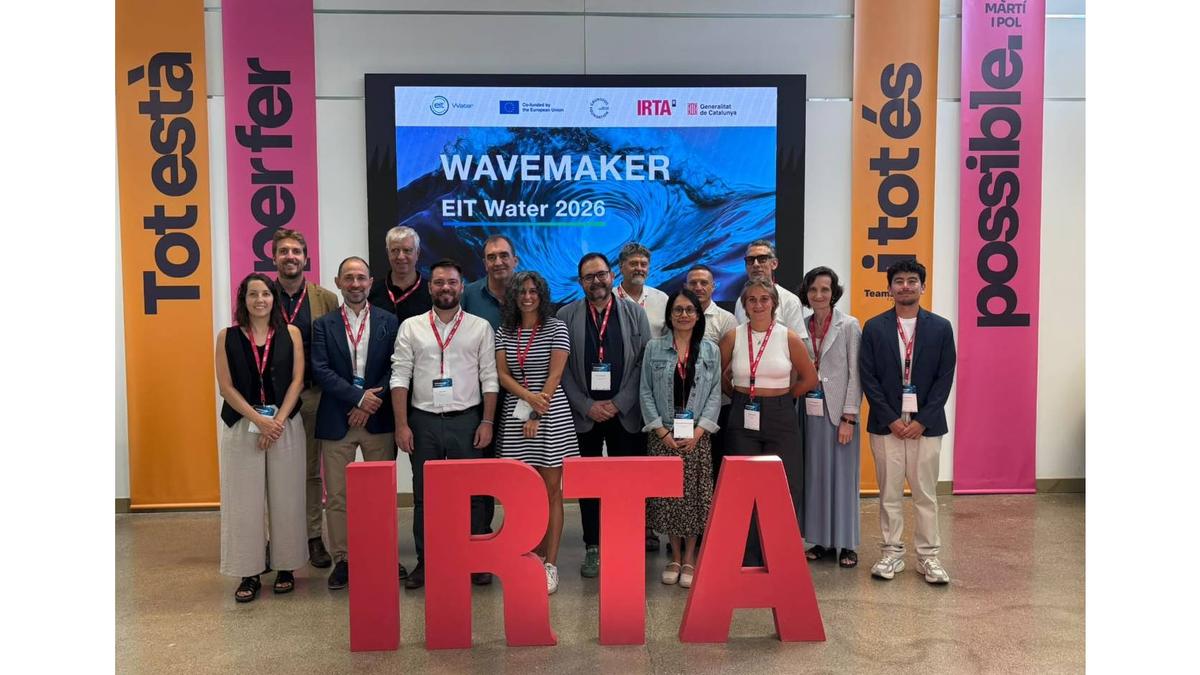
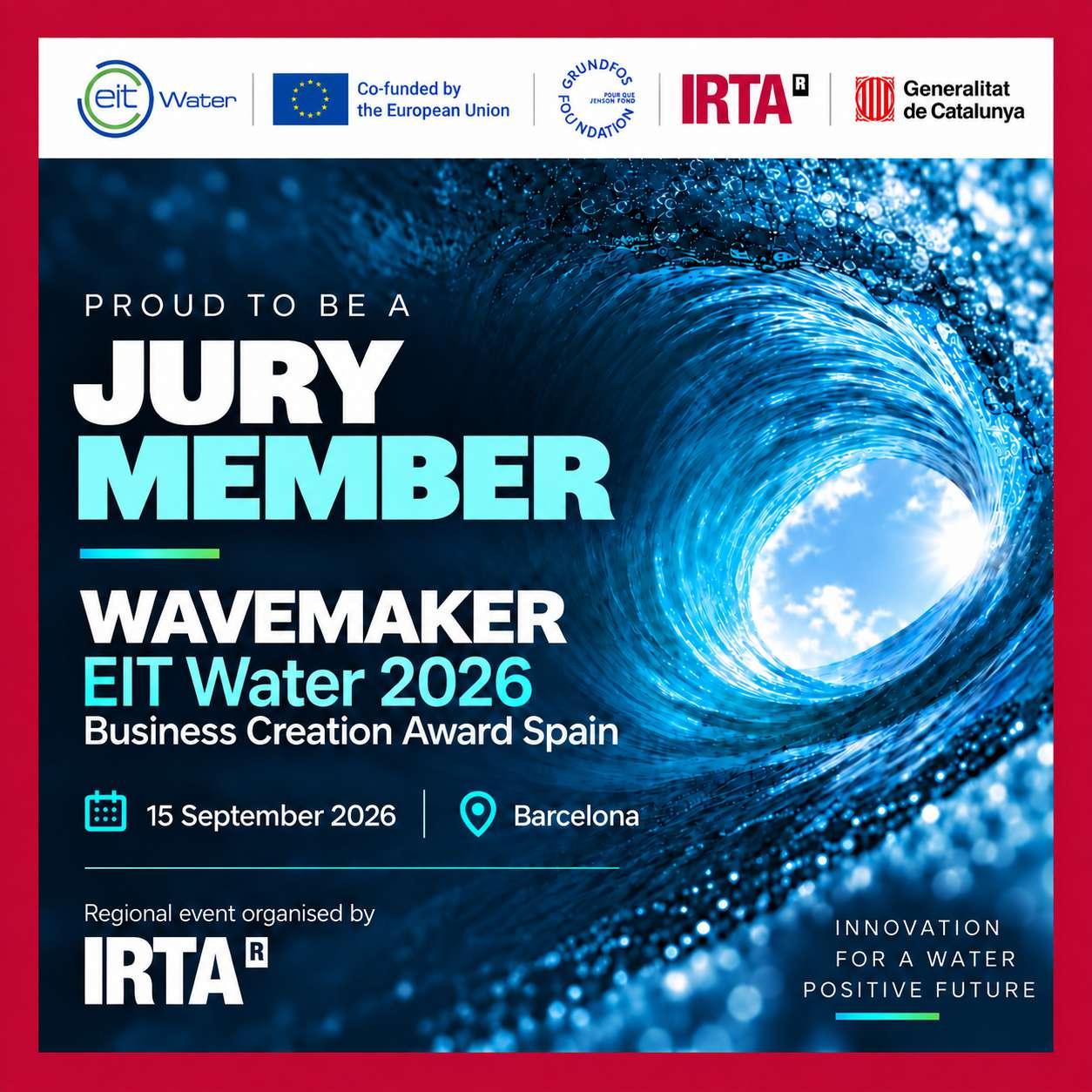
On Tuesday 15 September, IRTA hosted the WAVEMAKER Business Creation Award Spain 2026 at BAC – Barcelona Circular (Sant Andreu). It is EIT Water’s nationwide event for Spain, bringing together startups, spin-offs, and entrepreneurial projects with solutions to water challenges. IRTA has been a core partner of EIT Water since the end of 2025, alongside leading European institutions.
Pep Bantulà, International Projects promoter at IRTA, explained the context of EIT Water and the opportunities opened up by the European water innovation ecosystem.
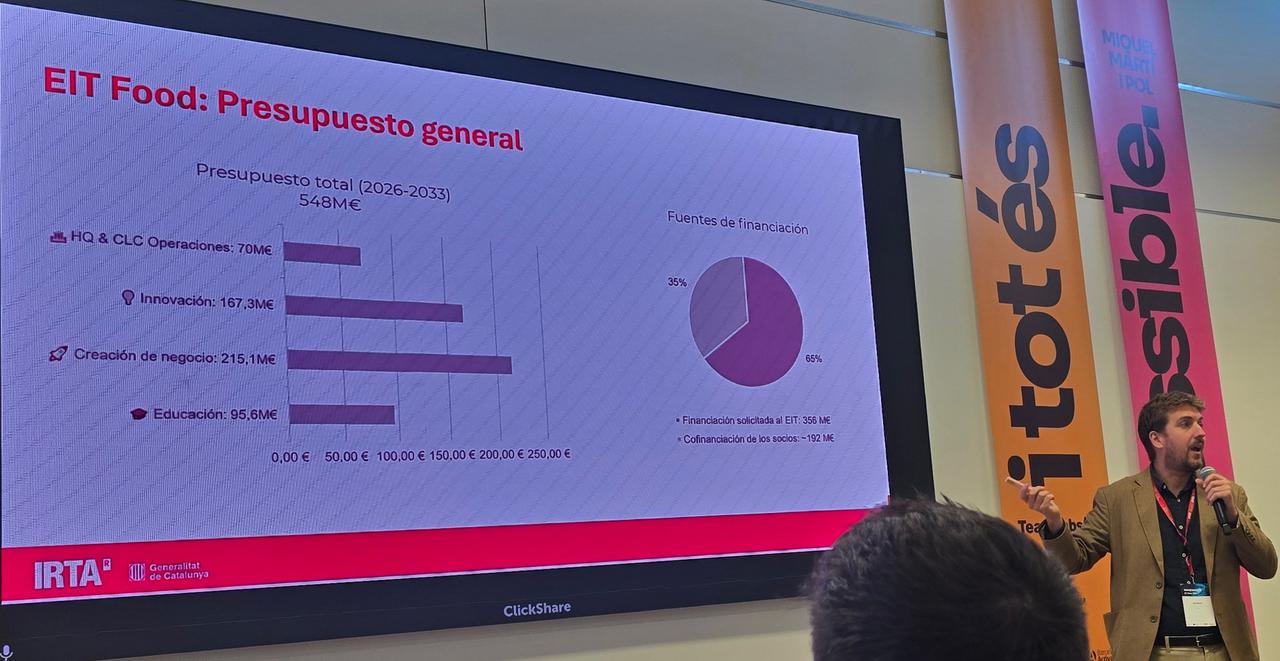
The EIT (European Institute of Innovation and Technology) is a European Commission body that drives innovation communities (KICs) bringing together companies, innovation bodies and educational centres to tackle global challenges. It falls within Horizon Europe, specifically Pillar 3: Innovative Europe. There are currently 7 active KICs. As an example, Pep shared EIT Food’s general budget.
Fig. 1 Pep Bentulà outlining the EIT Food budget.
My role in the event
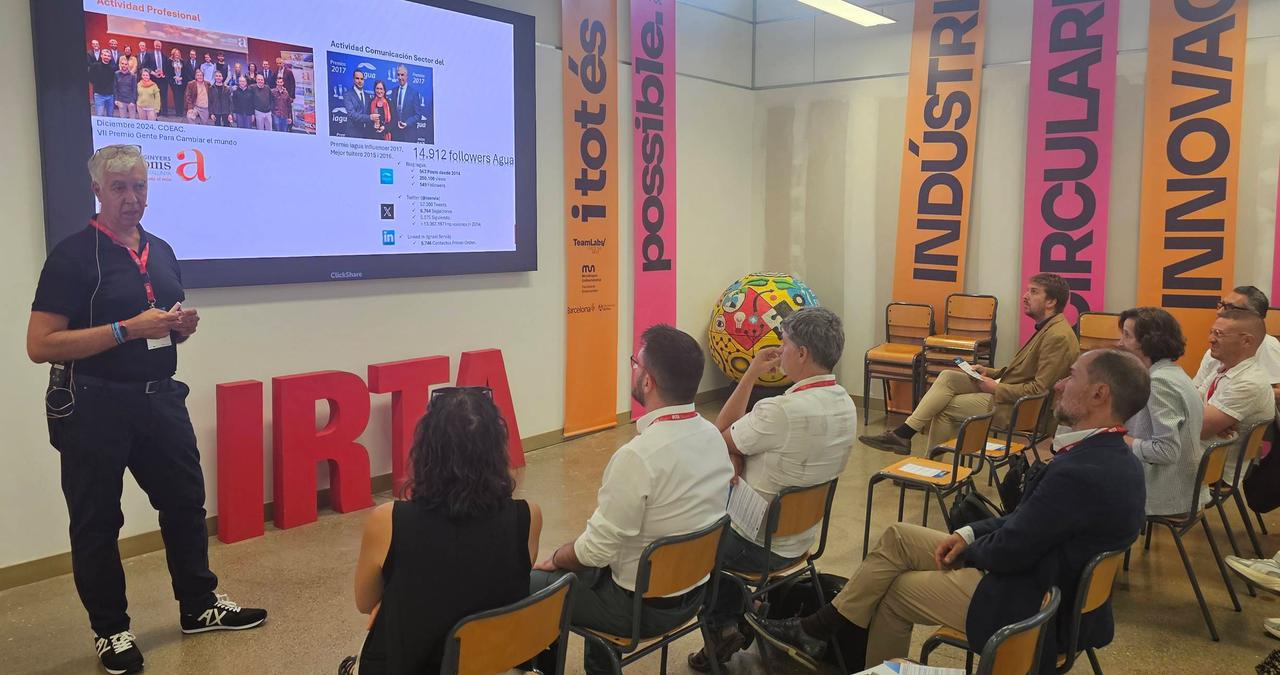
I had a triple role during the day. First I gave the invited talk following the institutional presentation, then I shared experiences with the 4 invited startups, and finally I sat on the jury. I am grateful to IRTA, and especially to Jess and Pep, for their trust and for how well they looked after me during the event.
Fig. 2. Triple role at the event. Presentation, mentor and jury. Fig. 3. Presentation of the water challenges.
The challenges I shared. The idea that sums up my message: in the midst of the climate crisis, water challenges go far beyond how much water we have. We need to explain the role of irrigated agriculture to society, make progress on governance and regulatory compliance and, above all, attract the talent needed to turn all the data we generate into knowledge that helps us decide better.
1. Raise awareness of Global Change. Do we really believe in Global Change? Using the trajectory of the Riudecanyes reservoir and the drought status of the Ter-Llobregat system, I recalled that we must learn to manage extreme values.
2. Communicate the importance of irrigated agriculture.
3. Governance. Define costs for different water uses.
4. Comply with current regulations.
5. Modernise and digitalise.
1. Smart Green Water digitalisation.
2. Water Cycle PERTE.
3. Responsible use of AI.
6. Attract talent
The role of irrigated agriculture
During the presentations, Miguel Angel Cubero shared a phrase from a professor at the Lleida school of agricultural engineering. And in the interviews I wanted to recall it: “Agriculture is the art and technology of turning water into food”.
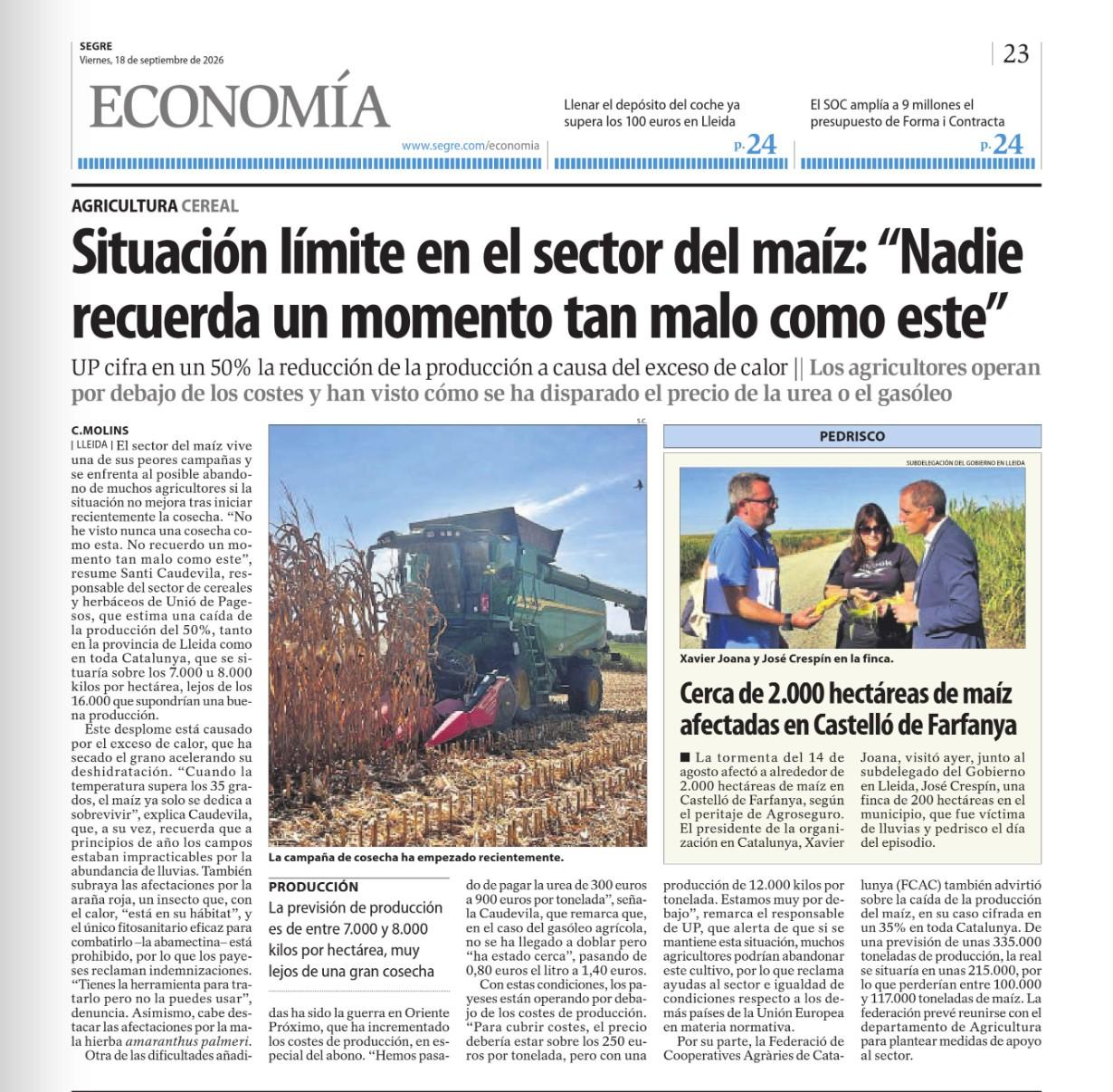
The combination of low rainfall, high temperatures and evapotranspiration that I already discussed in July has meant that yesterday it was news that this year’s maize harvest will be half the usual, according to Unió de Pagesos.
Fig. 4 Segre news item of 18/9 on the loss of the maize harvest.
Talking with Augusto Montamarta, we have just defined the sixth challenge: we must look after talent and also contacts, and I will come back to that in the third point.
Mentors / Jury and organisation
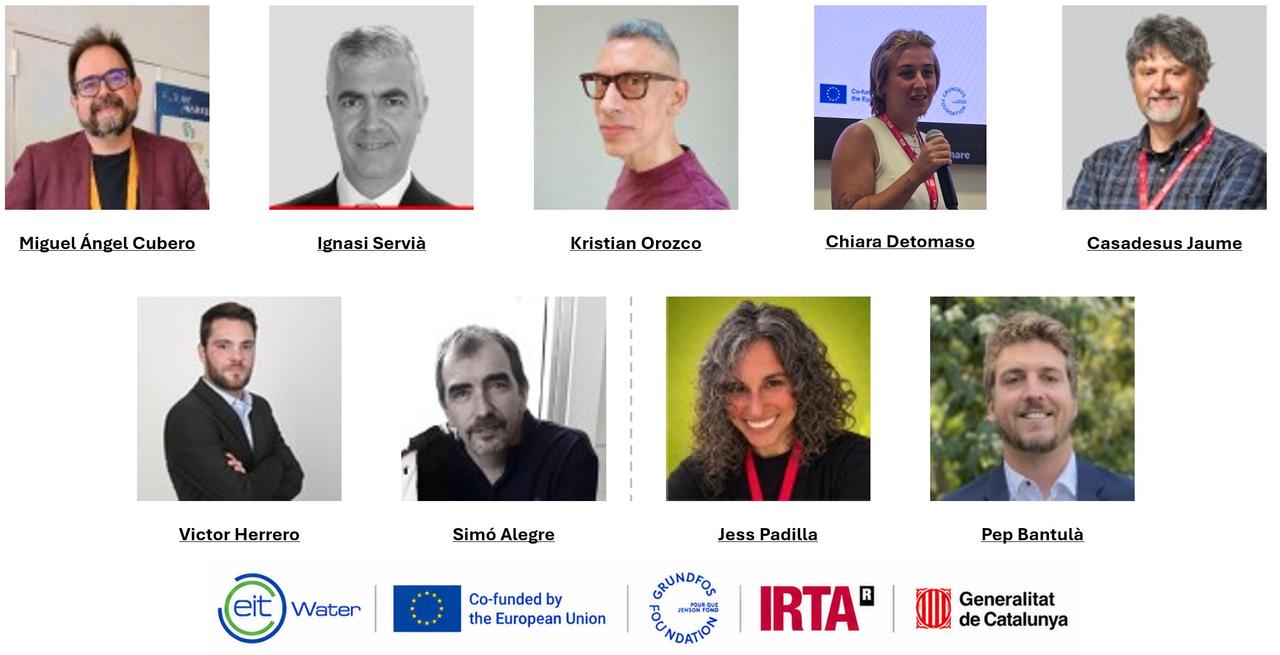
The following figure shows the people who took part as jury members; I have also included Jess Padilla and Pep Bantulà, who coordinated the organisation of the event.
Miguel Angel Cubero
Ignasi Servià
Kristian Orozco
Chiara Detomaso
Jaume Casadesus
Victor Herreo
Simó Alegre
Fig. 5 Wavemaker jury/mentors and organisation.
The invited startups
Acqua-e Group (Augusto Montamarta). The VRT-S biodigester, which cuts wastewater treatment plant sludge by more than 70% without replacing existing lines.
Agrixels / AI4WATER (UPC, Barcelona) works on digital twins for irrigation, able to forecast soil moisture up to 14 days ahead. The presentation was given by Carlos Lopez-Martinez, accompanied by Mercè Vall-llosera.
Electraqua Tech (Fernanda Murrieta) (spin-off, Barcelona) generates hydrogen peroxide on site to remove pharmaceutical micropollutants.
GRAPHEC Water Technologies (Johan Pasos) (spin-off of ICRA, Girona) uses graphene electrodes to destroy PFAS, not just capture them.
Smart Green Water. The challenge of sustaining the PERTE: data-centric water management
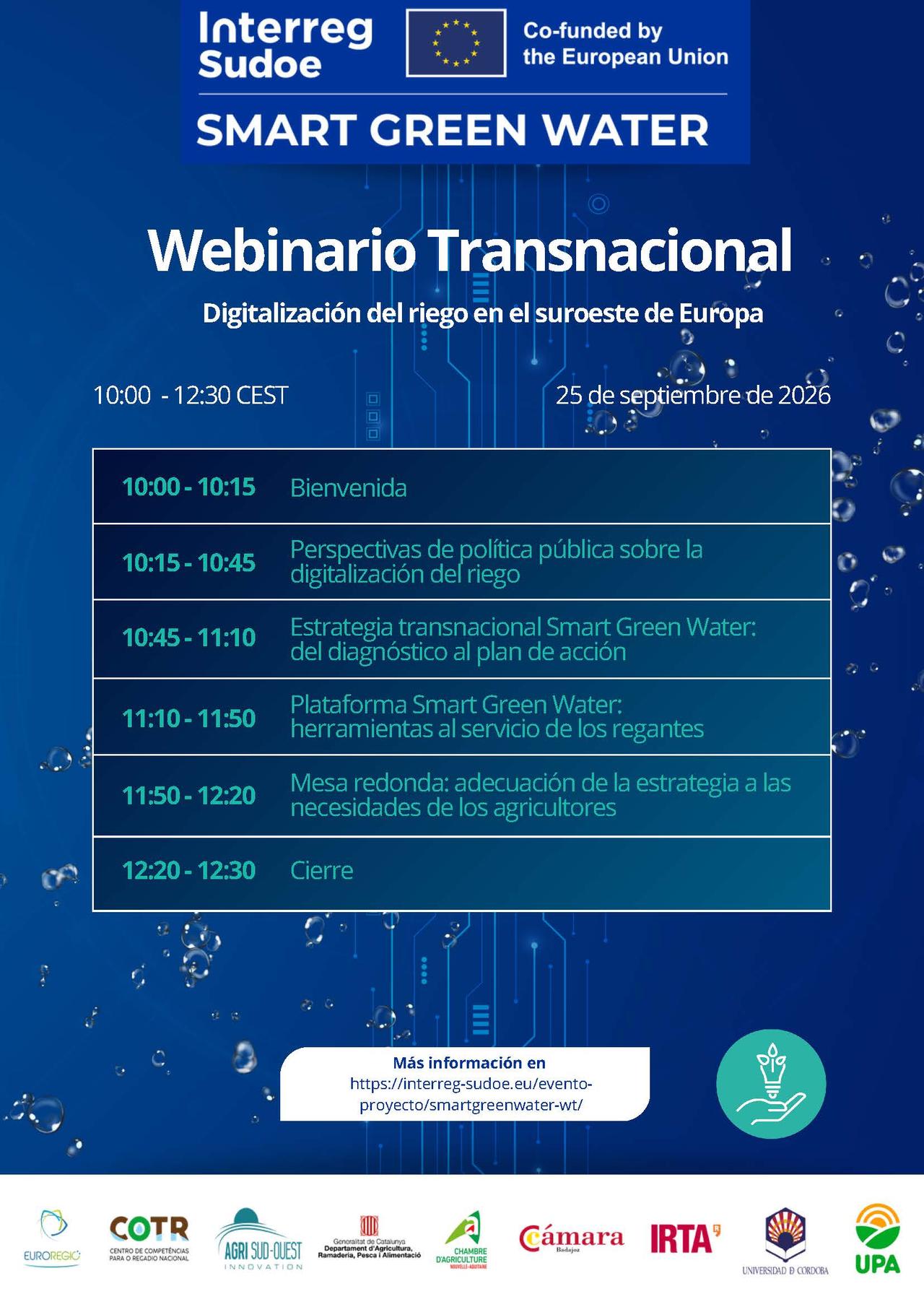
Yesterday I shared the final Smart Green Water event on LinkedIn (see post).
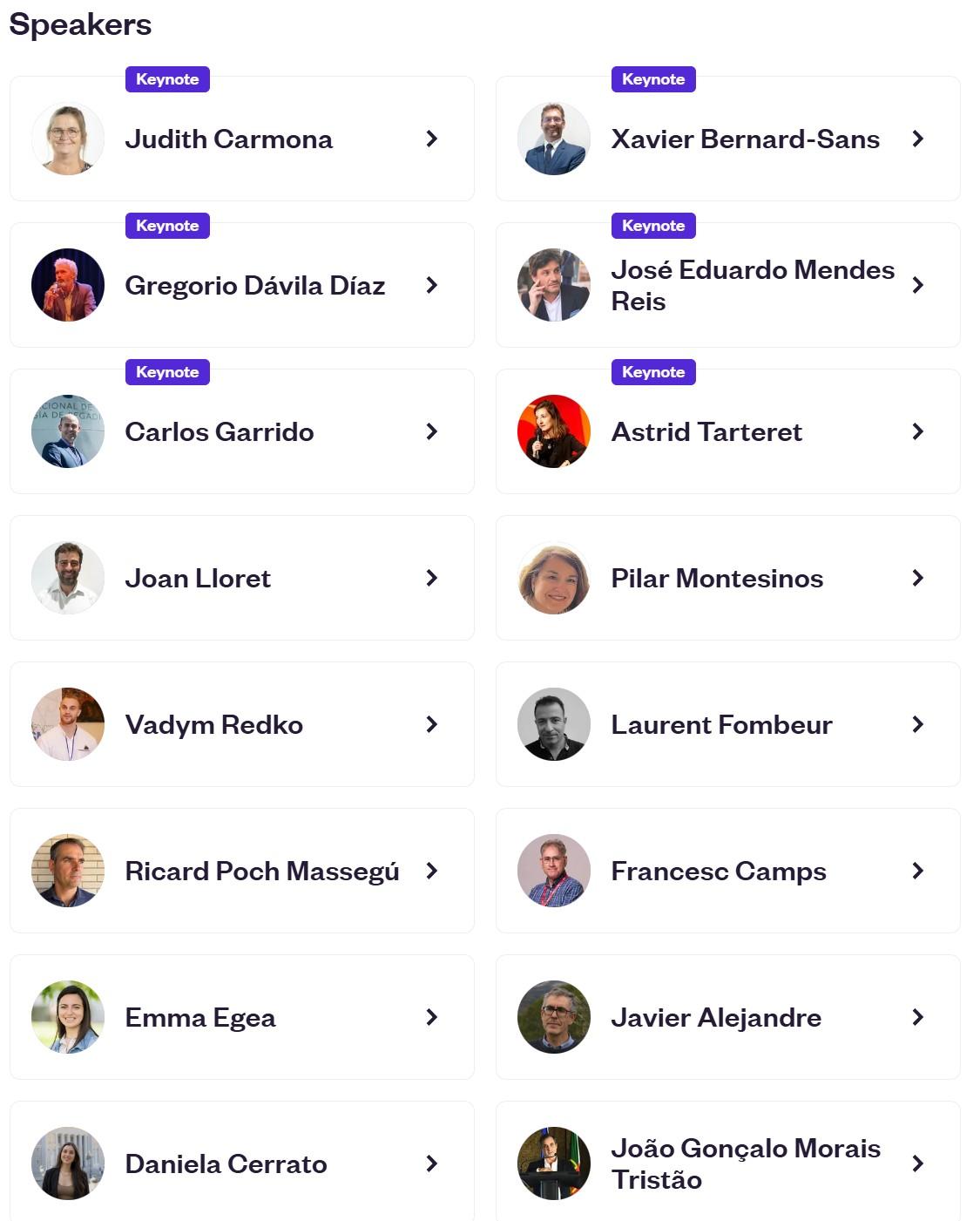
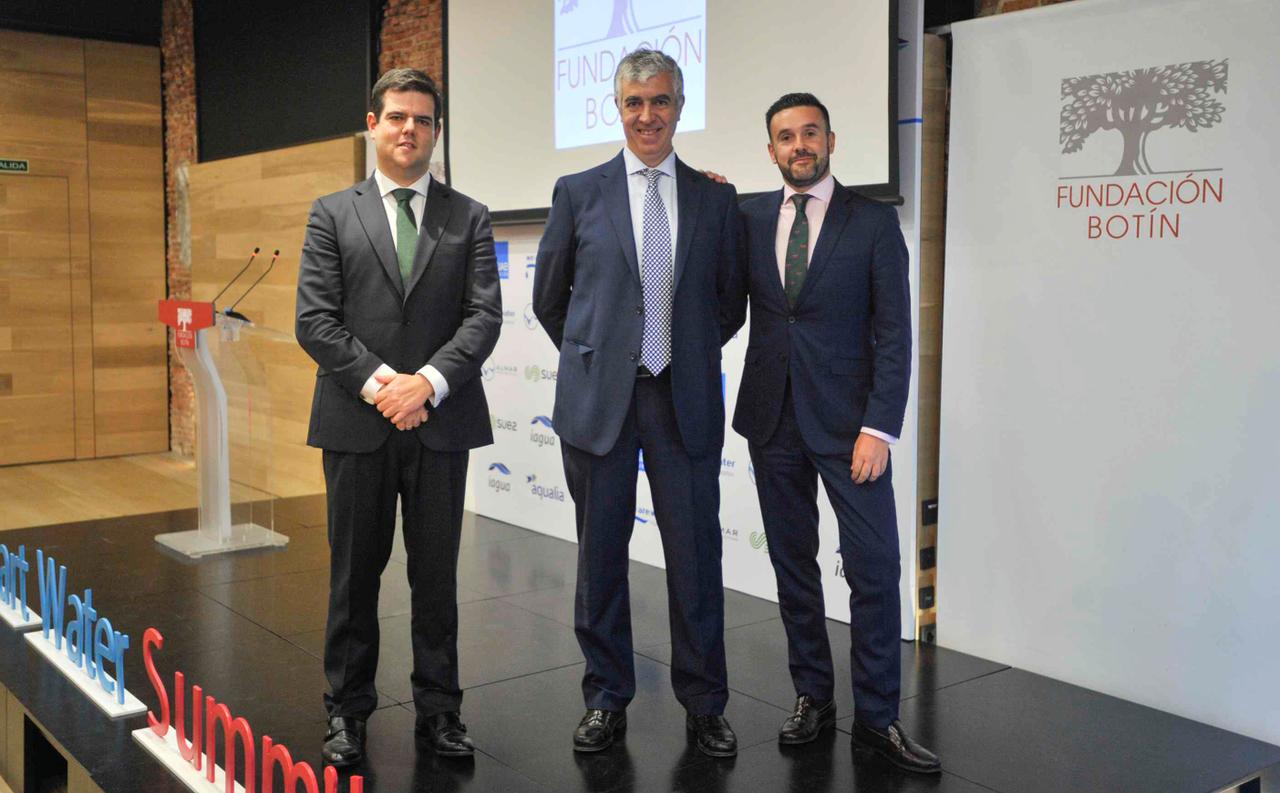
Fig. 6 Speakers at the Smart Green Water Transnational Webinar. Fig. 7 Smart Green Water project partners and Transnational Webinar programme.
Over recent months I have taken part in this project in drafting the strategy prototype, the strategy itself and the Action Plan for Catalonia for the Department of Agriculture of the Generalitat de Catalunya, through a collaboration with NTT DATA.
This event comes 3 months after the PERTE programmes ended, and now begins the stage of data-centric water management and of extracting value from the data we obtain.
Spain Smart Water Summit 2026. Looking after talent and contacts in the water sector
This week iAgua has sent out several updates on the Spain Smart Water Summit 2026. It takes place from 29 September to 1 October at the Meliá Avenida América in Madrid. This is its tenth edition, with three days organised around three verbs: measure, think and decide.
There will be around 35 sponsors, two parallel rooms, regional panels, an Ibero-American session, the CEO Panel and the iAgua Awards. I have been lucky enough to attend every edition.
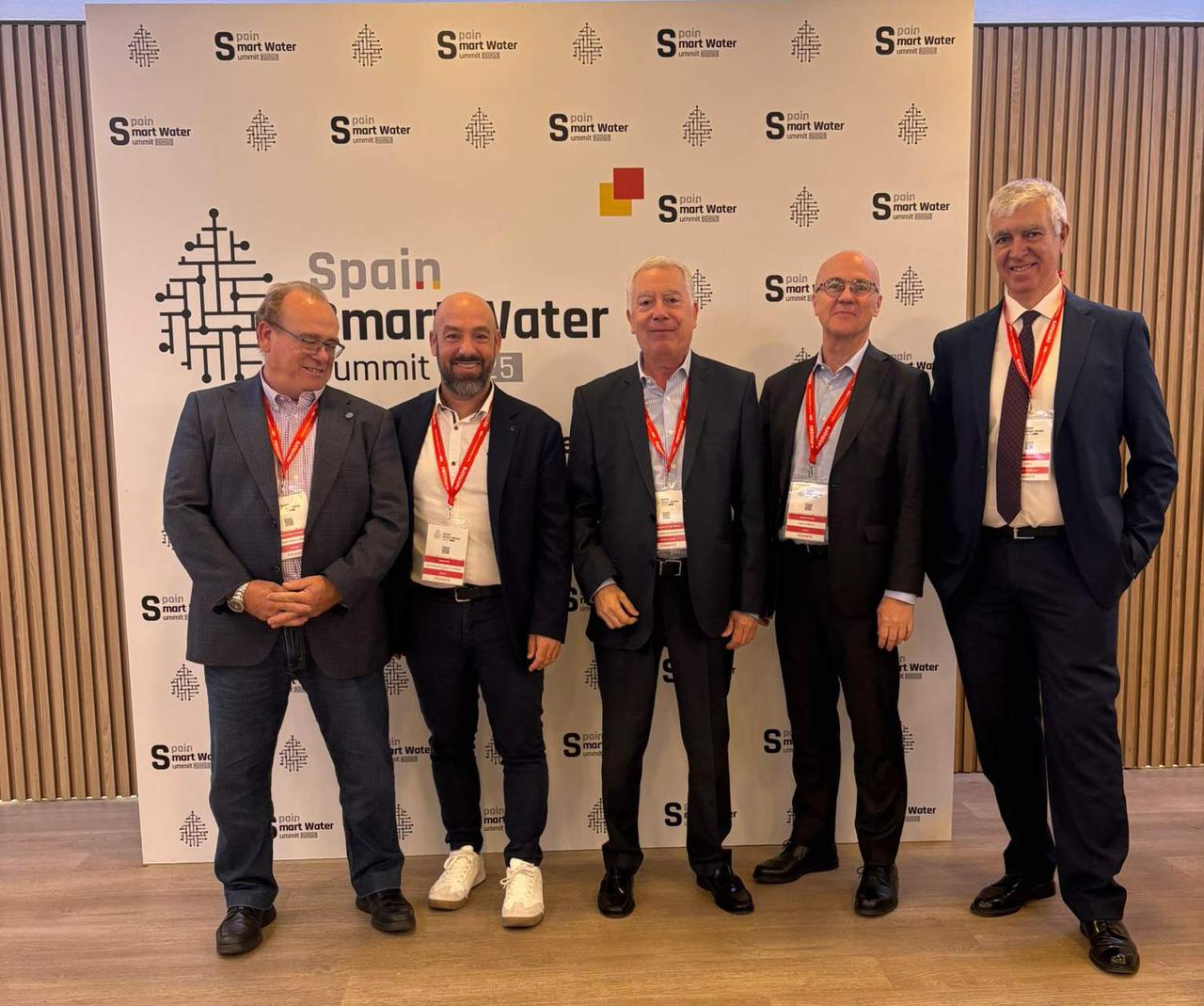
Fig. 8 Attending the first edition in 2017 with Alejandro Maceira and David Escobar. Fig. 9 At the iAgua photocall with colleagues from the Catalan water sector.
The App went live this week and, besides the 125 speakers from 77 different organisations, the 350 registered delegates can now be consulted. I recommend installing the App and planning the event to make the most of it.
I was struck by how many people I know among the attendees, many of them from Catalonia. As I said in the first point, I recommend looking after talent and contacts.
In this edition I will again talk about data (this year I am adding AI), and I will again talk about irrigation. I will explain the work carried out for the Riudecanyes Reservoir Irrigators’ Community. I am very pleased that Miquel Angel Prats, secretary of the community and president of Acatcor, will be there. I have also seen that Paco Fernandez from iriego is speaking, so there will be some more discussion of digitalisation.
The CH Ebro centenary exhibition arrives to Lleida
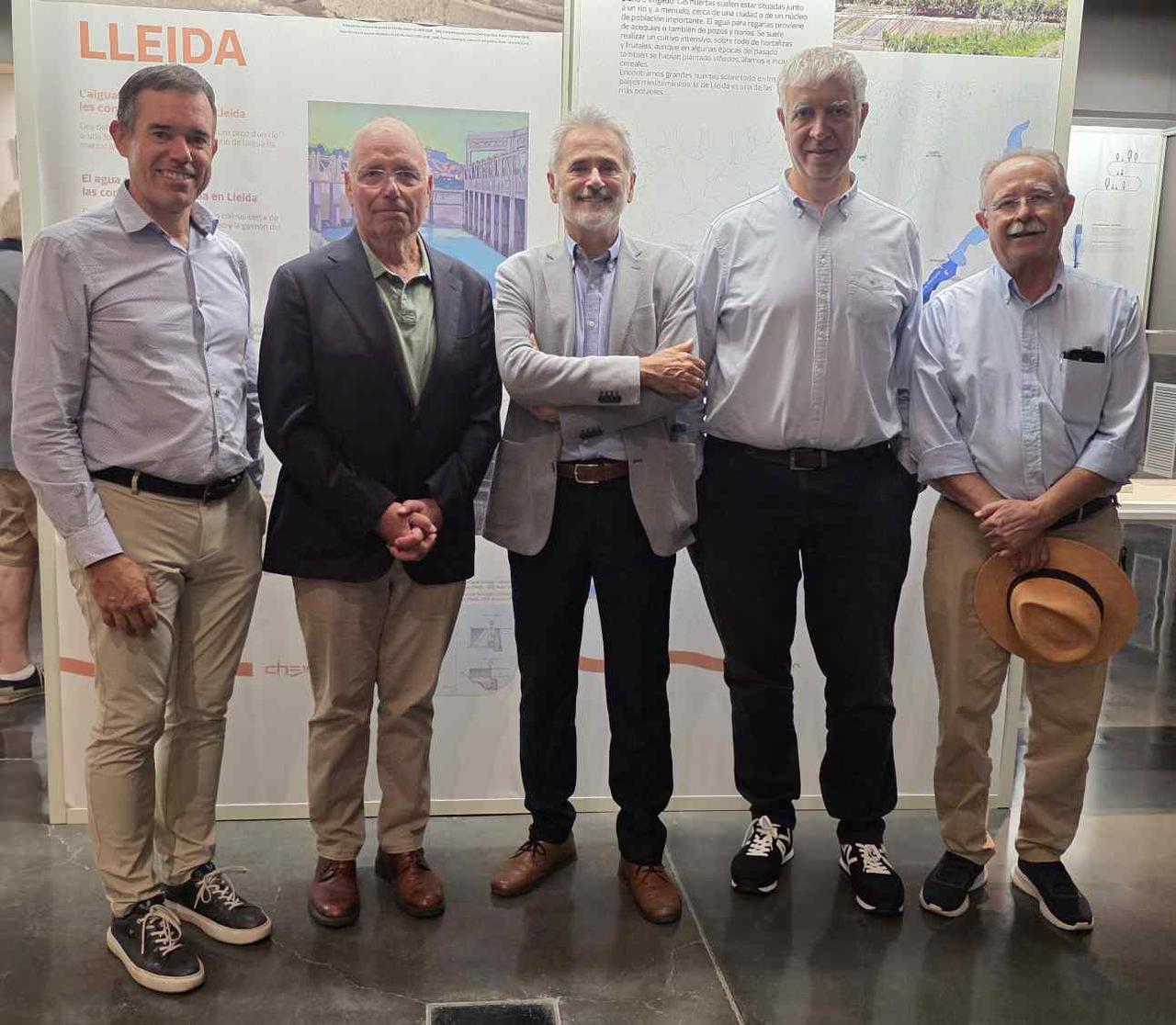
Yesterday afternoon the CHE centenary exhibition opened at the Museum of Lleida. There I was able to talk with colleagues from the Association of Agricultural Engineers of Catalonia, Irrigators’ Communities (Canals d’Urgell, Aragón and Catalunya, Segarra-Garrigues, Garrigues Sud, Canal de Pinyana, Regants de l’esquerra de l’Ebre), professors from the University of Lleida, etc.….
We also had time to talk with Javier San Román, curator of the CHE centenary.
Fig. 10 COEAC with Javier San Román at the CHE centenary exhibition in Lleida. Photograph by Andrea Clavería.