Public contribution to digitalisation to adapt Europe to climate change
1. Public consultation on the digital action plan for the water sector On 28 May, Olivia Tempest published the article “The European Commission launches a consultation on the digitalisation of the water sector”, open unt

1. Public consultation on the digital action plan for the water sector
On 28 May, Olivia Tempest published the article “The European Commission launches a consultation on the digitalisation of the water sector”, open until 24 June. The news followed the European Commission’s announcement on 27 May opening a public consultation process on the Digital Action Plan for the Water Sector.
2. Late-may heatwave
On 27 May, NASA published the article “Heatwave in Europe: Sentinel‑3 Shows Extreme Temperatures from Space”. Media across Europe reported exceptional temperatures.

El País published the article “Heatwave in Europe: seven deaths in France, records in the United Kingdom and tropical nights in Spain”.
Schools are being adapted to climate change, but sporting and outdoor activities must also be reconsidered. Extreme temperatures are increasingly affecting daily life and require new planning approaches.
Some argue that climate change is no longer a future challenge but a current reality. Under this new scenario, activities across the territory, particularly irrigated agriculture, must be planned accordingly.
Reducing irrigated land may appear to be a solution to water scarcity, but it would have economic, strategic, social and environmental consequences, including job losses, reduced food sovereignty, increased rural depopulation and higher wildfire risk.
3. Presentation of the new wildfire danger index
On May 28th, the Vice President of the Government and Minister for Ecological Transition and the Demographic Challenge, along with the Secretary of State for the Environment, attended the presentation of “AEMET Launches a New Fire Danger Index.”
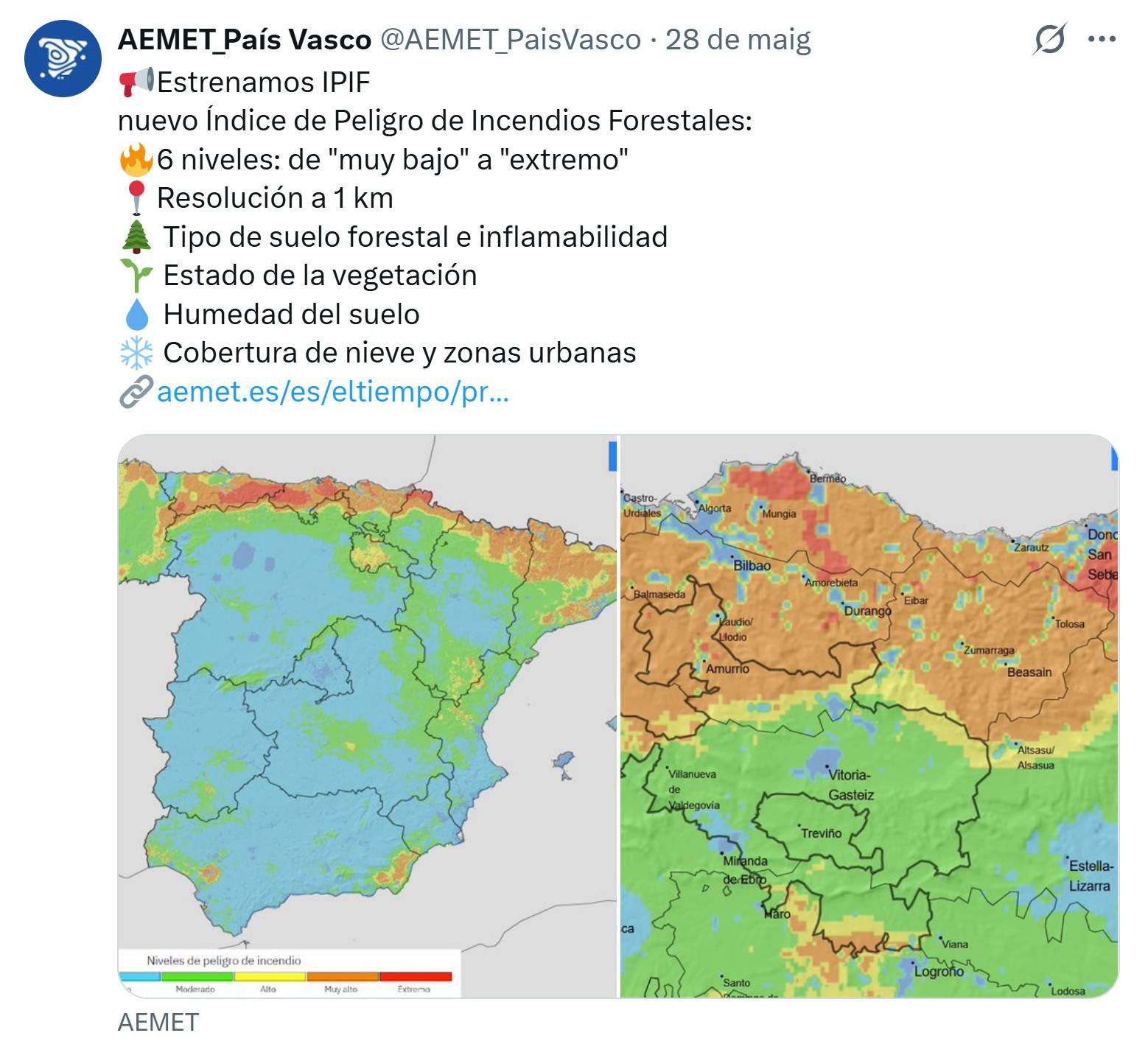
The new IPIF index was developed from the FWI, incorporating additional variables for a better characterization of fire danger: soil moisture, vegetation status using the NDVI vegetation index, and forest cover.
The IPIF still relies heavily on the FWI, and therefore on its meteorological variables, but with this additional information, it better represents the actual fire danger conditions.
Furthermore, this update includes other important changes: the number of danger categories has increased from 5 to 6: very low (NEW), low, moderate, high, very high, and extreme.
These changes were summarized by AEMET País Vasco in a post on X.
With the viewer, you can consult the daily maps for the current day and the next six days to create a short animation. You can download the maps as TIFF files for the current day, but not for previous days.
On May 27th, I downloaded the maps, and here I'm sharing the IPF index and the irrigated areas of Catalonia. You can see how the danger zones and irrigated areas are distributed.
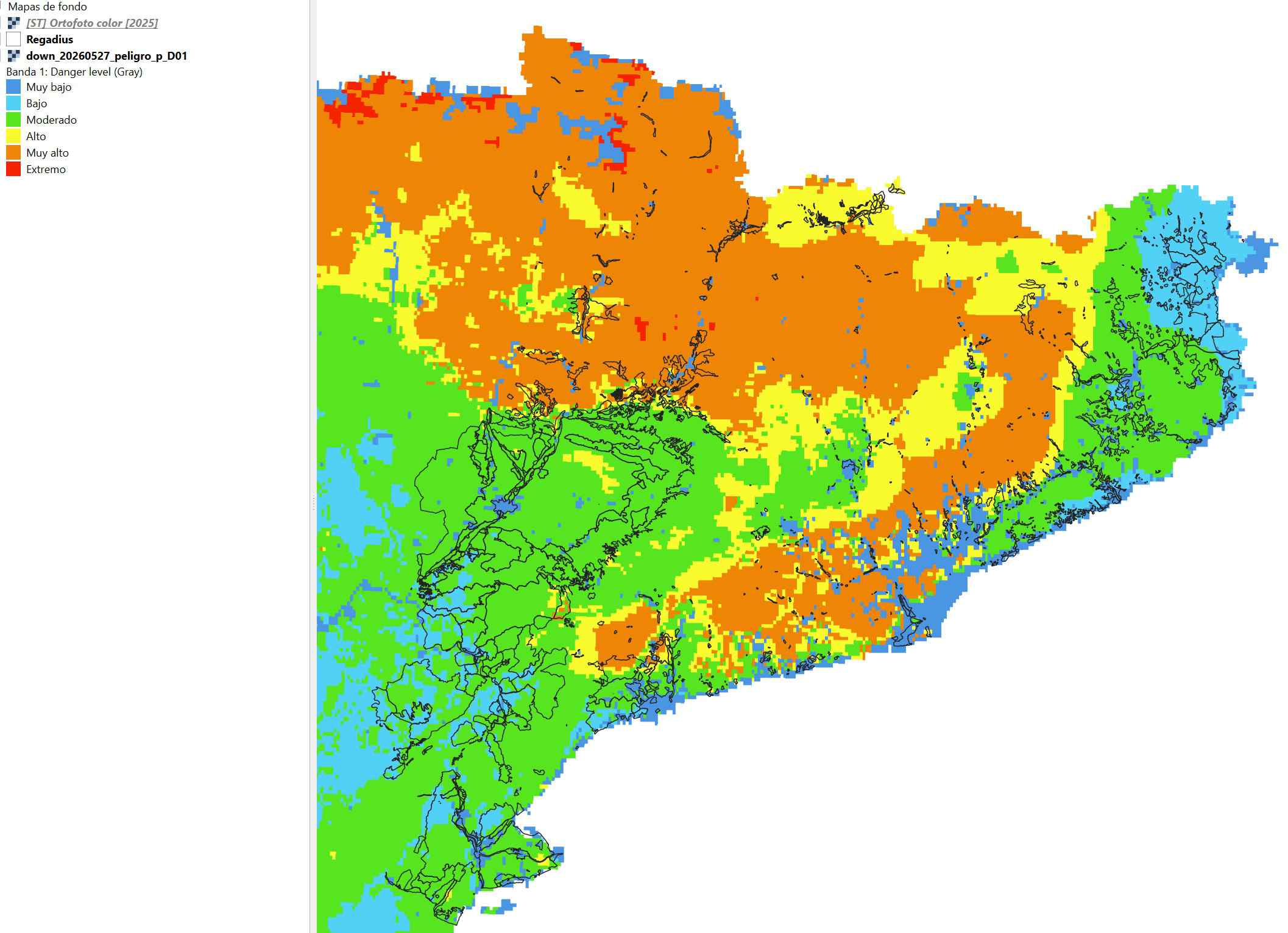
Without intending to be repetitive, in the previous post there was an image of a simulation of a large forest fire carried out by the GRAF in the area that appears to be at very high risk.
4. The Catalan Water Agency and the Barcelona Supercomputing Center develop a new flood-risk tool
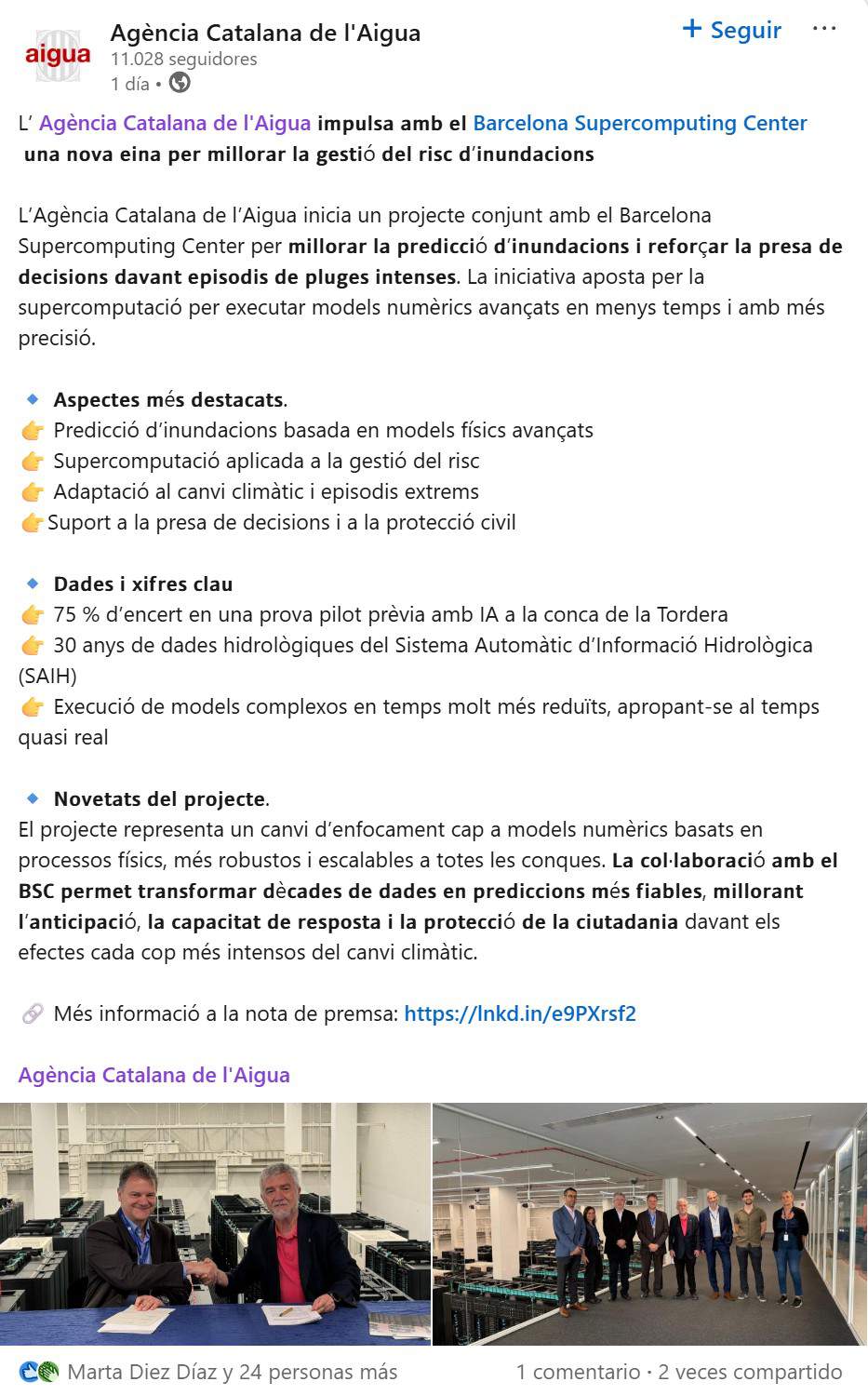
Last Friday, the Catalan Water Agency (ACA) shared the news article “The Catalan Water Agency is developing a new tool with the Barcelona Supercomputing Center to improve flood risk management” and the post on LinkedIn. Representing the ACA were its director (Josep Lluís Armenter) and the director of information systems (Joan Sallent), and representing BSC was its director (Mateo Valero).
5. The importance of high-quality data: Hazelnut 5.0
In January, I shared the PERTE Avellana 5.0 project. I participated in a digital solution that involved creating a century-long dataset of meteorological and hydrological data. AI was used to extract daily data from 1906 to 1973; the community already has digitized data from that year to the present.
The work was completed in early May, and I'm sharing some figures generated from 1969, the year I was born.
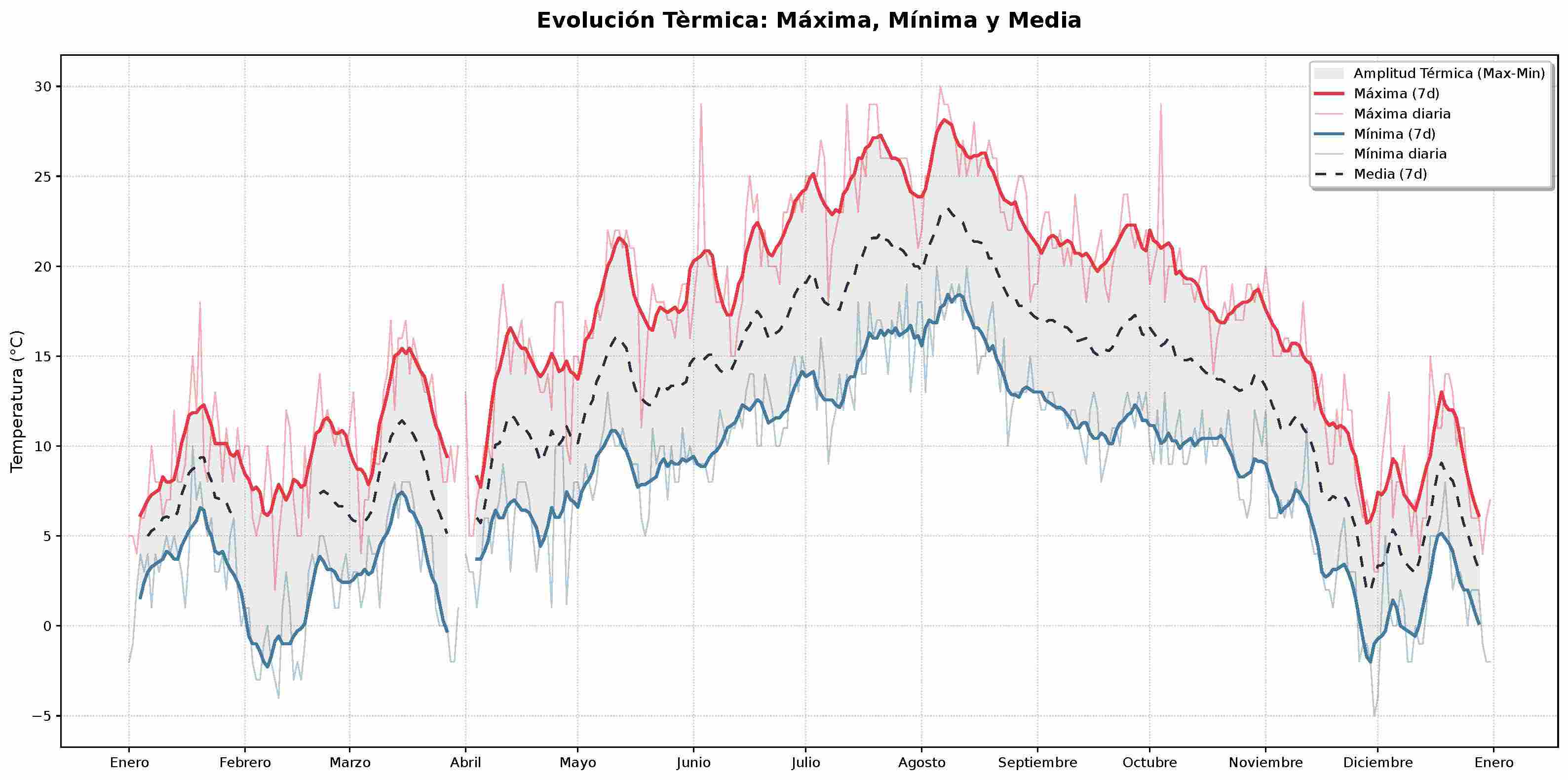
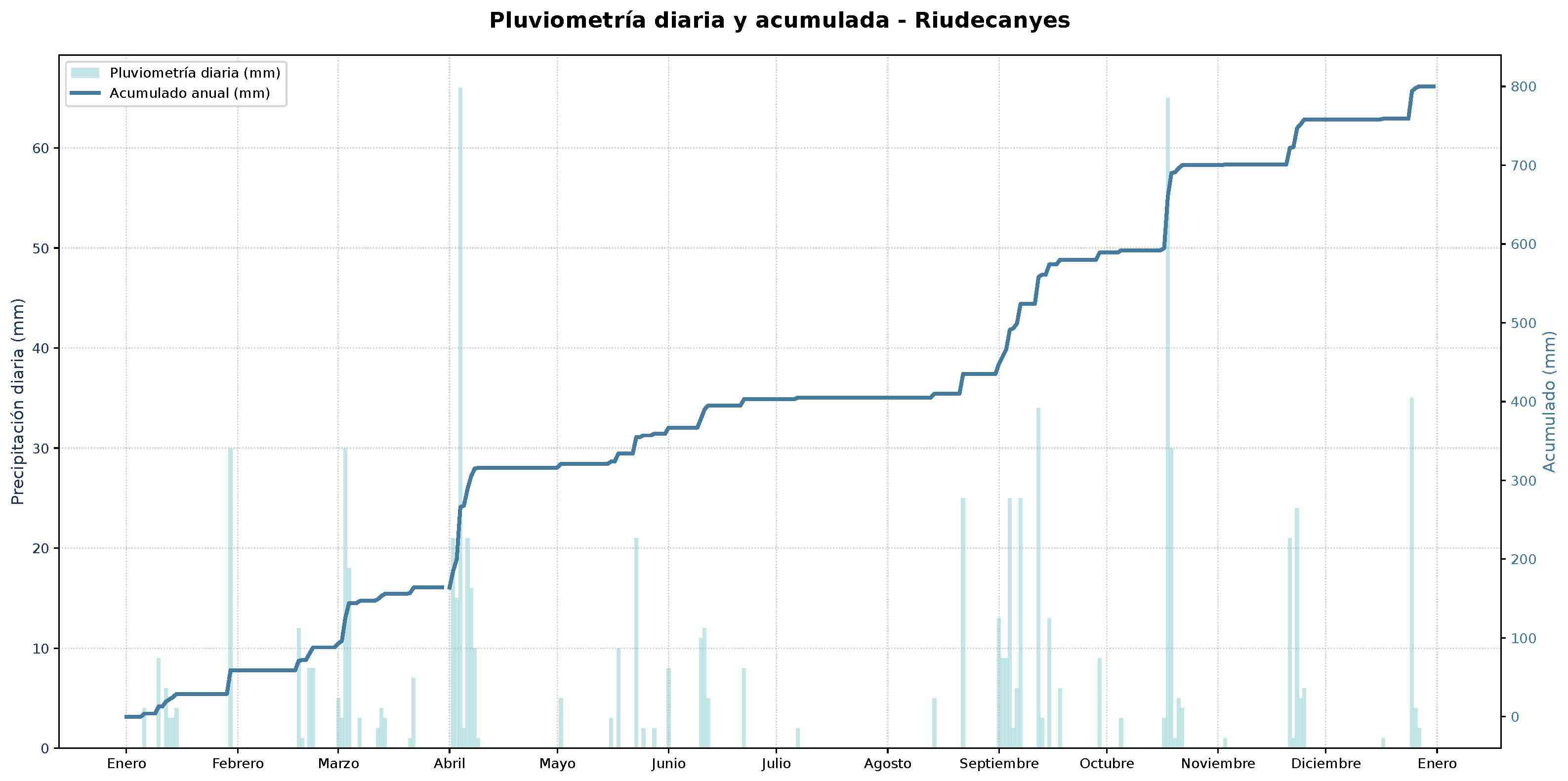
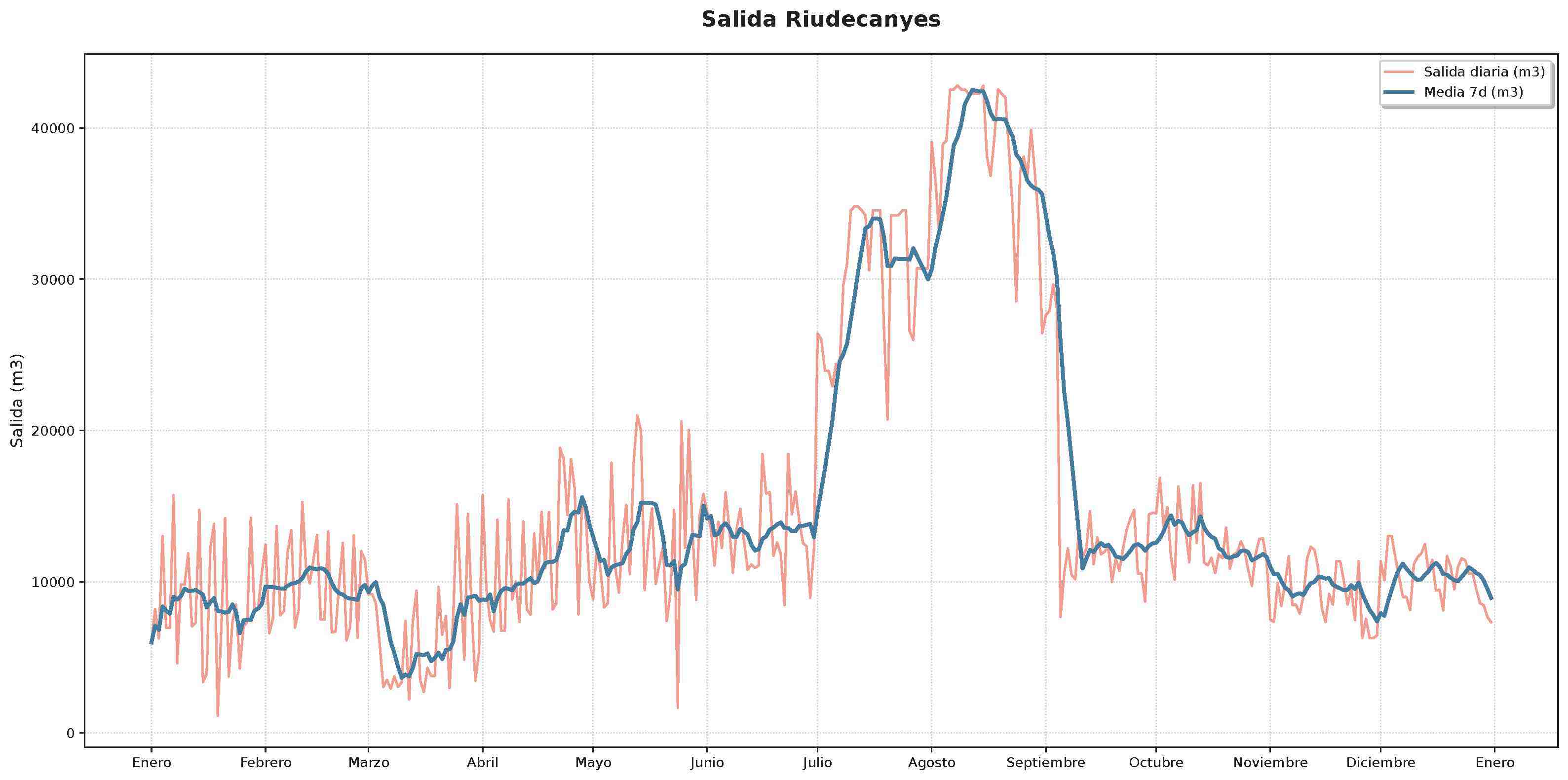
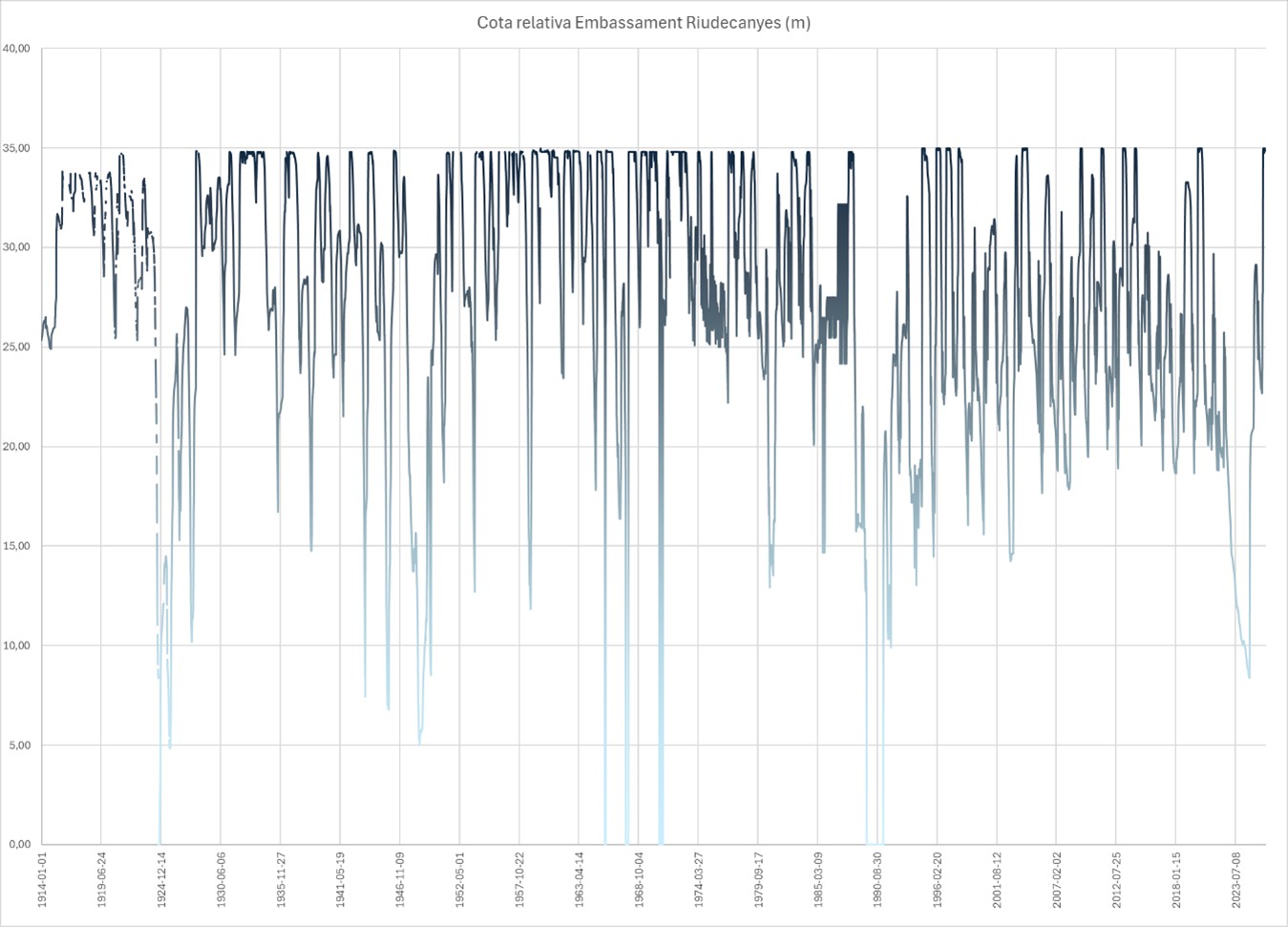
I'm sharing the evolution of the water level of the Riudecanyes Reservoir between 1914 and 2026. This graph contains over 40,000 daily data points. Here are some key takeaways from this graph:
- The impact of the drought experienced by the Riudecanyes Reservoir between 2022 and 2025.
- Data from the reservoir expansion works carried out in the early 1990s.
- The introduction of modern irrigation systems and digitalization has allowed the Riudecanyes Reservoir to experience more gradual fluctuations in its water level
6. Europe’s independence
The European Commission proposes that 2026 should be the “Moment of European Independence,” with the aim of strengthening European autonomy in five key areas: economy, energy, technology, security, and food.
The most important pillars are:
- Competitiveness and innovation: new laws on innovation, artificial intelligence, cloud computing, advanced materials, and the circular economy.
- Energy: reducing energy dependencies, improving electricity grids, electrification, and energy security.
- Defense and security: strengthening Frontex, Europol, and the European defense industry.
- Agriculture and food: improving the competitiveness of the agri-food sector, protecting farmers against unfair trading practices, and ensuring food security.
- Water and climate resilience: increasing water efficiency and preparing Europe for droughts, floods, and wildfires.
Of these 5 ideas, I would say:
1. The EU faces the challenge of beginning to measure the real innovation that reaches the different uses of water. It's about moving from presentations explaining what can be done to explaining what is actually being done. Without technological advancements, there will be no digitalization of the sector.
2. Agriculture and water are separate issues, and Europe must understand that while we often talk about water and energy as a single entity, we should be talking about Water and Energy for food production and land management. We must understand that there is a One Water concept, and that it includes water for agricultural uses.
3. The best way to achieve food security is to have technologically advanced and sustainable irrigation systems. No one should think that dryland farming will guarantee food security. In 2019, I already mentioned that climate change would expand the altitude and latitude of irrigated land in Europe. At what latitude will the European Commission understand the role of irrigation in Europe?
4. Water and climate resilience. Let's understand Pareto's principle in water use in Mediterranean countries, and increasingly in other parts of Europe. Resilience must involve preventing even the smallest loss in urban water networks, and also improving water use in agriculture due to the significant volumes involved.
7. Digital action plan for the water sector in Europe
I am currently finalizing the Action Plan for the digitalization of irrigation in Catalonia, the Smart Green Water Strategy, and I have carried out other related work, so I would like to share some reflections, which will be my contributions to the participatory process.
1. The document should explicitly mention irrigation, even though it introduces measures that directly affect its digitization within the Water Resilience Strategy. I find it difficult to understand why irrigation isn't explicitly mentioned. That's why the avatar and the final figure are AI-generated images created in a few seconds to represent what the digitization of irrigation can represent.
2. The digitization of the water cycle should serve to improve the quality of water bodies, but also to improve resilience to extreme events. The water transition calls on us to move from managing average values to managing extreme values. Let's not forget flood risk management, 20 months after the Valencia floods.
3. There will be no digitization without adequate interdisciplinary technical expertise; that's why I'm reminded that "talent is scarcer than water."
4. The timelines we have set for water digitization are unlikely to be met. At the SSWS 2025 meeting, there was a reflection on the need to avoid rushing digitalization, and now we're skidding.
5. The commission must understand the different uses of water and ensure that the necessary infrastructure, technology, and digitalization are in place to improve water use efficiency. Finding a solution for water cycle management is extremely difficult when only considering 15%.
6. Understand that in irrigation, water losses can and should be reduced, but water used for food production should not be reduced. Reductions in water allocation can translate into production losses.
7. In 2018, I wrote the post “Smart doesn't mean using a cannon to solve problems,” which is directly related to the previous point. We must be very mindful of the cost (CAPEX and OPEX) and the return on investment of each digital solution.
8. Digitalization is important, but above all, it is important to have a strategic, cross-cutting vision and access to quality data.
9. A couple of weeks ago, iagua published the post “Why farmers distrust digital irrigation technology, according to the UOC.” I made a video with one of the authors of the study, and we discussed how it is essential to involve experienced people in the sector to improve trust in digital tools.
10. Producing data is easy; ensuring its quality (representative, continuous over time, etc.) is not. The major challenge lies in extracting value from the data in an easy/simple/automatic way, etc.
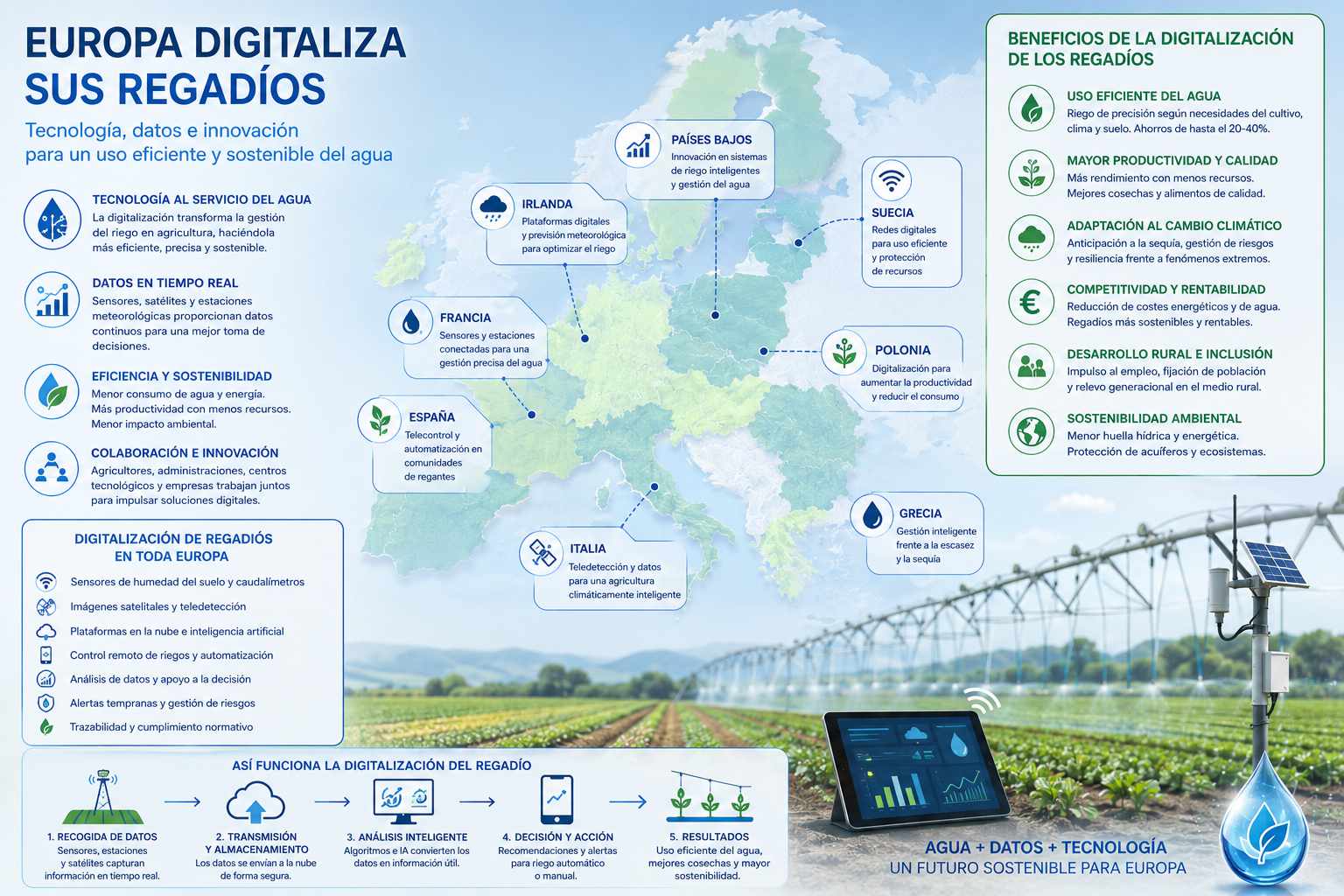
Fig. 9 Diagram of irrigation digitization in Europe (AI consultation).