

Badger Meter, the Milwaukee-based water technology company, has published its 2025 Sustainability Report, offering a detailed account of how its smart water solutions are generating measurable environmental outcomes for global customers while the company continues to reduce its own operational footprint. Now in its seventh year of publication, the report is structured around four pillars driving sustainable outcomes: governance, solutions, operations and people.
Every drop counted, at scale
The report's most striking figure sits on the solutions side rather than the operational one. Badger Meter estimates that its Cellular AMI installed base enabled the opportunity to save approximately 27 billion gallons of water in 2025 through faster leak detection, while reducing service vehicle travel by around 2.9 million miles annually. These estimates, derived from a methodology first piloted in 2024 and then applied across the full endpoint base in 2025, reflect what the company describes as the indirect but significant role its technology plays in customer water stewardship.
While long-term, sustained flow measurement accuracy helps utilities capture more water, the BEACON® Software platform turns flow measurement into actionable data, delivering near real-time visibility into consumption patterns and system anomalies.
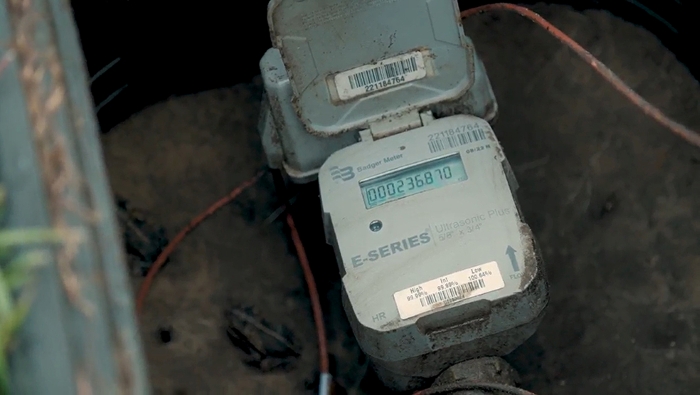
In many cases, results are being realized almost immediately, as the AMI system is being deployed. For example, in Lake Havasu City, Ariz., with only 10% of a meter changeout complete, the utility has already seen an increase in water capture and revenue gains with a shift toward ultrasonic metering. When the utility’s new BEACON dashboard showed water use 24 times that of the standard flow rate, a leak was identified and repaired in 8 hours, saving the city 1,725,000 gallons in potential water loss. No extensive downtime or field service visits were required to diagnose the problem, saving revenue and labor costs for the utility in the process.
Badger Meter estimates that its Cellular AMI installed base enabled the opportunity to save approximately 27 billion gallons of water in 2025 through faster leak detection
The case illustrates the shift the company is enabling for utilities: from reactive operations to predictive, data-driven ones, with direct implications for environmental protection, cost efficiency and infrastructure longevity.
The 2025 report offers the first detailed look at expansion in collection system monitoring, fueled heavily by the acquisition of SmartCover Systems in January 2025. (Though not included in this report, the May 2026 acquisition of UK-based sewer line monitoring leader UDlive furthers the global positioning of Badger Meter as a leading water solutions provider across the water cycle.)
Steady progress on internal operations
On its own operational footprint, Badger Meter reports continued progress, though with the transparency that comes from a significantly expanded reporting scope. In 2025, the company deployed a new sustainability data management platform and extended emissions reporting to all 30 of its global sites, up from 15 in 2024. This expansion means year-over-year comparisons require some care: total GHG emissions rose modestly in absolute terms, largely reflecting the broader coverage, while intensity remained roughly in line with the 2024 baseline at 10.5 metric tons per million dollars of sales.
In 2025, the company deployed a new sustainability data management platform and extended emissions reporting to all 30 of its global sites, up from 15 in 2024
The longer-term picture is more telling. Since 2020, Badger Meter has achieved a 58% cumulative reduction in GHG intensity, far exceeding its original 15% target for the decade. The company has now set a new goal: a further 30% intensity reduction from the 2024 baseline by 2030, supported by ongoing investments in LED lighting, heating, ventilation and air conditioning (HVAC) scheduling adjustments, and a 600 KW solar installation at its Milwaukee headquarters scheduled for completion in 2026.
Water intensity fell 11% in 2025, continuing a trend that has cut it by more than 50% since 2022. Badger Meter’s manufacturing sites in high water-stress regions remain a focus for targeted investment.


