

The water sector is at a turning point. Climate uncertainty, ageing infrastructure, and rising demand from industries like data centres and semiconductors are straining systems that were never designed for today's pressures, while persistent non-revenue water continues to drain resources worldwide. The technology to address these challenges already exists; the real question is how quickly utilities can move from pilots to scaled, operational impact. We spoke with Amrutha Venugopal, Head of the global water and waste business at Siemens AG, about the biggest hurdles facing the industry, what it means to "master the digital wave," and how integrated, intelligent control centres are helping utilities cut water losses, decarbonise operations, and strengthen cyber resilience, ahead of Siemens' showcase at IFAT 2026.
The water industry faces immense challenges, from global water scarcity to ageing infrastructure. How does Siemens view the biggest hurdles for more resilient and sustainable water management today?
Water systems were designed around the assumption of an abundant supply. That assumption no longer holds. Climate uncertainty is making planning harder: industrial uses such as data centres, semiconductors, etc. demand higher availability and quality, and much of the world’s infrastructure is aging after years of underinvestment. The result is not only risk of scarcity, but inefficiency, visible in issues like persistently high levels of non‑revenue water.
At Siemens, we see our role as a technology provider to translate digital capability into real operational resilience and sustainability outcomes
From Siemens’ perspective, a key challenge to achieving resilience and sustainability in the water sector lies in the disconnected planning, operation, and governance across different parts of the water cycle. Real resilience comes from looking at the entire system, from source to reuse, and ensuring these elements work together not just strategically, but in day‑to‑day operations. Many utilities already have data from sensors, SCADA, and analytics. The challenge is turning that data into trusted, actionable intelligence that operators and engineers actually use. Bridging this gap between insight and action is where progress often slows.
At Siemens, we see our role as a technology provider to translate digital capability into real operational resilience and sustainability outcomes. Technology largely exists, the key question now is how we can turn intent into tangible impact, at pace, at scale.

Siemens talks about "mastering the digital wave." What exactly does this mean for water management?
Ultimately, mastering the digital wave is about empowerment: equipping utilities to handle today’s operational complexity while building resilience
Last time at IFAT, we encouraged utilities to “ride the digital wave” by exploring what technologies are available and what is already possible today. This year, the message is clearer and more urgent: it’s time to master the transformation—to move decisively from exploration to execution, and from pilots to real operational impact.
In practical terms, this means shifting from fragmented, isolated systems to an integrated, intelligent multi‑utility control centre. When systems work together, utilities gain real‑time visibility and actionable intelligence—enabling better investment decisions, earlier interventions, and more reliable operations. For example, rising water demand and capacity expansion on the water side inevitably affect wastewater networks - managing these interdependencies is no longer optional.
Ultimately, mastering the digital wave is about empowerment: equipping utilities to handle today’s operational complexity while building resilience for what lies ahead, with technology serving the operations.
Can you give us concrete examples of how Siemens' digital solutions help utilities make their processes more efficient?
A great way to illustrate the impact of Siemens’ digital solutions is by looking at real-world successes. Let me share three concrete customer examples:
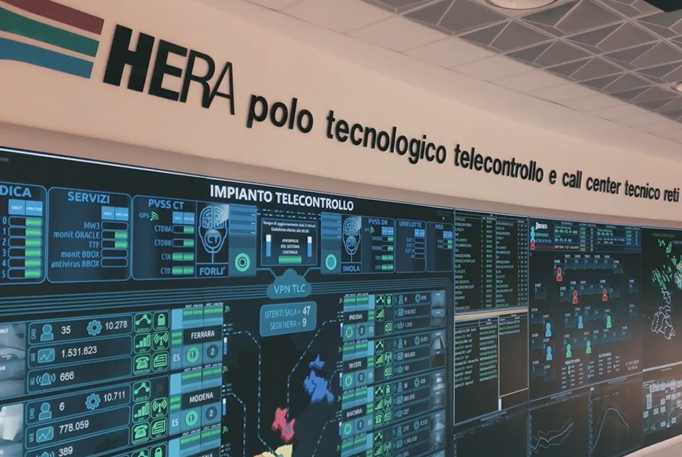
- Italy’s Hera S.p.A. serves over 7.5 million users—about 13% of the Italian population—across 311 municipalities. Hera oversees an extensive infrastructure of 11,000 remote-controlled facilities, 54,800 km of water networks, 20,000 km of gas networks, and 40,000 waste containers. By consolidating data from thousands of remote facilities into an integrated, multi‑utility control centre, Hera has moved from fragmented operations to real‑time system oversight. Siemens solutions have allowed operators to monitor assets continuously, plan maintenance proactively, and use historical data to optimise performance across the entire water cycle—turning complexity into operational transparency.
- Wasserwerke Westfalen offers another strong example: this utility supplies drinking water to 1.5 million residents and generates energy in run-of-river power plants, all managed from a central control room. The utility uses standardised automation and advanced simulation tools to operate more reliably and sustainably. By preparing today for technologies such as web‑based control centres and 5G network slicing, they are reducing operational risk while ensuring long‑term flexibility.
Siemens’ digital solutions help utilities move from reactive operations to predictive, data‑driven decision‑making
A third example is EYATH in Greece, where cloud‑based monitoring and AI‑supported analytics are used to detect sewer blockages and optimise network capacity early. These solutions integrate with existing SCADA systems and help operators respond faster—especially during heavy rainfall—reducing environmental impact and improving service reliability.
Across all these examples, the common theme is integration. Whether through centralised control centres, intelligent analytics, or digital twins of treatment processes, Siemens’ digital solutions help utilities move from reactive operations to predictive, data‑driven decision‑making—improving efficiency, resilience, and sustainability without disrupting existing operations.
Non-revenue water and ageing pipe networks are a persistent problem globally. How are Siemens' leak detection and network transparency solutions helping utilities reduce water losses?
Water loss is one of the world’s biggest challenges, with around 30% of drinking water lost before it reaches consumers—driving up economic, social, and environmental costs. Today, proven, user-friendly digital solutions empower utilities to leverage existing data from sensors and hydraulic models to pinpoint exactly where losses occur, and target efforts where reducing non-revenue water (NRW) will have the greatest impact.
Siemens offers a comprehensive approach, from pre-integrated IoT solutions, which significantly reduce implementation time, risk, and cost. By deploying SIWA, Siemens Water’s AI-based applications for leakage detection, meter management, and analytics, utilities can effectively minimise water loss all along the journey—from source to the tap. These solutions seamlessly interface with existing SCADA systems, ensuring a holistic view and control.
In fact, some have managed to cut non-revenue water by up to 50%, reduce time and costs for field crews, and optimise investment strategies for pipe replacement.

Energy consumption is a major cost and sustainability concern in water treatment. How close are we to seeing energy-positive wastewater treatment plants become a mainstream reality, and what role does Siemens play in getting us there?
Wastewater treatment is one of the most energy-intensive parts of the water cycle, yet also presents significant opportunities for energy optimisation and recovery
Water and energy management are closely connected—improvements in the efficiency of one lead to benefits in the other. The water sector is inherently energy-intensive, with utilities globally facing rising energy costs and the imperative to decarbonise. Digital technologies are proving to be game changers here, offering compelling, cost-effective solutions for energy efficiency and controlling direct process emissions to help utilities reach net zero. Wastewater treatment is one of the most energy-intensive parts of the water cycle, yet also presents significant opportunities for energy optimisation and recovery.
By optimising energy use in water operations organizations can both reduce energy consumption and make progress toward decarbonization goals, like in our projects with Nuremberg City Drainage, using our Energy Data Manager solution and EBS Vienna, Austria’s largest wastewater plant, using Siemens’ process simulation, has been energy self-sufficient since 2015—producing surplus energy for wastewater treatment and advancing Vienna’s goal of becoming climate-neutral by 2040. Its tailored digitalisation supports climate and water protection efforts.
Energy-positive wastewater treatment plants are increasingly mainstream, driven by maturing digital technologies. Siemens provides proven solutions, guiding utilities from basic energy monitoring to advanced system optimisation and visionary multi-utility energy management, translating digital capability into tangible resilience and net-zero outcomes.
As water infrastructure becomes more connected and digitalised, it also becomes a more attractive target for cyberattacks. How is Siemens helping water and wastewater operators navigate the cybersecurity landscape, including compliance with directives like NIS2?
With digitalisation, systems and processes are becoming increasingly networked, bringing with it the higher risk of cyberattacks. The growing risk that authorities also recognise in implementing the NIS2 Directive. The water supply and wastewater treatment facilities are also part of the critical national infrastructure, making it even more important that water suppliers and wastewater disposal companies protect their systems with the appropriate cybersecurity solutions. One example of a utility company that took this necessary step is found in the Netherlands, where Waterschap Limburg is working with Siemens to protect its water and wastewater infrastructure from complex cyberattacks. Siemens’ Remote Industrial Operations Services, along with Security Operations Centre as a Service, detect threats and support the company in responding to security incidents, helping it meet cybersecurity requirements such as NIS2 and CSIR (a Dutch variant of NIS2).
IFAT 2026 is approaching. What role does this trade fair play for Siemens in presenting your vision and solutions, and what highlights can visitors expect at your booth, especially regarding the integrated approach?
At our booth in Hall C1, 305, visitors can experience firsthand how water abstraction, treatment, distribution, wastewater processing, and reuse can be seamlessly connected and intelligently managed. At our highlight showcase, isolated subsystems are transformed into a unified, smart multi-utility control centre, presented across four digital rooms for:
- Desalination
- Wastewater Treatment
- Sustainable Water Use & Reuse
- Pipeline & Network Transparency
In addition, expert deep-dive stations demonstrate solutions for energy efficiency, sustainable operations, resilient wastewater management, reliable drinking water supply—and, new this year, innovative waste management to support a fully circular approach. We will be happy to welcome you to our booth!
Find more information on our Siemens IFAT Landing Page.
Need a last-minute ticket? Get it here for free


