Melissa Meeker has spent more than three decades working across public, private, and nonprofit roles in the water sector. Today, she leads The Water Tower, an innovation campus in Georgia that brings together utilities, researchers, and companies to test new ideas and train the next generation of professionals. Since opening in 2019, it has become a space for collaboration on issues ranging from PFAS removal to digital twins and cybersecurity. Speaking with Smart Water Magazine, Meeker discusses the future of water utilities, the technologies she sees gaining ground, and why building a skilled workforce is more urgent than ever.
Please tell us briefly about your background and your current role as CEO of The Water Tower.
I have 35 years in the water industry and have worked in the public, private and non-profit sectors. The Water Tower is a culmination of my best experiences in each of my previous roles with the goal of driving innovation and workforce development in one of the greatest sectors – water. Water is the driving force in economic prosperity, and it is incredibly rewarding to work in an industry focused on delivering safe drinking water and protecting the environment.
The Water Tower launched in 2019 as a unique water innovation campus uniting utilities, researchers, companies, and more. What was the original vision behind creating it, and how does it aim to address water challenges locally and globally?
The vision behind The Water Tower began with Gwinnett County leadership seeking a way to engage in cutting-edge research and innovation without disrupting day-to-day plant operations. Gwinnett County has always been forward-thinking, and the F. Wayne Hill Water Resources Center, in particular, has always been of great interest to researchers and technology developers because of the incredible innovations at that facility. I was recruited to take this concept and turn it into an organisation with a state-of-the-art brick-and-mortar center in 2018.
The Water Tower partners with utilities and companies in the U.S. and beyond on research, training, technology and engagement initiatives
TWT has a close partnership with Gwinnett County; however, the vision since I came on was to create a space where the broader water industry can come together to collaborate- beyond the County, Georgia, and even the Southeast. Since then, we’ve partnered with utilities and companies across the U.S. and internationally on research, training, technology and engagement initiatives. We’ve welcomed visitors from 48 U.S. states and 18 countries to our campus. Innovation can’t happen without collaboration - by bringing together diverse perspectives and organisations under one roof, we’ve seen powerful collaborations grow.

Your “living lab” enables real-flow testing with actual wastewater and reuse water. Can you share one project or technology breakthrough that best illustrates its potential?
I’m not sure I can pinpoint one example, but I can share that an area we have seen a lot of R&D focus on is in PFAS destruction, which is exciting and necessary. Water utilities take the brunt of regulations on emerging contaminants, even though they are really just transporting water from point A to B. If we can help facilitate innovative solutions that can be economical “bolt-on” processes at existing facilities, and not new multi-million-dollar facilities, that could really help utilities – and rate payers.
Digital tools are transforming water management. How is The Water Tower helping utilities and startups adopt smart monitoring, predictive analytics, and IoT-based solutions?
If we can facilitate PFAS solutions that are economical “bolt-on” processes at existing facilities, it could really help utilities
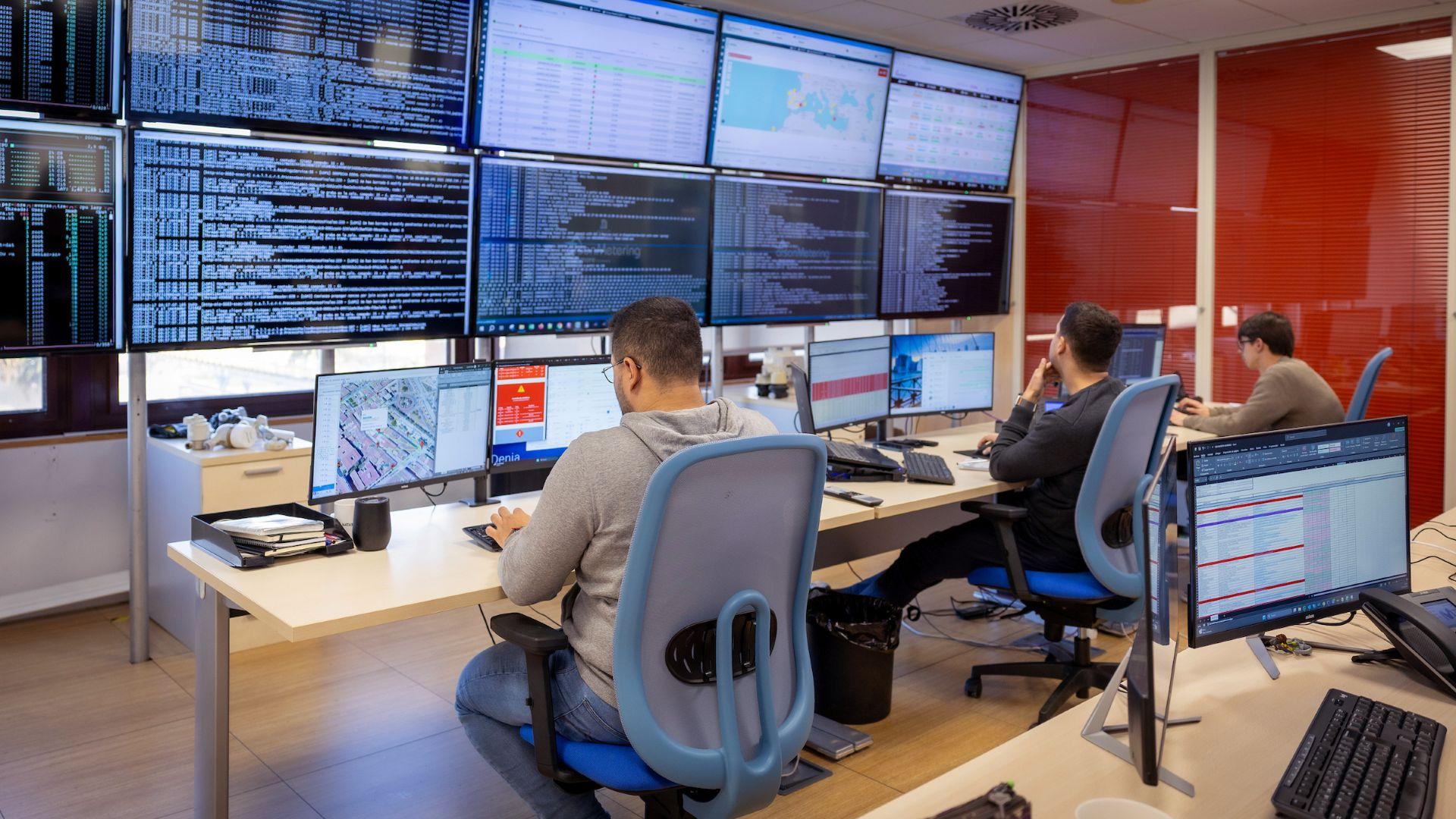
also partner with companies that focus on digital technologies, or digital components of their tech, such as dashboards. We work with utilities to hear firsthand what types of challenges they’re facing, and partner with technology providers who can help alleviate those challenges. Our control room showcases emerging digital tools, such as SCADA systems, digital twins, AI tools, dashboards developed to enable more predictive analytics, and more. Our campus offers tech companies the opportunity to demonstrate what their products can do, and utilities can see the capabilities firsthand in a no-pressure environment.
We have also focused on cybersecurity, including hosting an international conference in 2024 that included utilities, service providers, and academia.This October, we will be hosting iTrust Labs from Singapore for a Red versus Blue Cyber Defence Simulation involving 5 teams of 5 launching, detecting and defending from a cyber-attack on a water treatment facility in iTrust’s lab.It should be really enlightening and exciting.
Our campus offers tech companies the opportunity to demonstrate what their products can do, and utilities can see the capabilities firsthand
Innovation is moving toward autonomous operations, AI-assisted treatment optimisation, and digital twins for entire watersheds. Which of these frontier technologies do you expect to become mainstream soon, and how is The Water Tower preparing to test and validate them?
We’ve partnered with several companies that are innovating and exploring in this space, and are currently engaging in research investigating generative AI for utility benefit. AI is a tool that can help cut time and costs, but nothing can replace the institutional knowledge and problem-solving abilities of a skilled operator. AI-driven predictive analytics for infrastructure management is already gaining traction. In addition, many utilities already collect vast amounts of operational data through systems like SCADA, smart meters, etc., so applying AI models to enhance treatment efficiency and reduce downtime is a logical next step.

Your collaboration ecosystem spans nonprofits, utilities, research institutions, and tech firms. How could this model be adapted and scaled internationally to accelerate innovation across the water sector?
Developing solutions that address significant challenges requires a diversity of expertise and experiences that bring together a variety of perspectives.No one group or organisation can do it alone.We are doing our best to be the connector - facilitating collaboration between different international organisations, and we would love to connect with others who feel the same way.
Policy and regulation often determine how quickly innovation is adopted. What changes or strategies could help speed up deployment while protecting water quality and public health?
Protecting the environment and public health is of paramount importance; however, they can certainly delay the adoption of new technologies. The time it takes from ideation to deployment in the water sector (10-30 years) is significantly longer than in other industries, such as energy (5-10 years), automotive (3-5 years), and IoT (6 months-2 years). Strategies such as engaging regulators early on in the process, demonstrating the technology’s merit in real-world conditions, and more pilot-friendly regulatory pathways could help accelerate the process. Another potential strategy is a shift toward outcome-based standards, which would leave room for innovation on how utilities meet those standards.

If you could design the “water utility of the future” from scratch, what would it look like in terms of technology, governance, and resilience — and how close are we to making that vision a reality?
Utilities must consider and develop succession planning, mentorship, and knowledge transfer to ensure long-term sustainability
The water utility of the future will be smart, resilient, and adaptive. It will incorporate smart technologies, such as AI predictive maintenance, digital twins, and real-time monitoring, into daily operations. It will focus on integrated water resources, maximising the opportunity for water reuse. The utility of the future will have a large focus on transparency and public engagement, ensuring the communities it serves understand the importance of treatment and the reasoning behind decision-making. It will be resilient to changing weather patterns, operational interruptions, and cyber-attacks. The utility staff will be highly skilled, well-versed in smart technology, and adaptive to new ways of approaching challenges. The future for water utilities is bright.
As the water sector faces increasing pressures from population growth, ageing infrastructure, and the adoption of advanced technologies, how can utilities ensure a resilient, skilled, and diverse workforce — especially as many experienced professionals retire? What strategies are most effective in attracting, training, and retaining the next generation of water professionals?
This is one of the most urgent challenges facing the water sector today. As experienced professionals retire and infrastructure needs grow more complex, water utilities must actively cultivate a resilient, skilled, and diverse workforce to ensure long-term sustainability. Utilities must consider and develop succession planning, mentorship, and knowledge transfer. Attracting new talent is key, and that is where we at The Water Tower come in. We’ve developed a unique and proven model that incorporates social media campaigns, partnering with social nonprofits, and school outreach to engage students to enter our skilled trades training programs.