October 29, 2024, is now marked in Valencia’s history. The now-infamous DANA (a Spanish acronym for Isolated High-Altitude Depression) unleashed rainfall of extreme intensity, with volumes exceeding all previous records.
Turís, a municipality located in the Ribera Alta, recorded 772 litres/m² of rainfall in just 24 hours — the highest ever measured in the province of Valencia. Of this, 185 litres/m² fell in only one hour. However, the most striking aspect was not just the sheer amount of rain, but its distribution. In many of the hardest-hit areas, little rain actually fell; instead, the greatest damage came from upstream basins where precipitation triggered massive runoff. The flow near Torrent reached 2,300 m³/s, and downstream it exceeded 3,000 m³/s, overwhelming all documented flood management plans. Hydraulic infrastructure proved clearly insufficient: the main channel, designed to drain 400 m³/s — enough for a once-in-a-century flood according to regulations and prior studies — was completely overrun.
On October 29, 2024, the Valencia DANA unleashed rainfall of extreme intensity, overwhelming all documented flood management plans
The result was staggering: 227 fatalities, hundreds missing, and more than 337 municipalities affected, most of them in the province of Valencia. Aerial images reveal the scale of the catastrophe: vast areas submerged under more than 2.5 metres of water. The flooded area covered 552 square kilometres — nearly an entire province under water — severely impacting rural and urban communities, critical infrastructure, and agricultural land of incalculable value.
Digitalisation applied to climate emergencies
Miren Aldecoa, Operations EU at Xylem Vue, described the event as an “unprecedented disaster”. According to her, water was not the only problem: “It is true that rainfall intensity reached a return period of over 500 years, which is unusual, but the mud and sludge carried by the water destroyed roads, pipelines, and services, even leaving entire towns cut off.”
In Turís, 772 l/m² fell in 24 hours — with 185 l/m² in just one hour — the highest ever rainfall measured in Valencia province
This situation, combined with complications in transmitting real-time data and the lack of adequate digital sensors in the sewer network — collapsed after the DANA — greatly hindered operational decision-making.
In this context, with widespread sewer blockages and a shortage of suction trucks, it was crucial to know the status and progress of daily work in order to allocate trucks to each municipality. Without digitalisation — and with every affected municipality requesting trucks — it was extremely difficult to allocate resources and track work progress.

Therefore, the recovery process was planned in three phases: Phase 0 (Emergency): lasting 3 months. Phase 1 (Post-emergency): also 3 months; Phase 2 (Long-Term Recovery): focused on system improvements, planned over 18 months. According to Aldecoa, Xylem Vue’s work — supporting Global Omnium, which acted as the local operator at the service of authorities for emergency tasks and subsequent reconstruction — focused on four main actions: “Analysis of affected populations and impacts; Planning and execution, prioritizing urgent tasks; Communication and coordination with citizens, utilities, and emergency services; and, finally, Digitalisation — using real-time information to support decisions and keep systems operational.”
Xylem Vue focused on four main actions: analysis, planning and execution, communication and coordination, and digitalisation
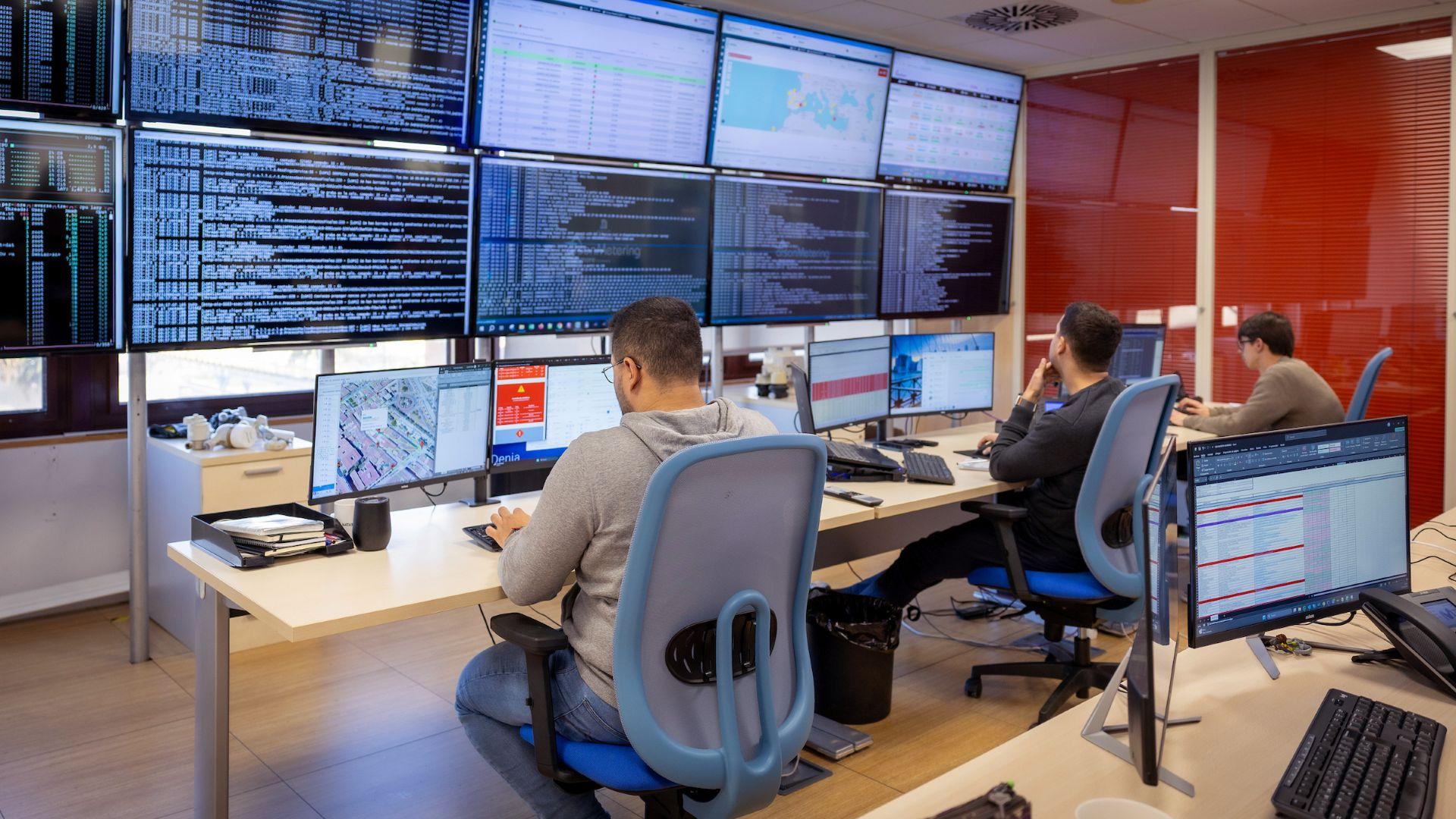
From the very beginning, Xylem Vue operators concentrated their efforts on providing assistance through digitalisation, playing a crucial role in managing the disaster and testing the power of data science, advanced modelling, and digital technologies. Sergio Aznar, Head of GIS Analysis at Idrica, explained the first steps: “From the start, we worked in two areas: first, organising the work of field teams through real-time monitoring via the platform. This way, we knew if each building had a water supply, pumping pressure, and whether additional materials were needed. Second, we focused on analysing water quality — residual levels, supply parameters, and sludge samples collected on site.”
Tools supporting the response
Specifically, the Xylem Vue team focused on three categories of tools: existing ones, adapted ones, and those created from scratch.
According to Aldecoa, two of the existing tools within the Xylem Vue platform — Real-Time What-if Scenario (RTWIS) and Leak Detection — were indispensable: “The use of RTWIS helped us understand in real time what was happening in the network. It also provided emergency plans and allowed us to test pre-modelled decisions and scenarios.” “Leak Detection was also key, helping identify hidden damages, saving time, preventing water losses, and making field teams more effective.”

Among the adapted tools was WO Mobile, a reconfigured app used to monitor field crews. It enabled real-time visibility of each team’s location, tasks, and support needs, facilitating coordination. Support from many water utilities and communities further improved the tool’s effectiveness in managing multiple teams.
Two of the existing tools within the Xylem Vue platform — Real-Time What-if Scenario (RTWIS) and Leak Detection — were indispensable
Finally, tools developed ad hoc for the emergency included the DANA Emergency App, initially an internal version that tracked field operators, monitored building-level water supply, and mapped population impacts. Aznar described the process: “The following week, the GIS department began work, and by November 15, we already had a viable first version. Over the next ten days, we added geospatial tools for water quality monitoring, such as supply points, sectoral sampling histories, and compliance indicators. Thanks to these tools, operators could monitor the situation live and respond quickly.”
In fact, more than 70 analysis reports were generated, and over 789 water samples were collected and analysed by the Global Omnium laboratory.
Impacts and lessons learned: water resilience
The October DANA marked a turning point in water risk management. The event highlighted the urgency of shifting toward proactive management models based on digitalisation and advanced prediction. The Xylem Vue experience stands as a reference point for how technology can bridge traditional management and new climate resilience.
Key takeaways from the response include:
- Robust, scalable early-warning systems: anticipation and response capacity depend on integrating high-frequency data, intelligent predictive models, and action protocols adapted to various risk scenarios.
- Redesign and reinforcement of hydraulic infrastructure under extreme climate criteria: the event showed that classical sizing parameters must be revised to account for higher return periods and new precipitation patterns linked to climate change.
- Digitalisation and collaboration as essential elements in emergency management: connectivity among administrations, operators, and citizens is not just an ideal — it is a proven necessity to save lives and optimise resources under pressure.

The future: data-driven reconstruction and prevention
The tragedy created an opportunity to renew approaches and decisively embrace artificial intelligence, advanced analytics, and collaborative platforms as pillars of water and territorial defence.
Digitalisation and collaboration are essential elements in emergency management: a proven necessity to save lives and optimise resources
The experience of Xylem Vue during the toughest days of the DANA served both as a shield against destruction and as a catalyst for a vital debate: water as a strategic yet vulnerable resource, whose management requires the best available science and technology.
The 2024 DANA was, in effect, a stress test for the water management system and its adaptive capacity. The operations carried out by Xylem Vue will undoubtedly serve as a reference for other territories already facing — or soon to face — the challenges of “extreme hydrology”. In the era of climate change, only innovation can close the gap between vulnerability and security.