For most of its history, wastewater marked the end of the line — treated, discharged and forgotten. If the plant met its consent, the job was done.
That assumption no longer holds.
In 2026, wastewater is no longer the end of sanitation; it is the beginning of a new chain of supply, risk and capital. It is a water source, a priced contaminant, an energy asset, and a financeable market. The question is no longer which technology exists, but what comes next, who pays, and who delivers.
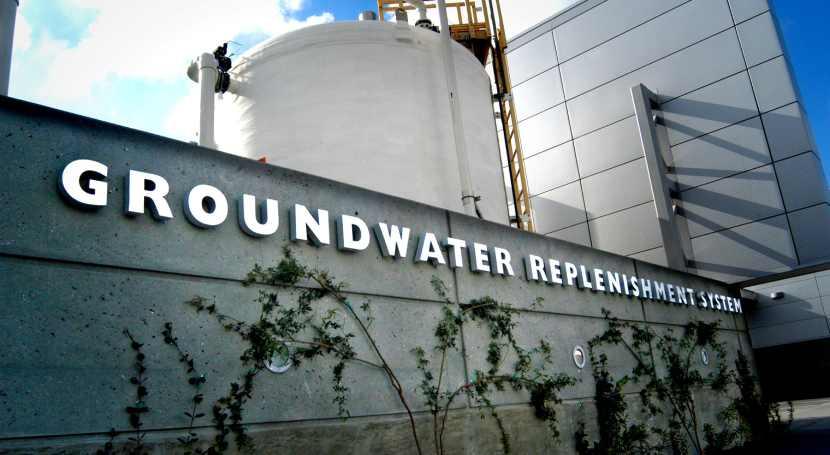
Our cover interview with John Kennedy, General Manager of Orange County Water District, captures the shift. He inherited the world's largest reuse system, the GWRS, as it reached full build-out — the moment construction ends and the harder discipline of operation begins. Success is no longer measured in milestones, but in reliability sustained over decades.
The same logic runs through the issue. At Hampton Roads Sanitation District, Lauren Zuravnsky is delivering SWIFT, a $3 billion programme turning treated wastewater into a regional groundwater supply, recharging an over-drawn aquifer and slowing subsidence in Virginia. From Berkeley, Professor David Sedlak frames the wider stakes: water security may depend less on technology than on dismantling the silos that keep drinking water, wastewater and stormwater apart.
In 2026, wastewater is no longer the end of sanitation; it is the beginning of a new chain of supply, risk and capital
Yet the recurring lesson here is not technical. The technology is proven; the harder task is trust. Sedlak and Professor Joan Bray Rose — 2026 Lee Kuan Yew Water Prize laureate, whose work turned water safety into measurable science — converge on one point: reuse advances at the speed of public confidence, not engineering.
That conviction is now global. Danielle Francis, Water Services Association of Australia, notes that over 30 million people already drink purified recycled water, heading past 55 million by 2050. António Pinto, Águas do Tejo Atlântico, shows digital twins remaking the plant; Sreenivasan Ramaswami makes the case for reuse in the global south; and Martin Hurst, Sustainability First, makes public trust a governance test for every utility. David LaFrance, CEO of AWWA, names the quieter risk: the knowledge that retires with an experienced operator.
The features show the market being built. Badger Meter turns the sewer network into a single intelligence layer; ACCIONA makes underground networks predictive; Almar Water Solutions shifts to long-term, financeable partnerships; and Tedagua, Xylem Vue and Filtralite bring compact reuse, real-time visibility and reliable filtration.
What emerges is a sector that no longer treats used water as the end. It is supply, it is risk, it is capital, it is public health.
Because waste, it turns out, was always the wrong word.